
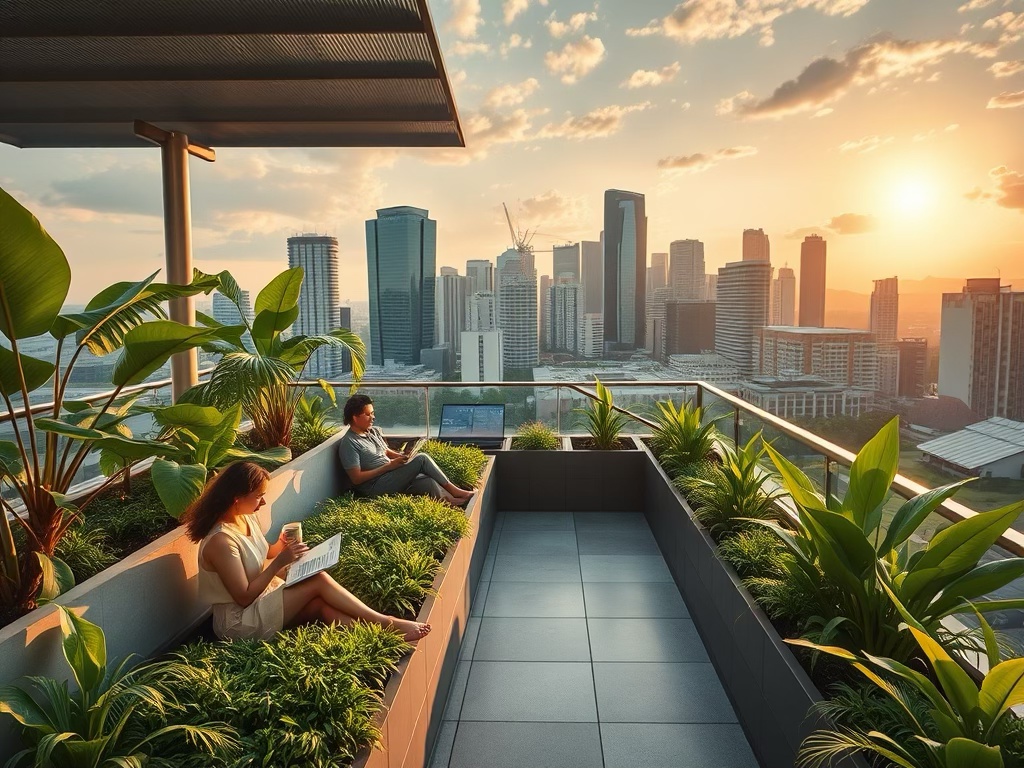
Metro Manila’s average temperature has risen by 1.5°C in just the last two decades, a silent yet tangible reminder of how urban density, concrete sprawl, and vehicle emissions are reshaping city life. The once-cool breeze of the metropolis has been replaced by waves of heat radiating from rooftops and asphalt — a daily reality for millions of Filipinos navigating one of the world’s most congested urban regions.
Now imagine this: you’re sipping coffee above the skyline, surrounded by lush greenery and the faint hum of the city below. The air feels cooler. The view stretches beyond glass and steel — into pockets of life, color, and calm. This isn’t a luxury escape; it’s a glimpse into the urban green revolution taking root across Philippine cities.
Rooftop gardens are redefining what it means to live sustainably in the modern metropolis. More than an architectural trend, they represent a powerful blend of lifestyle innovation and environmental resilience — turning underutilized rooftops into thriving ecosystems that cool the air, clean the atmosphere, and reconnect people with nature amid the city’s relentless growth.
What Are Rooftop Gardens and Why They Matter

Rooftop gardens — also known as green roofs — are specially designed vegetation systems built atop buildings, transforming unused concrete spaces into living, breathing ecosystems. They aren’t just decorative patches of greenery; they are engineered solutions that help cities adapt to climate challenges while improving the quality of urban life.
Definition & Types
There are two main categories of rooftop gardens:
Extensive Green Roofs
Lightweight and low-maintenance, these systems feature shallow soil layers and hardy plants such as grasses, sedums, and succulents. Ideal for residential or mid-rise buildings, they provide natural insulation and stormwater absorption with minimal upkeep.
Intensive Green Roofs
Often called “rooftop parks”, these feature deeper soil profiles that can support shrubs, trees, and even small lawns. They require more structural support but create usable recreational spaces for residents, cafes, or office workers.
Community Gardens and Commercial Green Roofs
Across cities like Taguig and Makati, developers are integrating shared rooftop gardens that double as urban farms, offering residents access to fresh produce and supporting local food systems.
Mechanics: How Rooftop Gardens Work
A rooftop garden isn’t simply soil laid on concrete. It’s a carefully layered system designed to ensure longevity and waterproofing:
1. Roof Deck and Waterproofing Membrane
The foundation layer that prevents leaks and moisture intrusion into the building structure.
2. Root Barrier and Drainage Layer
Protects the roof from root penetration while channeling excess rainwater.
3. Filter Fabric and Growing Medium
A mix of lightweight soil substrates that retain nutrients and allow root aeration.
4. Vegetation Layer
The visible green surface that cools, filters, and beautifies the environment.
This system enables buildings to absorb rainwater, reduce heat gain, and extend roof lifespan, offering both ecological and economic benefits.
Relevance in the Philippines
In a country where urban density and climate extremes define daily life, rooftop gardens provide an elegant and practical solution. The tropical climate supports year-round plant growth, while frequent rainfall enhances the roofs’ stormwater retention capacity — helping mitigate flash floods in low-lying areas. With limited land for green spaces in cities like Quezon City, Makati, and Taguig, rooftops have become the next frontier for sustainable development.
Legal & Policy Context
The Philippine government has started to recognize the value of green roofs within its sustainability framework. The Green Building Code of the Philippines (2015) encourages developers to integrate vegetation systems that reduce heat and improve energy efficiency. Meanwhile, the Department of Environment and Natural Resources (DENR) promotes Urban Greening Initiatives, which include rooftop gardens as part of broader biodiversity and air-quality improvement programs.
Together, these policies form a growing legal foundation that aligns environmental responsibility with modern real estate development — pushing for a future where green infrastructure becomes the urban standard, not the exception.
Environmental Impact: Cooling and Cleaning Philippine Cities

As Philippine cities continue to expand vertically, the consequences of rapid urbanization — rising temperatures, worsening air quality, and frequent flooding — have become impossible to ignore. Rooftop gardens are emerging as a green counterforce to these urban pressures, providing measurable environmental benefits that improve both city living and climate resilience.
Mitigating Urban Heat Islands
In dense business districts like Makati and Bonifacio Global City, heat radiating from concrete and asphalt creates what experts call urban heat islands (UHIs) — localized zones that are significantly warmer than surrounding rural areas.
According to the Philippine Green Building Council (PhilGBC), green roofs can reduce rooftop temperatures by up to 10°C and lower nearby air temperatures by 2–3°C. This cooling effect reduces air-conditioning needs, cutting energy use by 15–25% in peak summer months.
By replacing heat-absorbing surfaces with plant-covered roofs, developers are not only reducing operational costs but also creating cooler, more comfortable urban microclimates.
Improving Air Quality
Rooftop gardens act as natural air filters in congested metropolitan areas. The vegetation absorbs carbon dioxide (CO₂), nitrogen dioxide (NO₂), and particulate matter (PM2.5) — pollutants commonly emitted by vehicles and industrial zones.
Research shows that every square meter of green roof can capture up to 0.2 kilograms of airborne particles annually, significantly reducing smog and respiratory risks for residents, resulting in cleaner air for polluted communities.
Reducing Stormwater Runoff
Flooding remains one of Metro Manila’s most persistent challenges, with impermeable surfaces preventing natural drainage. Rooftop gardens alleviate this problem through stormwater absorption and delayed runoff.
The soil substrate and vegetation can retain 50–90% of rainfall, reducing the water burden on city drainage during heavy downpours — a key benefit for flood-prone areas like Mandaluyong and Quezon City.
Developers who integrate green roofs into their designs not only contribute to urban flood mitigation but also comply with the DENR’s sustainable drainage and water conservation goals.
Supporting Biodiversity
Rooftop gardens help enhance dull concrete areas while providing homes for pollinators like bees and butterflies, supporting nature in cities. Native plants like ilang-ilang, banaba, and bird’s tongue grow well in these gardens, linking urban life with the environment.
These biodiversity pockets support urban pollination networks and help restore the ecological link between built and natural environments — one rooftop at a time.
Economic and Real Estate Benefits
Beyond their environmental rewards, rooftop gardens are proving to be smart financial investments. For developers, property owners, and even corporate tenants, the value of a green roof extends far beyond aesthetics — it translates directly into lower costs, stronger market positioning, and measurable returns over time.
Energy Efficiency & Cost Savings
Rooftop gardens improve a building’s energy efficiency. Research from the Philippine Green Building Council (PhilGBC) indicates that green roofs can lower cooling costs by up to 25% because they keep rooftop surfaces cooler and provide better insulation.
By mitigating heat absorption, air-conditioning systems work less, extending equipment life and reducing utility expenses — a crucial benefit in a tropical country where energy bills often spike during the dry season.
For example, mid-rise condominiums and office towers with green roofs in Taguig and Pasig have reported lower electricity usage during peak summer months, validating the cost-efficiency of passive cooling design.
Increased Property Value
Sustainability now sells. Properties with certified green features command higher market valuationsand faster sales turnover, as buyers increasingly prioritize eco-friendly living spaces.
In Bonifacio Global City, several LEED-certified buildings like ArthaLand Century Pacific Tower and Menarco Tower feature rooftop gardens, boosting rental rates and investor confidence.
For residential buildings, the addition of green roofs enhances perceived exclusivity, creating a sense of wellness and sophistication that aligns with modern lifestyle expectations.
Tenant Appeal
Today’s tenants — from millennial homebuyers to multinational firms — view sustainability as an essential amenity, not an add-on. Rooftop gardens enhance a property’s livability and brand image, providing open-air retreats and natural spaces that promote well-being.
For developers, these features translate into higher occupancy rates and tenant retention. A survey by CBRE Philippines found that properties with green and wellness amenities are leased 20% faster than conventional spaces, driven by the growing demand for health-oriented environments.
In an age where “green” equals “premium,” rooftop gardens can elevate a project’s marketability overnight.
Long-Term ROI
While installing a green roof may cost more initially than traditional roofing, the return on investment (ROI) grows over time. These roofs shield roof membranes from UV rays and temperature changes, adding 20–30 years to roof lifespan and cutting maintenance costs.
Furthermore, developers benefit from corporate ESG (Environmental, Social, and Governance)advantages — improving their sustainability credentials for investors, tenants, and government compliance.
The result? A property that performs better, lasts longer, and sustains higher market demand in an increasingly eco-conscious real estate landscape.
Return on Investment for Green Roof Installations
| Category | Traditional Roof | Green Roof | Key Benefit |
|---|---|---|---|
| Installation Cost | ₱1,800–₱2,200/sqm | ₱3,000–₱3,800/sqm | Moderate upfront cost |
| Annual Energy Savings | — | 15–25% | Lower cooling costs |
| Roof Lifespan | 10–15 years | 25–40 years | Longer durability |
| Maintenance | High (repairs, repainting) | Low (periodic upkeep) | Lower lifetime cost |
| Property Value Impact | Standard | +8–12% | Higher marketability |
Sources: Philippine Green Building Council (PhilGBC) presentation 2023; Colliers Philippines research on sustainable building certifications 2024; and case-studies from green roof and water-management projects in the Philippines.
Health and Lifestyle Benefits for Urban Residents
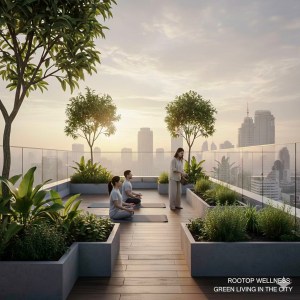
In a city where space is limited and life moves at an unrelenting pace, rooftop gardens offer something money can’t easily buy — peace of mind, connection, and balance. These green sanctuaries are transforming not just skylines but the way Filipinos experience urban living, blending wellness and sustainability into everyday life.
Stress Reduction & Mental Health
The mental health benefits of nature are well-documented — and in high-density areas like Makati or Quezon City, access to greenery can be life-changing.
Rooftop gardens serve as micro-sanctuaries, offering residents a calm retreat where stress melts away with the rustle of leaves or the scent of fresh blooms.
Research from the University of the Philippines Diliman Department of Environmental Science shows that being in nature can reduce stress hormones by up to 30%, improving focus and emotional well-being.
Imagine leaving your condo after work and finding a peaceful spot in nature above the city — a place to relax and unwind.
Social Spaces
In an era where vertical living can feel isolating, rooftop gardens create social ecosystems.
These elevated spaces often double as community hubs, featuring lounge areas, jogging paths, or shared gardens where residents can connect over casual conversations, yoga sessions, or weekend events.
By transforming unused rooftops into lively social spaces, developers are encouraging community interaction that goes beyond individual units.
A sense of shared ownership and camaraderie naturally develops — something increasingly valuable in the fast-paced rhythm of city life.
Urban Agriculture
Beyond leisure, rooftop gardens can also serve a functional and sustainable purpose — growing food.
Small-scale urban farms in residential and mixed-use buildings across Taguig, Pasig, and Makati are now cultivating herbs, leafy greens, and vegetables, helping residents practice urban agricultureand reduce dependence on market produce.
These edible gardens not only promote self-sufficiency but also encourage healthier eating habitsand reconnect people with the origins of their food.
For property developers, incorporating edible landscapes aligns perfectly with global trends in wellness real estate — merging lifestyle, sustainability, and practicality.
Aesthetic and Lifestyle Value
Rooftop gardens redefine what it means to live well in the city. They introduce beauty, calm, and connection to nature into spaces often dominated by glass and concrete.
From morning yoga to dinner under the stars, these green terraces enhance city living, providing experiences that were once only found at resorts or nature retreats.
Rooftop gardens are more than just a feature; they represent a new way of city living that emphasizes mindfulness, sustainability, and a balance between nature and buildings.
Case Studies: Philippine Developments Leading the Green Rooftop Movement

Arthalands’s Century Pacific Tower
The rise of rooftop gardens in the Philippines isn’t just a trend — it’s a measurable shift in how developers design, build, and sustain urban environments. From corporate towers to mixed-use communities, forward-thinking developers are proving that green rooftops are both beautiful and beneficial, merging architecture with ecology to redefine city living.
Below are some of the most influential examples of green rooftop innovation in Metro Manila — projects that demonstrate how sustainability can thrive in a dense, tropical metropolis.
🌿 High Street South, Bonifacio Global City – Ayala Land’s Green Urban Blueprint
Ayala Land’s High Street South Block in BGC stands as a model for mixed-use sustainability. Designed with lush open spaces, rooftop gardens, and pedestrian-friendly walkways, the development exemplifies how green design can enhance livability in high-density districts.
Its rooftop gardens serve as natural insulators, lowering indoor heat and energy consumption while offering shaded spaces for relaxation. The blend of green architecture and public access highlights Ayala Land’s dedication to fostering lively, walkable, and eco-friendly communities.
“Ayala Land’s projects in BGC have set a national benchmark for sustainable mixed-use development,” notes the Philippine Green Building Council, highlighting the developer’s role in promoting ESG-aligned design.
🏢 The Finance Centre, Bonifacio Global City – LEED Gold Certified Sustainability
The Finance Centre by Daiichi Properties is one of the most environmentally advanced commercial buildings in the Philippines, earning LEED Gold certification for its energy-efficient design and green roof system.
Its rooftop has native plants and reflective materials that help keep it cool and lower energy use. Rainwater is collected and used for irrigation, and efficient windows reduce energy loss.
The building’s approach to sustainability demonstrates how corporate real estate can combine operational efficiency with environmental responsibility, supporting global ESG goals and long-term asset value.
🌺 SM Aura Premier, Taguig – The Skypark as an Urban Oasis
Perched above SM Aura Premier is The Skypark, a sprawling rooftop garden and leisure deck that spans several hectares. This urban biodiversity haven features landscaped gardens, water features, and shaded seating areas that offer visitors a peaceful retreat amidst Taguig’s commercial bustle.
Beyond its visual appeal, The Skypark functions as a natural cooling system and carbon sink, improving air quality in one of Metro Manila’s busiest districts. It also serves as a venue for cultural events and wellness activities — a true multi-purpose space that brings sustainability to life.
This pioneering rooftop garden helped establish SM Prime Holdings as a leader in eco-conscious retail architecture in the country.
🌱 Arthaland Century Pacific Tower, BGC – The Future of Green Skyscrapers
As the first EDGE-certified office tower in the Philippines, Arthaland Century Pacific Towerintegrates cutting-edge sustainable systems — from its rooftop garden to its solar-ready design and water recycling system.
The rooftop serves several purposes: lowering heat, collecting rainwater, and offering a peaceful space for tenants. Arthaland’s comprehensive strategy has made it one of Asia’s top sustainable office buildings, combining energy efficiency, natural design, and long-term cost savings.
This development sets the tone for the next generation of high-performance green buildings in the country, demonstrating that sustainability can coexist with architectural sophistication.
These projects collectively signal a paradigm shift in Philippine real estate — from purely aesthetic design to functional sustainability that benefits people, businesses, and the planet. Each development illustrates how green rooftops are redefining urban luxury and environmental stewardship in Metro Manila.
Challenges and Considerations in Implementing Rooftop Gardens
While rooftop gardens promise a wealth of environmental and lifestyle benefits, their successful implementation requires careful planning, engineering expertise, and long-term commitment. Developers and building owners must navigate structural, financial, and regulatory challenges to ensure that these elevated green spaces are both safe and sustainable.
Below are the key considerations that determine the success of rooftop garden projects in the Philippine context.
🧱 1. Structural and Engineering Constraints
Before planting a single shrub, engineers must ensure that the building’s structural integrity can handle the added weight of soil, vegetation, and retained water. Green roofs typically add 60 to 150 kilograms per square meter depending on the design — which can be a significant load for older or lightweight structures.
To mitigate risks:
Structural assessments are essential to confirm load-bearing capacity.
Waterproofing membranes and root barriers must be properly installed to prevent leaks.
Lightweight soil substitutes and modular systems can be used to reduce pressure while maintaining plant health.
In the Philippines’ humid, high-rainfall environment, drainage and waterproofing are non-negotiable— a single flaw can lead to costly water damage.
💧 2. Maintenance and Irrigation in a Tropical Climate
Rooftop gardens thrive only with consistent maintenance. In tropical cities like Manila or Cebu, intense sunlight and heavy rains can stress plants and erode soil if not properly managed.
To sustain lush growth:
Use automated drip irrigation systems to conserve water and ensure even distribution.
Select native and drought-tolerant species such as pandan, bougainvillea, and vetiver grass for low-maintenance sustainability.
Schedule regular pruning, replanting, and inspection to maintain root health and prevent clogging of drainage layers.
Neglecting maintenance can quickly transform a vibrant garden into a costly liability — but smart irrigation and resilient plant choices make upkeep manageable and cost-efficient.
💰 3. Initial Costs vs. Long-Term Gains
One common misconception is that rooftop gardens are prohibitively expensive. While installation costs can indeed be 20–30% higher than traditional roofing, the long-term economic and environmental returns far outweigh the investment.
Consider these advantages:
Reduced cooling costs of up to 25% annually, due to natural insulation and shade.
Extended roof lifespan, as the garden layer protects against UV damage and temperature fluctuations.
Increased property value and stronger marketability, especially in ESG-conscious developments.
Developers are now realizing that the ROI for green roofs compounds over time — making it a strategic asset, not an expense.
🏗️ 4. Regulatory and Permitting Issues
Compliance and incentives are crucial aspects of rooftop garden development. The Philippine Green Building Code (2015) encourages the integration of green roofs and energy-efficient systems, particularly in large-scale or mixed-use projects.
However, challenges persist:
Permitting and inspection may vary between LGUs (Local Government Units).
Developers must ensure adherence to National Building Code structural and fire safety standards.
Opportunities exist for tax incentives and green building certifications (e.g., LEED, BERDE, EDGE) that reward eco-friendly design.
Engaging early with architects, environmental consultants, and regulatory offices helps ensure smooth approval and compliance.
Ultimately, rooftop gardens succeed when developers balance aesthetic ambition with technical discipline. By addressing engineering, maintenance, and regulatory challenges head-on, these spaces can deliver lasting value — both for property owners and for the cities they help green.
How Developers and Homeowners Can Integrate Green Roofs
Rooftop gardens are no longer reserved for luxury projects or avant-garde architects — they’re becoming a mainstream feature in Philippine real estate. Whether you’re a large-scale developer, a condominium association, or an individual homeowner, integrating green roofs is both achievable and rewarding when approached strategically. Below are tailored pathways for each stakeholder to help make sustainable urban living a reality.
Ready to Build Your Own Green Roof?
Tap into the future of eco-urban living in the Philippines.
Download your FREE Rooftop Garden Planning Guide today and start designing a space that’s both sustainable and profitable.
🏗️ For Developers: Design Green from the Ground Up
The most successful rooftop gardens start early — during the conceptual and architectural design phase. Integrating green infrastructure at the planning stage ensures that the building’s structural, drainage, and insulation systems can support vegetation efficiently and safely.
Best practices for developers include:
Partnering with sustainability consultants and landscape architects to align designs with LEED, BERDE, or EDGE standards.
Using building information modeling (BIM) tools to plan waterproofing, irrigation, and load distribution.
Allocating rooftop zones for mixed uses — such as urban farms, leisure decks, and solar panels — to maximize both environmental and commercial value.
Marketing the project as a “green lifestyle investment,” appealing to health-conscious and ESG-driven buyers.
When sustainability is embedded in the blueprint, the rooftop becomes more than a roof — it becomes a brand statement.
🏢 For Condominium Associations: Transform Shared Rooftops into Community Assets
Condo associations hold the key to unlocking underutilized rooftops. By transforming them into communal gardens or relaxation decks, residents gain access to nature and meaningful shared spaces that enhance well-being and property value.
Implementation steps for associations:
Conduct a feasibility study to confirm structural integrity and maintenance costs.
Involve residents early — organize green committees or polls to encourage participation and ownership.
Partner with local landscape firms or NGOs for design and maintenance support.
Incorporate smart watering systems and low-maintenance tropical plants to minimize upkeep.
In Metro Manila, several condominiums in Ortigas and Makati have successfully converted rooftops into urban pocket parks — spaces that now host morning yoga, composting programs, and weekend markets. These initiatives prove that sustainability and community can thrive side by side.
🏡 For Homeowners: Small-Scale Green Roofs and Terrace Gardens
Even without a high-rise structure, homeowners can enjoy the benefits of greenery through small-scale rooftop or balcony gardens. These setups improve cooling efficiency, promote self-sufficiency, and add natural charm to the home.
Practical steps include:
Start with modular planters or raised beds using lightweight soil and native plants.
Add vertical gardens or climbing vines to maximize limited space.
Incorporate rainwater collection systems for sustainable irrigation.
Choose low-root, shallow-plant species like lemongrass, mint, or ornamental ferns to protect roof membranes.
In a tropical climate like the Philippines, these personal gardens can thrive year-round and contribute to better air quality and temperature regulation even on a micro scale.
💰 Financing Options: Turning Green Vision into Reality
The good news? Going green is no longer just an expense — it’s an investment supported by financial incentives and regulatory programs.
Available options include:
ESG-linked financing – Banks like BPI and RCBC offer sustainability loans with lower interest rates for green-certified projects.
Certification benefits – LEED, BERDE, and EDGE certifications boost property value, attract corporate tenants, and enhance market reputation.
Government incentives – The Green Building Code of the Philippines (2015) and various local government initiatives provide tax breaks and fast-tracked permitting for eco-friendly developments.
Public-private partnerships – Developers can collaborate with city governments for grants under urban greening and climate resilience programs.
For homeowners, microgreen loans or community-based financing can make small retrofits more accessible. In all cases, sustainability isn’t just ethically sound — it’s financially smart.
By integrating green roofs across all property scales, Filipino developers and homeowners can reshape the urban skyline — one garden at a time. Beyond the aesthetics, it’s an investment in livability, wellness, and climate resilience.
The Future of Green Real Estate in the Philippines
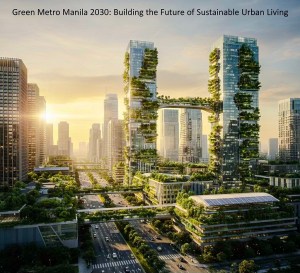
The next decade will redefine what it means to live and build sustainably in the Philippines. With intensifying climate challenges, rapid urbanization, and a growing middle class that values wellness and sustainability, green real estate is no longer a niche — it’s becoming the new urban standard.
Government Push for Sustainability
The Philippine government, through agencies like the Department of Human Settlements and Urban Development (DHSUD) and the Department of Environment and Natural Resources (DENR), continues to tighten its focus on sustainability. Recent initiatives under the National Green Building Code and DENR’s Urban Greening Program aim to make eco-conscious design mandatory in both private and public developments. These policies encourage the use of rooftop gardens, energy-efficient systems, and eco-friendly materials, ensuring that future urban landscapes are not just livable but climate-resilient.
Rise of ESG Investing
Globally and locally, Environmental, Social, and Governance (ESG) principles are influencing where capital flows. Philippine developers are increasingly being evaluated not just on profit but on their environmental footprint. Major property firms — such as Ayala Land, SM Prime, and Arthaland — are integrating ESG strategies into their developments to attract international investors. Green-certified properties, particularly those with sustainable rooftop features, are proving to have higher tenant retention, stronger brand equity, and better long-term valuation.
Technology Integration
The future of green real estate is as digital as it is sustainable. Smart irrigation systems, solar-integrated green roofs, and IoT-based environmental monitoring are reshaping how buildings manage energy and water. Imagine a rooftop that not only cools your home but also powers it — adjusting watering schedules based on weather forecasts or storing rainwater for reuse. These innovations are already being piloted in modern developments across Bonifacio Global City, Cebu IT Park, and Makati’s new vertical communities.
Vision for 2030: A Climate-Resilient Urban Future
By 2030, Metro Manila’s skyline could look dramatically different — a network of living rooftops, solar panels, and vertical gardens working together to mitigate heat, reduce pollution, and enhance urban biodiversity. This vision aligns with the Philippines’ Nationally Determined Contributions (NDCs) under the Paris Agreement and the UN Sustainable Development Goals (SDGs) for sustainable cities and communities. The expansion of green roofs represents a key milestone toward building cities that thrive in harmony with nature — where sustainability, technology, and livability coexist seamlessly.
Conclusion: Building Upward, Living Greener
In the ever-evolving landscape of Philippine real estate, rooftop gardens stand as symbols of balance — where innovation meets sustainability, and progress harmonizes with nature. What was once a luxury feature is now emerging as a necessity for urban resilience, wellness, and long-term economic growth.
By transforming underutilized rooftops into vibrant ecosystems, we reduce urban heat, capture stormwater, purify the air, and create spaces that nurture both people and the planet. For developers, it’s a forward-looking investment that boosts property value, brand reputation, and ESG performance. For residents, it’s a lifestyle shift — a return to nature in the middle of the city’s concrete jungle.
As the Philippines continues its march toward climate-resilient and people-centered cities, every green roof brings us closer to that vision. Whether you’re a developer envisioning your next sustainable project or a city resident seeking a greener way to live, rooftop gardens prove that progress and nature can coexist — one rooftop at a time.
➡️ Looking to invest in sustainable developments? Explore our curated list of eco-friendly condominiums in Metro Manila and beyond, and discover how green design can redefine your lifestyle and investment strategy.





Leave a comment