
A solid WFH lighting setup isn’t optional anymore — it determines how well you focus, how comfortable you feel, and how efficiently you work inside a condo.
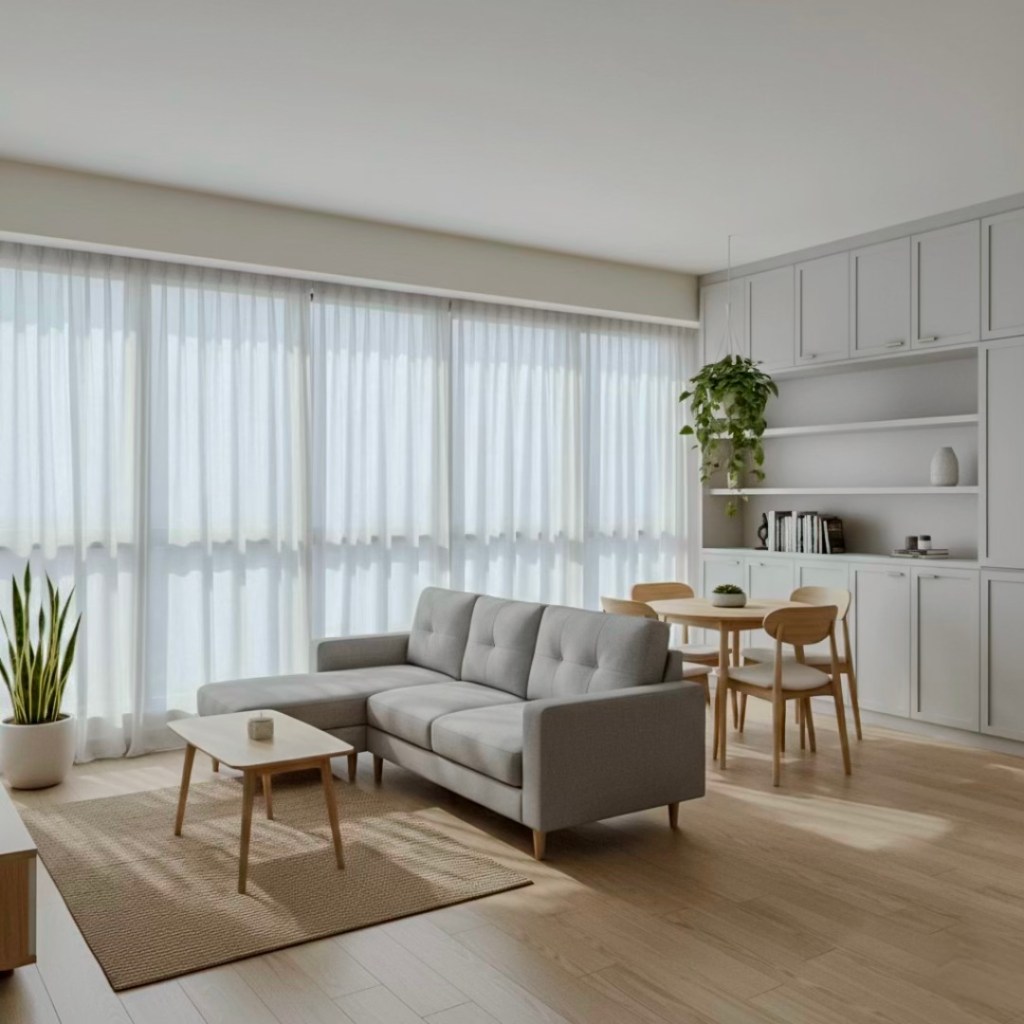
Metro Manila condos have a familiar mood when lighting and airflow fall short — a heavy stillness, a hint of warmth trapped in the corners, and that dim haze that makes even the nicest unit feel smaller than it is. Anyone who has lived in a studio along EDSA or a one-bedroom in BGC knows the feeling.
The city outside is blazing with sunlight and movement, but inside the unit, the air barely circulates and the light fades before it reaches the far wall. It’s not a design flaw. It’s a missed opportunity.
A few smart adjustments can flip that entire experience. Light becomes cleaner and more purposeful. Air moves with intention. Rooms feel larger, calmer, and far more livable. Better yet, these improvements aren’t just lifestyle perks — they translate directly into stronger rental demand, higher resale appeal, and a property that stands out in a saturated market.
When you elevate a condo’s lighting and ventilation, you upgrade more than a space. You upgrade its value, its comfort, and the way people feel the moment they walk through the door.
Why Lighting & Ventilation Matter in Philippine Condos
The Philippine climate doesn’t play nice with poorly designed condo interiors. Heat rises, humidity clings to every surface, and outdoor pollution slips into the smallest gaps.
In a high-rise unit, these challenges become even more noticeable. When airflow is weak, warm air settles and moisture lingers, turning a compact space into a pressure cooker. Air that fails to circulate becomes stale fast — and in cities like Manila, where humidity regularly pushes past 80%, that stagnation triggers a chain reaction of discomfort.
Because humidity levels remain high year-round, humidity control becomes essential for preventing moisture buildup and maintaining indoor comfort.
Poor ventilation doesn’t just make a room feel stuffy. It quietly feeds mold. Damp corners behind furniture, moisture trapped in bathrooms without exhaust systems, and condensation forming on windows all work together to create the perfect breeding ground.
Mold spreads quickly in condo environments because interior walls, closets, and ceiling corners trap humidity with nowhere to escape. And once mold appears, tenants and buyers notice. This is why condo mold prevention should be a priority for every owner, especially in high-humidity locations across Metro Manila.
Lighting carries its own influence. It shapes your mood the moment you enter the room. Soft, even illumination calms the mind; harsh or insufficient lighting strains it. For condo owners who work from home — a major portion of the urban population — dim interiors drain productivity and make small spaces feel psychologically heavier.
Conversely, a well-lit unit looks bigger, photographs beautifully, and instantly feels more welcoming during viewings. Good lighting is a silent negotiator during property tours. It boosts rental desirability, strengthens buyer interest, and often explains why two units with identical layouts perform very differently in the market.
These challenges set the stage for one of the most powerful transformations any condo owner can make — improving natural light.
Natural Lighting Strategies
Understanding Window Orientation in the Philippines (East vs West vs North)
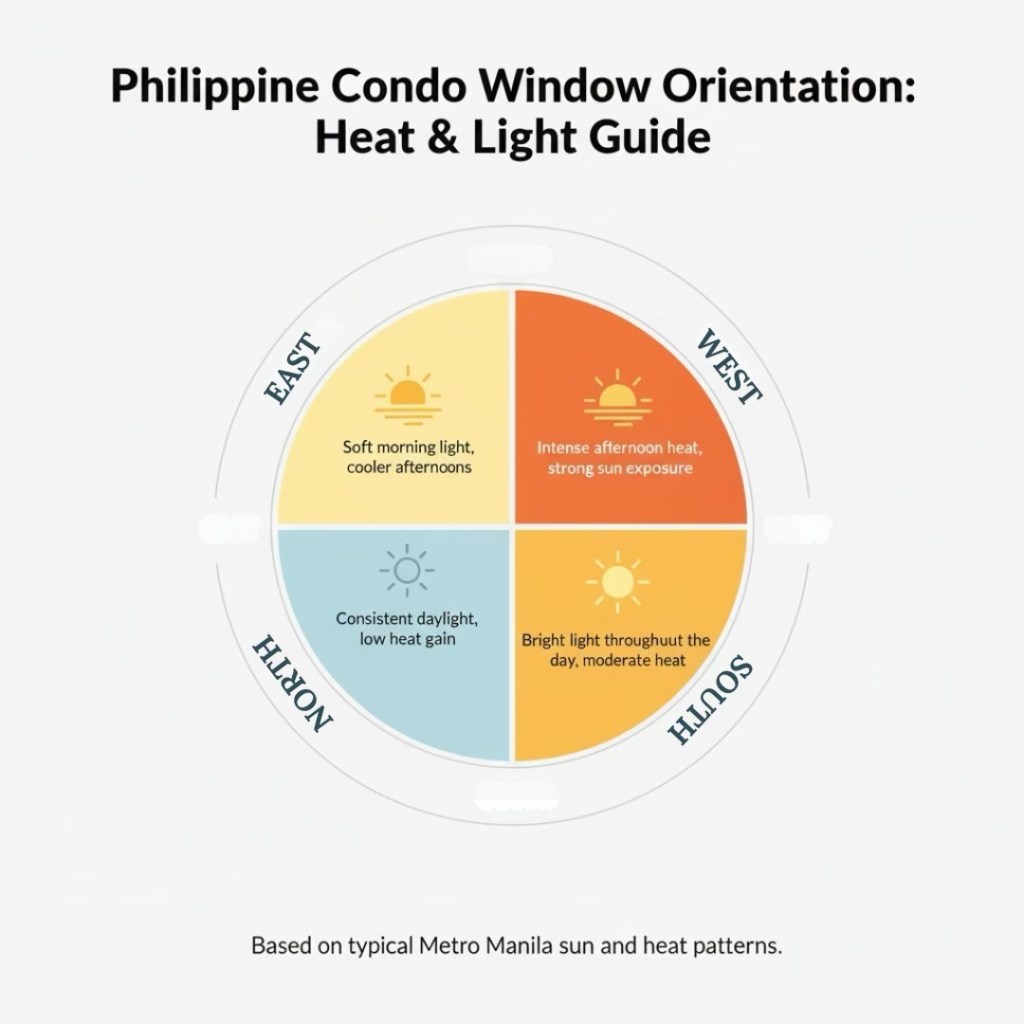
Light behaves differently depending on where your windows face — and in the Philippines, that difference is dramatic.
- East-facing units capture gentle morning sun and stay cooler in the afternoon. These are prized by buyers who value natural brightness without the late-day heat spikes.
- West-facing units glow beautifully at sunset but absorb intense afternoon heat. They demand stronger heat-control strategies, from UV films to lighter interior palettes.
- North-facing units offer soft, consistent daylight throughout the day — perfect for those who prefer balanced illumination for work or photography.
- Understanding orientation lets you tailor your interior to maximize brightness while managing heat, comfort, and electricity use.
Maximizing Daylight in Studio and One-Bedroom Condos
Small units depend heavily on every beam of sunlight they can harness. Keep window areas clear and unobstructed. Use open-leg furniture, glass tables, and low-profile pieces to prevent shadows from swallowing the limited space. In studio units, position workspaces or dining areas closer to windows to take advantage of brighter zones. The goal is simple: treat daylight as a resource and guide it deeper into the room.
Using Light-Reflecting Colors and Materials
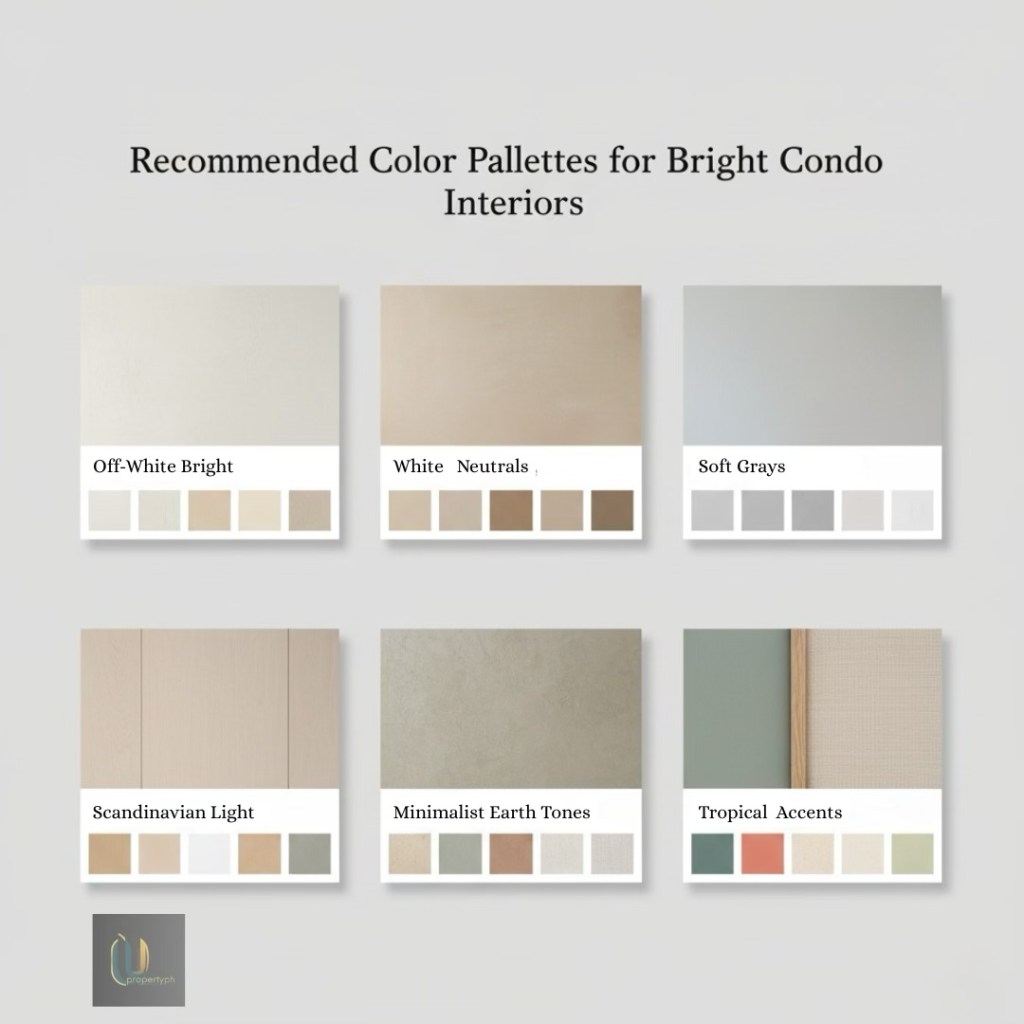
Colors are silent amplifiers of brightness.
- Off-whites, warm neutrals, soft greys, and muted beiges bounce light without washing out the room.
- Semi-gloss or satin paint finishes add subtle reflectivity.
- Light-toned wood, polished tiles, and glass surfaces make the entire unit feel more open and airy.
These materials don’t just brighten; they visually stretch the space, an advantage every condo owner can appreciate.
Privacy vs Brightness: How to Maintain Both
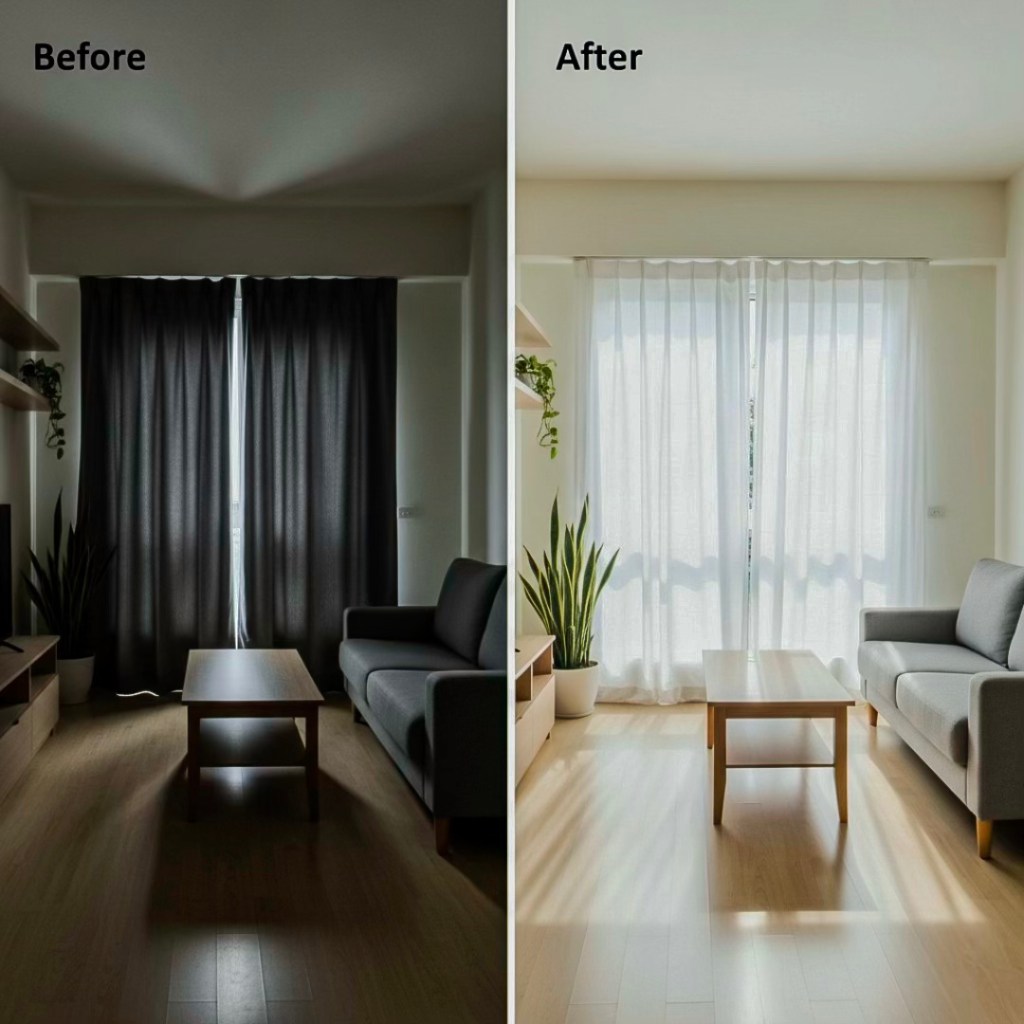
Many condo residents default to blackout curtains because city living feels too exposed. Unfortunately, that turns a bright unit into a cave. Instead:
- Use sheer curtains during the day to diffuse light while maintaining privacy.
- Install dual-layer blinds for flexible control.
- Consider frosted window films for bathrooms or lower sections of windows facing adjacent towers.
Smart Furniture Placement to Avoid Blocking Light
Sunlight behaves like a guest — it needs a clear path to move around. Avoid pushing tall cabinets, dark shelves, or bulky sofas near windows. Use glass or acrylic furniture to keep the visual weight light. If you have a one-bedroom with a sliding partition, choose translucent or frosted partitions instead of solid ones to allow light to spill through.
These solutions protect privacy without suffocating the daylight your unit desperately needs.
Artificial Lighting for Modern Condo Living
The Three-Layer Lighting System: Ambient, Task, Accent
A well-lit condo doesn’t rely on one overpowering ceiling bulb. It’s a deliberate combination of three light layers that shape the mood, function, and aesthetic of every corner.
- Ambient Lighting sets the overall tone. Think ceiling-mounted LEDs or recessed panels that distribute light evenly. This creates the foundation of comfort.
- Task Lighting sharpens focus where you need it: kitchen counters, study desks, reading nooks, vanity mirrors. In today’s WFH-heavy lifestyle, task lighting determines whether your eyes last through a Zoom marathon.
- Accent Lighting elevates personality. Wall sconces, LED strips, spotlights on shelves — these add dimension and depth, making even compact units look intentionally designed.
Perfecting these three layers transforms a condo from basic to polished, without touching the layout.
🎯 Before buying any new fixture, test how the current light behaves during late afternoon — it’s the time of day when Philippine condos often reveal their dimmest corners.
Lighting Type vs Best Use Case for Condos
| Lighting Type | Best Use Case | Why It Works in Philippine Condos |
|---|---|---|
| Ambient Lighting (ceiling LEDs, recessed lights) | Whole-room illumination, living areas, general lighting | Delivers even brightness in compact units and prevents dark corners that make spaces feel smaller. |
| Task Lighting (desk lamps, under-cabinet lights, vanity lights) | Work-from-home setups, kitchen prep areas, reading corners, grooming | Provides focused, eye-friendly light essential for productivity and detail work, especially in tight condo layouts. |
| Accent Lighting (wall sconces, LED strips, spotlights) | Highlighting shelves, artwork, architectural features | Adds depth and visual interest, making small units feel designed and curated, not plain or flat. |
| Natural Lighting Enhancers (sheer curtains, reflective surfaces, light palettes) | Living rooms, dining areas, bedrooms | Maximizes daylight and reduces reliance on artificial lighting, lowering energy costs in the PH climate. |
| Decorative Lighting (pendant lamps, statement fixtures) | Dining nooks, entryways, corners needing personality | Creates focal points without overwhelming compact condo spaces when chosen in low-profile designs. |
| Smart Lighting (app-controlled bulbs, automated dimmers) | Entire unit; ideal for renters, WFH setups, nightly routines | Automates brightness and ambiance shifts, saving energy and improving comfort in high-electricity environments. |
| Dimmable Lighting (dimmer switches, tunable bulbs) | Living rooms, bedrooms, entertainment areas | Allows day-to-night transitions and mood control without adding more fixtures; great for studios that serve multiple functions. |
LED & Smart Bulb Adoption in PH Condos (Cost Efficiency)
Electricity in the Philippines isn’t cheap, and condo owners feel that pain monthly. LEDs slice energy consumption by up to 80% compared to old incandescent bulbs. Smart bulbs take it further by automating routines: dimming at night, brightening in the morning, syncing with your work schedule, or turning off automatically when you leave.
Beyond cost-savings, smart lighting adds a modern touch that renters and buyers value — a small upgrade that reads as premium.
Recommended Fixture Types for Condos with Low Ceilings
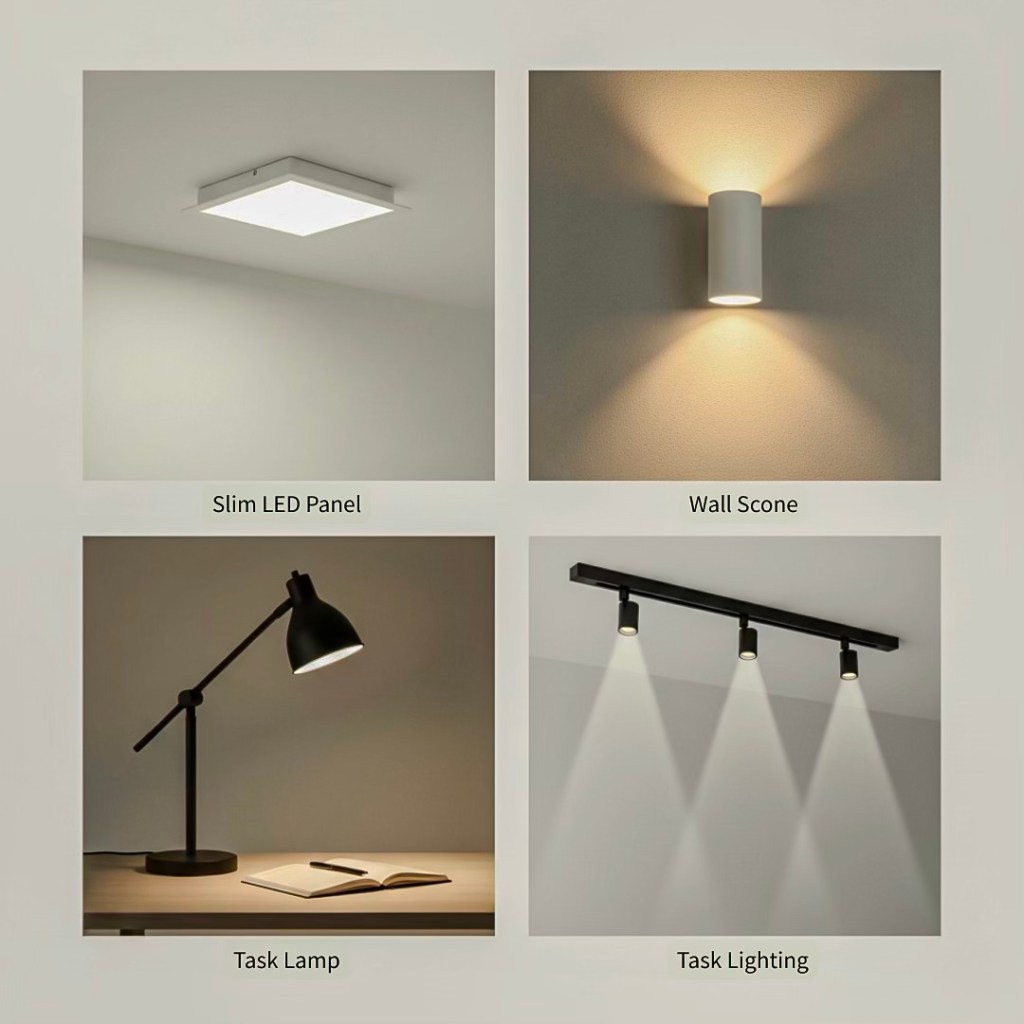
Most Philippine condos have ceiling heights around 2.4 meters, which means anything bulky becomes visual clutter. Instead, use fixtures that stay sleek:
- Flush-mount LED panels for flat, even illumination
- Track lighting for flexible zone-based lighting
- Slim-profile recessed lights to keep ceilings clean
- Wall-mounted sconces to boost brightness without occupying ceiling space
- Under-cabinet strips for kitchens with limited overhead clearance
These fixtures brighten the room without shrinking it.
Lighting for Work-From-Home and Small Spaces
The explosion of remote work turned lighting into a performance tool. For WFH areas inside condos:
- Use cool white (4000K–5000K) task lights to maintain alertness.
- Place adjustable desk lamps near your monitor to reduce glare.
- Install wall-mounted task lights if desk space is tight.
- For studios, zone your work area using a dedicated task lamp so it mentally separates “work mode” from the rest of the room.
Good lighting is now a productivity asset, not décor.
Dimmers, Warm vs Cool Light Temperature
Light temperature dictates mood.
- Warm white (2700K–3000K) softens bedrooms and living rooms, making them restful.
- Cool white (4000K–5000K) energizes kitchens, bathrooms, and work zones.
- Dimmers let you shift ambiance instantly — from productive mornings to relaxing evenings. They also help manage energy consumption when full brightness isn’t needed.
When used strategically, light temperature becomes a mood-setting tool that reshapes the entire living experience.
Artificial lighting enhances function, but airflow completes the living experience.
Ventilation & Air Quality Solutions
Airflow is the unsung hero of condo comfort. When it works, you barely notice it. When it fails, you feel it instantly.
Natural Ventilation: How to Enhance Airflow (Cross-Vent Strategies)
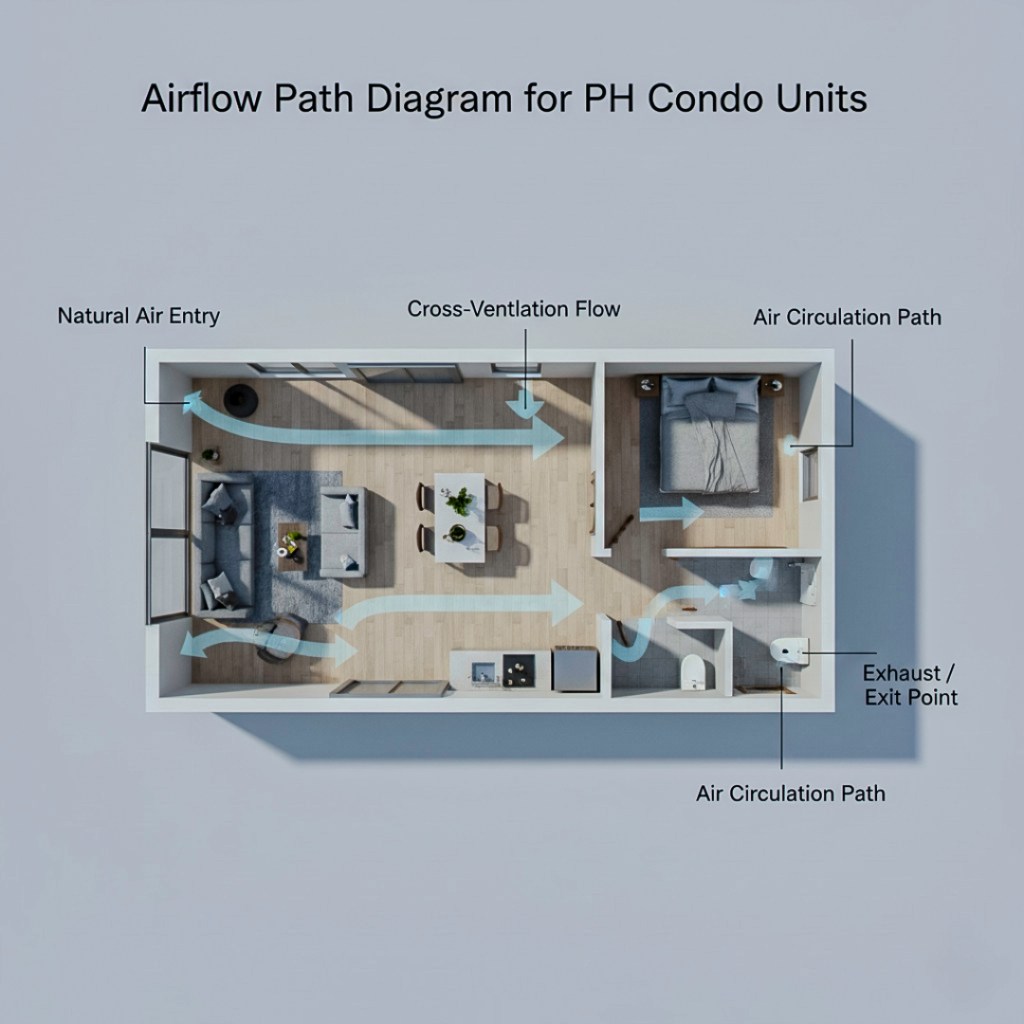
Airflow inside Philippine condos can feel limited, but it doesn’t have to stay that way. Cross-ventilation is the gold standard — fresh air enters from one side of the unit and exits through another, pushing stale air out as it moves.
Even if your condo isn’t designed with windows on opposite ends, you can guide airflow using simple techniques:
- Keep interior doors partially open to allow air to pass through instead of trapping it in sections.
- Position oscillating fans near windows to “pull” fresh air inward or “push” trapped air outward.
- Use gaps under doors or vent panels to help circulate air between rooms.
- Open windows during early mornings and late evenings when outdoor air is cooler and cleaner.
- The goal is steady movement — airflow that’s perceptible without being overpowering.
Mechanical Ventilation: Exhaust Fans, Kitchen Improvements, Bathroom Solutions
Where natural ventilation falls short, mechanical solutions take over.
- Kitchen ventilation: If your building allows ducted systems, install them — nothing clears heat and smoke faster. If not, use high-performance recirculating hoods with charcoal filters to trap grease and odors.
- Bathroom exhaust: Install ceiling or wall-mounted exhaust fans with backdraft dampers. These prevent humid air from gathering, which is essential in preventing mold over time.
- Utility or laundry areas: Compact exhaust fans help push out moisture from dryers or washing machines.
Mechanical ventilation adds consistency, ensuring airflow even on days when windows can’t be opened due to heat, rain, or pollution alerts.
Air Quality Boosters: Purifiers, Plants, Dehumidifiers
Urban air isn’t always fresh — especially in cities like Manila, Mandaluyong, and Pasay, where pollution levels spike during rush hours. Improve indoor quality with:
- HEPA air purifiers to remove fine particles, allergens, and odors.
- Dehumidifiers play a major role in humidity control and is one of the most effective condo mold prevention strategies
- Indoor plants like snake plant, pothos, and peace lily, which thrive in low-light condos and improve air freshness.
Think of these as your air ecosystem. Each tool handles a specific aspect of indoor comfort.
Preventing Mold in Humid Philippine Cities
Mold thrives in silence — and it spreads fast. Units near the coast (Pasay, Manila Bay) or in high-humidity zones (QC, Ortigas, Makati CBD) are especially vulnerable. Most condo mold preventionissues stem from poor airflow and trapped humidity — both of which are fixable with simple adjustments:
- Running dehumidifiers daily during the wet season.
- Keeping windows dry and wiping condensation promptly.
- Leaving closet doors open occasionally to reduce trapped humidity.
- Using moisture absorbers in cabinets, sink bases, and hard-to-reach corners.
- Avoiding furniture pressed tightly against exterior walls where condensation builds.
Mold doesn’t just damage interiors; it drives away tenants and buyers immediately.
Choosing Air-Circulating Fans for Small Units
Fans aren’t old-fashioned — they’re incredibly effective when chosen correctly. In condos, prioritize:
- Air circulators (e.g., Vornado-style units) that push air in a spiral pattern to fill the room.
- Tower fans that save space and offer strong directional airflow.
- Ceiling fans with low-profile blades for units with low ceilings.
- Desk or clip-on fans for WFH setups where additional airflow helps regulate comfort.
Proper fan placement helps reduce AC usage and keeps indoor air feeling fresh instead of stagnant.
Recommended Appliances for Better Airflow & Air Quality
| Appliance Type | Recommended Use Case | Ideal for Condo Size | Approx. PH Price Range |
|---|---|---|---|
| HEPA Air Purifier | Removes dust, allergens, odors; improves indoor air quality | Studios to 2BR units | ₱3,000 – ₱15,000 |
| Compact Dehumidifier | Reduces humidity; prevents mold and moisture buildup | High-humidity areas, bathrooms, bedrooms | ₱2,000 – ₱8,000 |
| Large-Capacity Dehumidifier | Strong humidity control for enclosed spaces or units near coastal areas | 1BR–2BR units | ₱8,000 – ₱18,000+ |
| Bathroom Exhaust Fan | Removes moisture after showers; prevents mold | All bathroom types | ₱1,000 – ₱4,000 |
| Kitchen Range Hood (Recirculating) | Reduces cooking smoke, grease, and odors; ideal when ducting isn’t allowed | Studios and 1BR units | ₱3,500 – ₱12,000 |
| Kitchen Range Hood (Ducted) | Strongest smoke/odor removal; requires building approval | 1BR–2BR units | ₱8,000 – ₱25,000+ |
| Air Circulator Fan | Moves air in spiral pattern for better whole-room airflow | All unit sizes | ₱2,000 – ₱7,000 |
| Tower Fan | Slim, quiet cooling; ideal for tight spaces | Studios, 1BR units | ₱1,500 – ₱6,000 |
| Low-Profile Ceiling Fan | Improves airflow without adding visual bulk | Units with low ceilings (~2.4m) | ₱3,000 – ₱10,000 |
| Clip-On or Desk Fan | Targeted airflow for WFH setups | Work desks, bedside, kitchen | ₱300 – ₱1,200 |
Improved airflow and humidity control not only boost comfort but also reduce long-term maintenance issues that often affect resale value.
Combining Lighting & Ventilation for Better Comfort and Higher Property Value
Impact on Tenant Satisfaction and Faster Lease-Up
If you’re considering renting out your unit, upgrade lighting first — it photographs better and instantly outshines comparable listings online.
In most Metro Manila condo inspections we do during listings and client walkthroughs, the difference is clear: bright, well-ventilated units attract stronger interest within the first few minutes. Tenants stay longer, renew contracts more willingly, and recommend the unit to others. For landlords, this means fewer vacant months, stronger demand, and higher-quality renters who treat the unit with respect.
How Better Airflow Reduces Energy Costs
Strategic airflow is more than comfort; it’s an energy-saver. When air circulates properly, your air-conditioning system no longer needs to overcompensate for trapped heat. Improved daylighting reduces the hours spent relying on overhead lights.
Together, they create an efficient living environment where tenants can enjoy lower Meralco bills — a major selling point for anyone renting or buying in the metropolis. Energy-efficient units don’t just feel modern; they command higher interest because they reduce ongoing living expenses.
Case Study: A Metro Manila Studio Before/After Upgrade
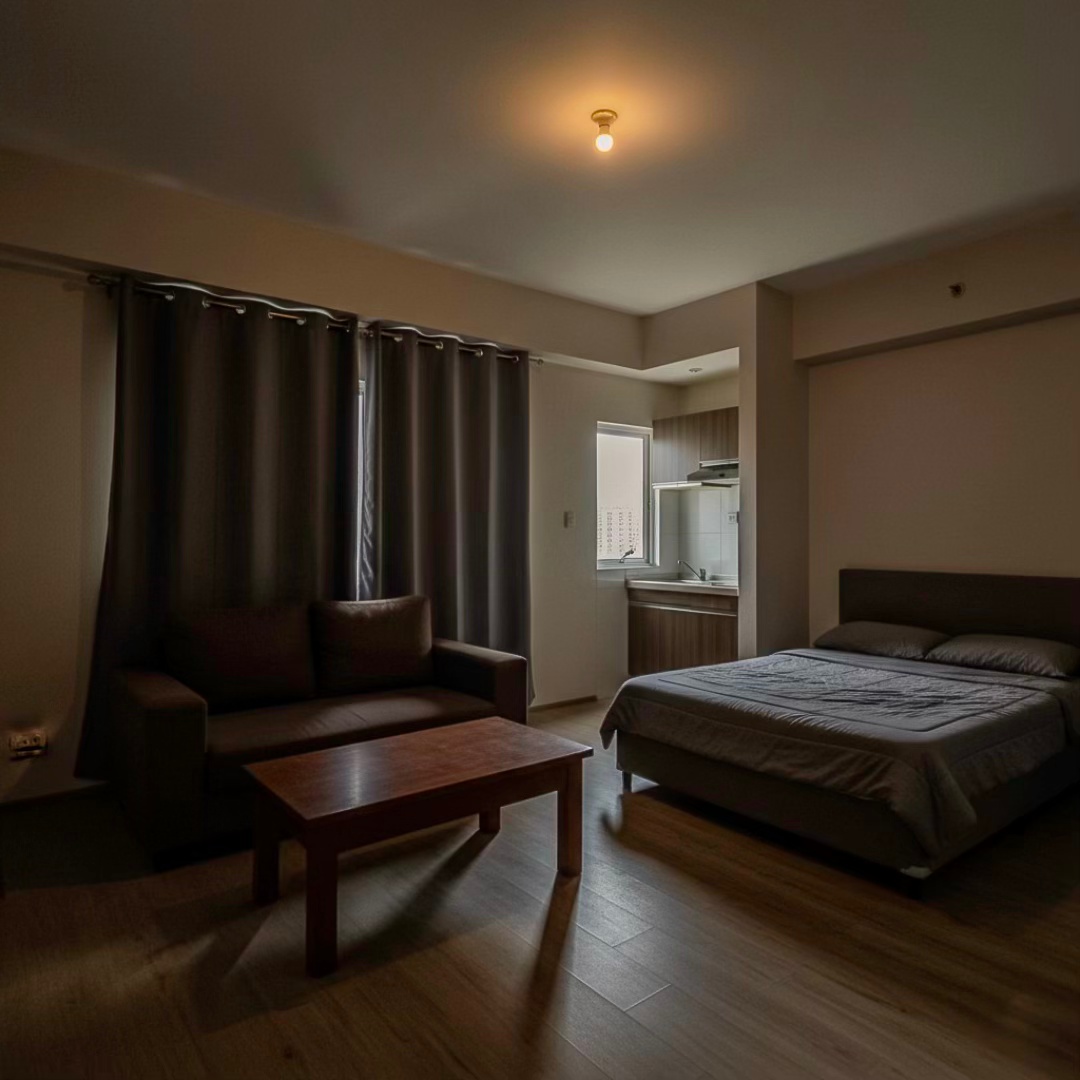
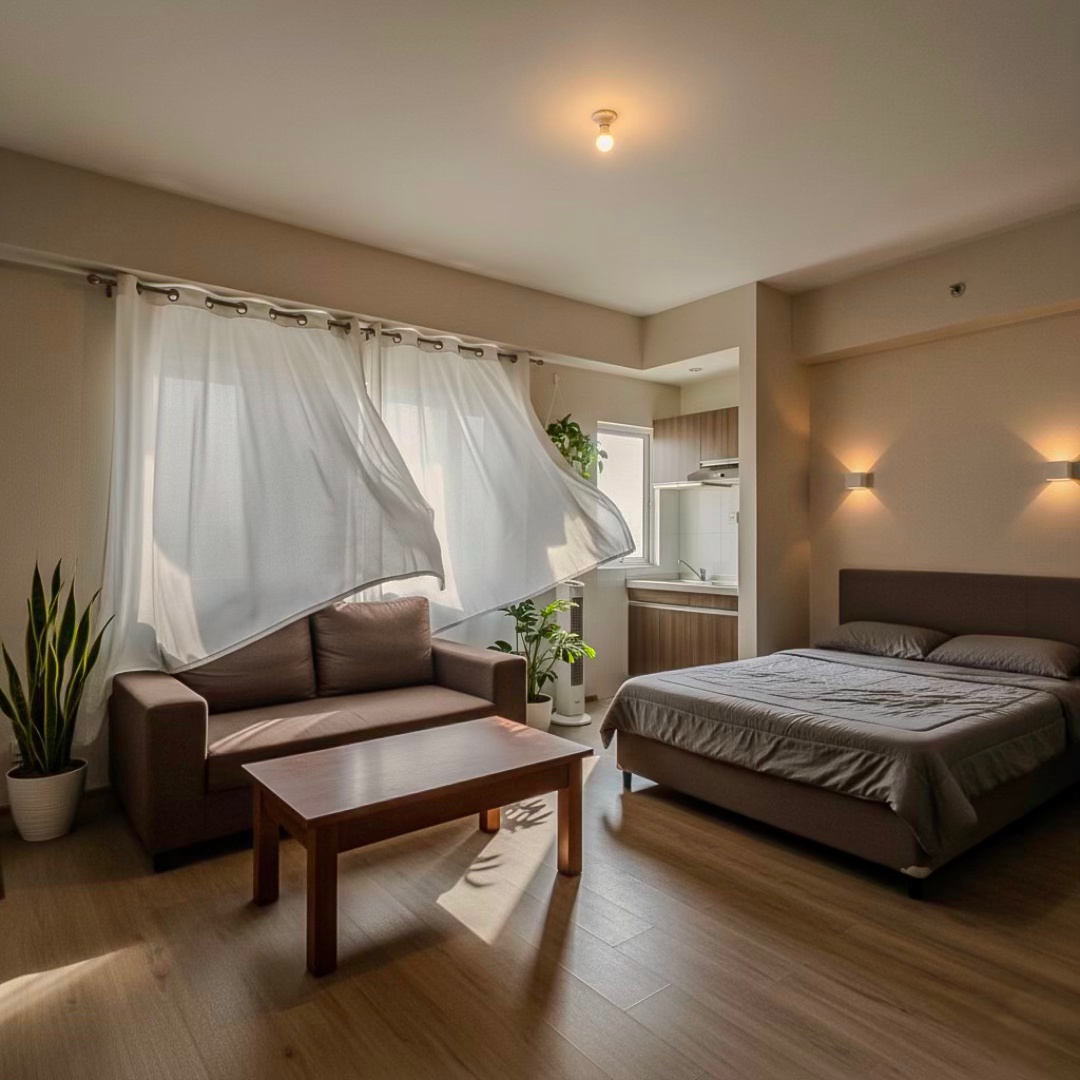
A studio unit in Mandaluyong struggled to attract tenants. Dim yellow light, weak airflow, and a single small window made the room feel cramped. After a targeted upgrade:
- Layered lighting replaced the lone bulb.
- A compact air circulator and dehumidifier improved airflow and comfort.
- Light-toned paint and repositioned furniture allowed daylight to travel deeper into the room.
The transformation was immediate. The unit photographed better, felt noticeably cooler, and created the illusion of expanded space. Within two weeks of relisting, tenant inquiries doubled and the owner secured a higher rental rate than before.
ROI Insights: Cost of Upgrades vs Rental/Resale Improvements
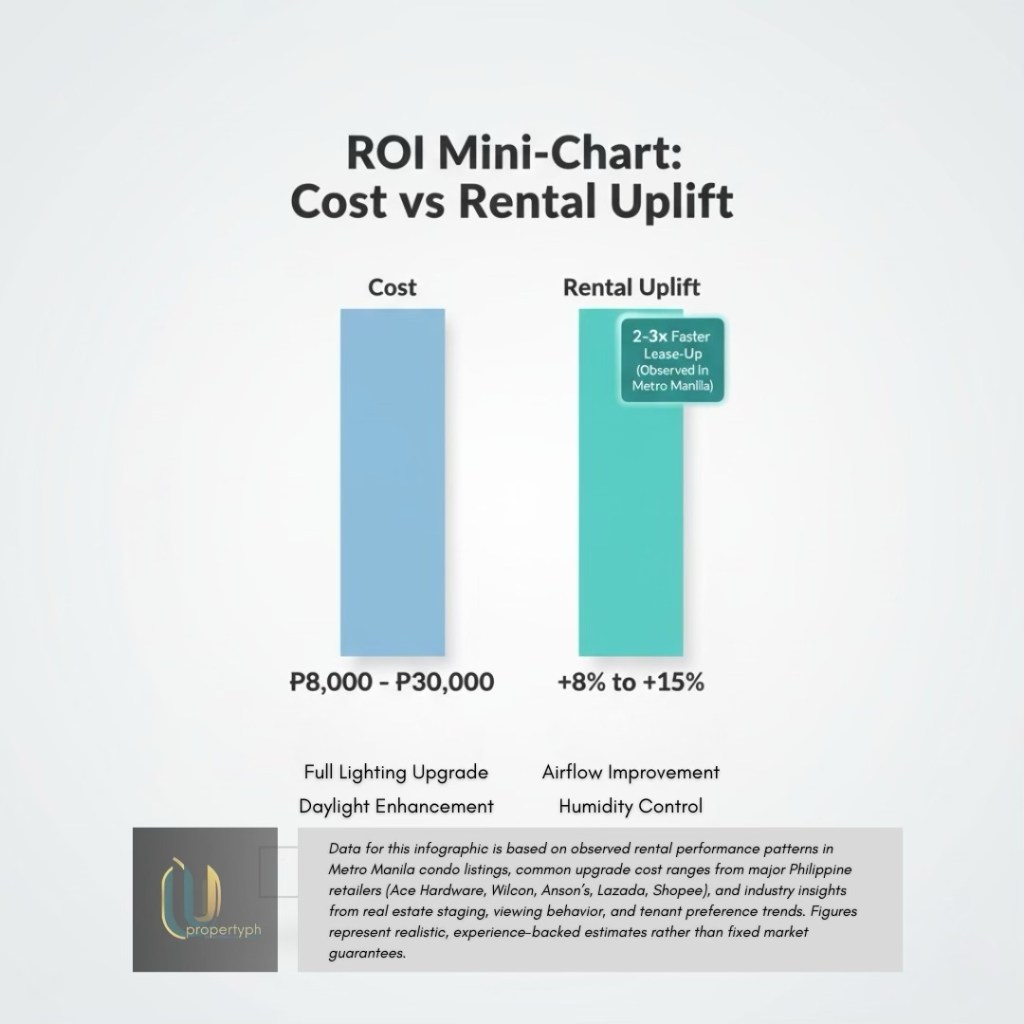
Lighting and ventilation improvements are some of the highest-return upgrades for Philippine condos because they enhance function, comfort, and visual appeal simultaneously. Typical results:
- 8–15% increase in rental value after lighting and airflow enhancement
- 2–3× faster lease-up time for units with brighter interiors
- Higher resale appeal, especially when compared to similar units in the same building
- Minimal upfront cost, with most upgrades focused on bulbs, fixtures, fans, and paint rather than structural work
In a competitive condo market, these improvements signal care, modernity, and livability — the trifecta that drives stronger offers.
🔒 Free Download: Condo Lighting & Ventilation Audit Sheet (PDF)
Unlock the exact checklist I use when preparing units for staging, photography, and high-conversion listing presentations. This clean, easy-to-print guide walks you through everything that makes a condo look brighter, healthier, and more valuable before you show it to a buyer or tenant.
✔️ What You’ll Get Inside:
- Natural lighting and daylight distribution checks
- Artificial lighting breakdown (ambient, task, accent)
- Airflow and ventilation assessment guide
- Humidity control + mold prevention checklist
- Furniture and WFH layout optimization cues
- Pre-listing photo readiness steps
- Notes section for your unit-specific fixes
It’s the same checklist used to help owners secure stronger offers, faster lease-ups, and cleaner listing photos that outperform comparable units.
📨 Get Your Free Copy
Enter your email below and I’ll send you the downloadable PDF instantly — plus a few expert tips for getting your condo listing market-ready.
Practical Tips for Philippine Condo Owners
Budget-Friendly Upgrades
Take a quick inventory: which corner of your unit feels the heaviest?
That’s usually the first spot where lighting or airflow needs attention. Small, strategic upgrades create outsized impact:
- Swap old bulbs for LEDs to instantly brighten your space and cut electricity costs.
- Add one or two accent lamps to eliminate dark corners and make small units feel warmer and more intentional.
- Install under-cabinet lighting in the kitchen for better visibility and a more premium look.
- Apply heat-control or UV-filter window films to reduce glare and keep west-facing units cooler.
- Add a compact air circulator or tower fan to boost airflow without hogging floor space.
These low-cost fixes immediately elevate comfort and aesthetics without touching the structure of your unit.
Maintenance Checklist: Windows, Filters, Vents, Fixtures
Strong lighting and ventilation demand consistent upkeep. A few minutes each month protects your condo from dullness, mold, and unnecessary energy consumption:
- Windows: Clean glass panels monthly to maximize light penetration; remove dust from rails and tracks.
- Air-conditioning filters: Rinse every 3–4 weeks to maintain cold airflow and reduce Meralco consumption.
- Exhaust fans: Clean blades and check backdraft dampers quarterly.
- Light fixtures: Wipe lampshades and LED panels every few months to prevent dust buildup that dims brightness.
- Dehumidifiers: Empty water tanks regularly and replace cartridges as needed.
- A well-maintained unit feels fresher, breathes better, and photographs beautifully.
Seasonal Tips (Wet Season vs Dry Season)
The Philippine climate shifts aggressively, and your condo must adapt.
- Wet Season (June–November):
- Run dehumidifiers more frequently as part of your humidity control routine to keep humidity below 60%.
- Keep bathroom exhaust fans on longer after showers to avoid moisture buildup.
- Inspect windows for leaks or condensation.
- Dry Season (December–May):
- Maximize natural ventilation during early mornings and evenings when outdoor air is cooler.
- Use blinds and sheer curtains to manage glare.
- Stabilize temperatures with fans to avoid overusing AC units.
Seasonal awareness keeps your interior healthy and comfortable year-round.
What to Audit Before Selling or Listing
Bright, airy units stand out immediately in online listings — and buyers often shortlist based solely on photos. Before putting your property on the market, check:
- Brightness levels in each room (avoid dark corners in photos).
- Window cleanliness to ensure maximum daylight.
- Functional lighting, especially in kitchens and bathrooms.
- Airflow quality, making sure no room feels stuffy.
- Humidity hotspots, which leave subtle stains and turn off buyers fast.
- Furniture placement, creating unobstructed paths for natural light to travel.
A thorough audit ensures your listing communicates value instantly — and commands stronger offers.
Common Misconceptions & Quick Fixes
“I can’t renovate because I rent the unit.” → Tenant-Friendly Upgrades
You don’t need to touch a single wall to transform a space. Renters can still create brighter, more breathable condos using simple, non-invasive upgrades:
- Add plug-in lamps for layered lighting without drilling.
- Use clip-on fans or compact air circulators that leave zero marks.
- Install removable window films to control heat and glare.
- Stick to portable dehumidifiers and air purifiers for humidity control.
Landlords rarely object to upgrades that don’t alter structure — and most appreciate tenants who improve upkeep.
“Better ventilation is expensive.” → Affordable Solutions
Ventilation isn’t always about big appliances. Sometimes the most effective solutions are incredibly simple:
- Use oscillating fans to direct airflow toward windows or doors.
- Keep interior doors slightly open to prevent stagnant pockets of air.
- Place moisture absorbers in cabinets, closets, and corners to keep humidity under control.
- Run a basic dehumidifier during wet season months to prevent mold.
These small adjustments drastically improve comfort without breaking the budget.
“My layout limits me.” → Space Hacks
Even awkward condo layouts can be optimized for light and airflow with smart placement:
- Switch to translucent partitions instead of solid ones to let daylight move through the space.
- Reposition tables, shelves, or sofas so they don’t block windows or airflow paths.
- Use open-leg furniture to keep visual weight low and prevent shadows from forming.
- Mount mirrors strategically to bounce daylight deeper into the room.
Layout challenges aren’t dead ends — they’re puzzles with surprisingly easy solutions.
“Lighting is just décor.” → Why It’s a Performance System
Lighting isn’t a decorative flourish. It’s a functional system that shapes how you live, work, and feel inside your condo.
- It boosts productivity in work-from-home setups.
- It enhances mood and reduces visual fatigue.
- It makes small condos feel bigger by eliminating dark corners.
- It increases rental and resale desirability because bright units look modern, clean, and well-maintained.
Think of lighting as infrastructure — the foundation of a condo that feels thoughtfully designed rather than accidentally dim.
Conclusion
A brighter, well-ventilated condo doesn’t happen by accident. It’s the result of smart choices — light placement that expands a room, airflow that keeps humidity in check, and upgrades that make daily living undeniably better. These improvements aren’t just aesthetic wins; they directly influence your condo’s rental appeal, resale value, and the comfort you or your tenants feel every single day.
If your unit feels dim, heavy, or smaller than it should, consider this your cue to take action. Audit your lighting, check your airflow, and make the upgrades that turn an average condo into one that stands out instantly in a crowded Philippine market. When you elevate a space, you elevate its value.
If you want expert help assessing your unit — whether for living, staging, selling, or rental preparation — I’m here to guide you.
Every upgrade you make today pays you twice — once in comfort, and again when the next buyer or tenant walks in.
“Message me for a condo lighting & ventilation assessment. Let’s upgrade your space and maximize its value.”


Leave a reply to Upgrading Your Condominium: Ideas for Renovations and Enhancements – U-Property PH Cancel reply