

Your aircon is fighting for its life again. It’s running at maximum power, the room is still warm, and the latest Meralco bill has you questioning your life choices. Prospective tenants now ask, “May inverter po ba?” before asking about parking or amenities. In Philippine condominium living, energy inefficiency is no longer a minor annoyance—it’s a silent drain on your wallet and your property’s competitiveness.
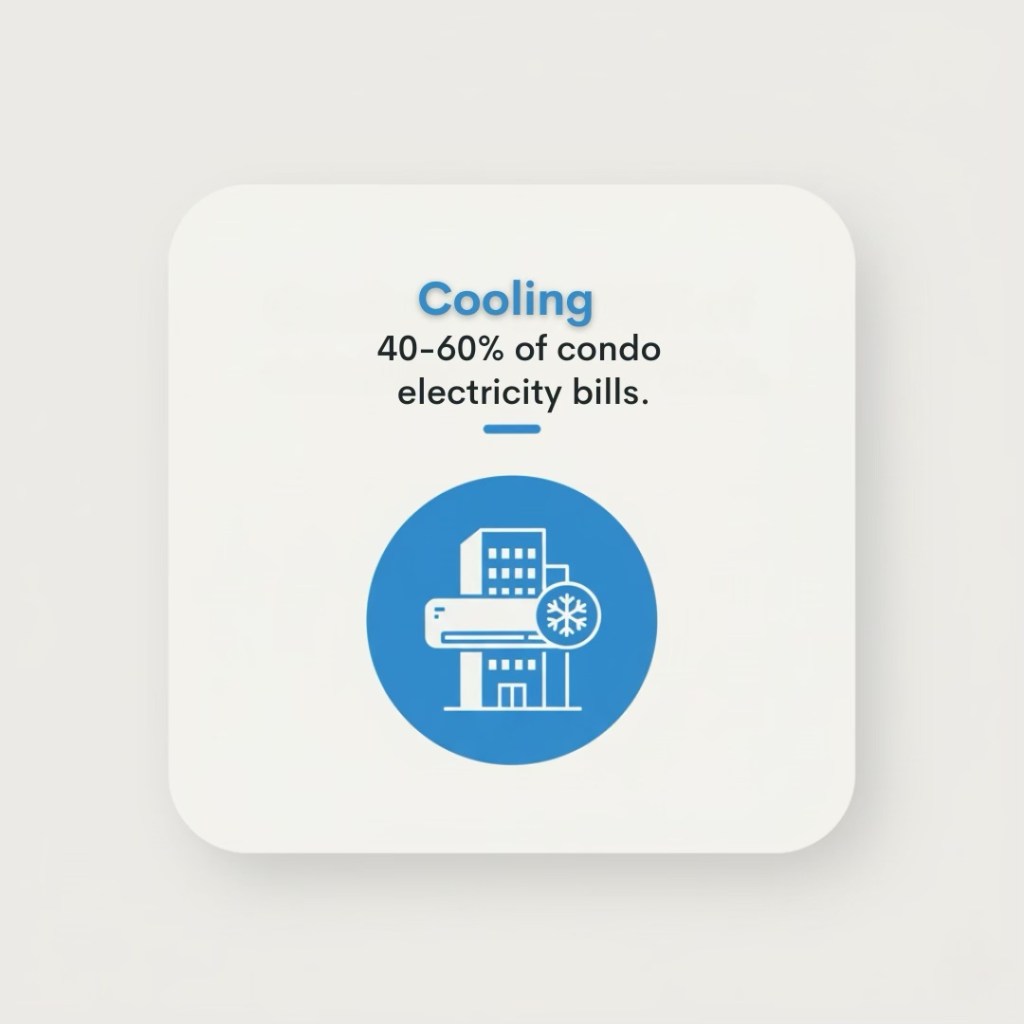
Electricity rates across Metro Manila and key urban hubs keep climbing. Every year, condo owners carry the weight of rising generation charges, pass-through adjustments, and the brutal reality of cooling a small, sun-exposed unit in a tropical climate. In many condos, air-conditioning alone eats up 40% to 60% of monthly consumption—an expense that stacks up faster than most owners expect.
This isn’t just a comfort issue. It’s a market issue. Renters are becoming ruthless evaluators. Expats, young professionals, and WFH tenants now filter listings based on energy efficiency, knowing full well that a poorly insulated unit can blow up their budget. Investors are just as vigilant: they’ve seen how energy-efficient units rent faster, command higher premiums, and keep tenants longer.
Forward-thinking owners aren’t waiting for the next energy rate hike—they’re upgrading. They’re installing inverter units, applying Low-E films, sealing gaps, switching to LEDs, and adding smart monitoring tools that expose hidden energy drains. These upgrades do more than cool a space. They slash electricity bills, elevate comfort, strengthen a unit’s value, and make it stand out in an increasingly competitive market.
This guide lays out everything you need to transform your condo into a cooler, smarter, more efficient asset. You’ll learn which upgrades produce the biggest savings, how to calculate ROI, what the Philippine condo rules allow, and which improvements deliver the fastest impact.
If your goal is a condo that performs better, feels better, and earns better—this is your blueprint.
Table of Content
- Why Energy Efficiency Matters for Philippine Condominiums
- The Condo Energy Audit: Know Your Baseline Before Upgrading
- High-Impact Condo Energy Upgrades (The Core Improvements That Deliver Real Results)
- Investment & Financial ROI: Do These Upgrades Pay Off?
- Legal, HOA, and Compliance Considerations in the Philippines
- Case Studies: Realistic Scenarios of Filipino Condo Owners Who Cut Their Electricity Bills
- Case Study 1: Makati Studio Unit — 28% Lower Electricity Bills with Basic Upgrades
- Case Study 2: Ortigas 1-Bedroom — Solving “Hindi Lumalamig” with Targeted Insulation
- Case Study 3: QC Penthouse — HOA-Led Solar Installation Reduces Association Dues
- Case Study 4: Cebu IT Park Studio — Standing Out in a Crowded Rental Market
- Case Study 5: BGC 2BR Family Unit — Major Comfort Improvement & Lease Renewal
- How to Prepare for an Energy-Efficient Renovation
- Step 1: Start With an Energy Audit (Your Baseline Assessment)
- Step 2: Prioritize Upgrades Based on ROI and Budget
- Step 3: Create a Renovation Budget and Timeline
- Step 4: Secure HOA or Building Management Approvals
- Step 5: Hire Credible, Accredited Contractors
- Step 6: Implement Upgrades in the Right Order
- Step 7: Validate Results After Installation
- Why This Renovation Roadmap Works
- Final Recommendations: Your Best Next Steps
- Ready to cut your condo’s electric bill and boost its market value?
Why Energy Efficiency Matters for Philippine Condominiums
Energy efficiency is no longer a niche concern reserved for eco-minded homeowners. In the Philippines—where electricity rates are among the highest in Asia and cooling costs dominate monthly condo expenses—it’s now a financial strategy, a market advantage, and a major factor influencing tenant and buyer decisions.
The Philippine Energy Landscape
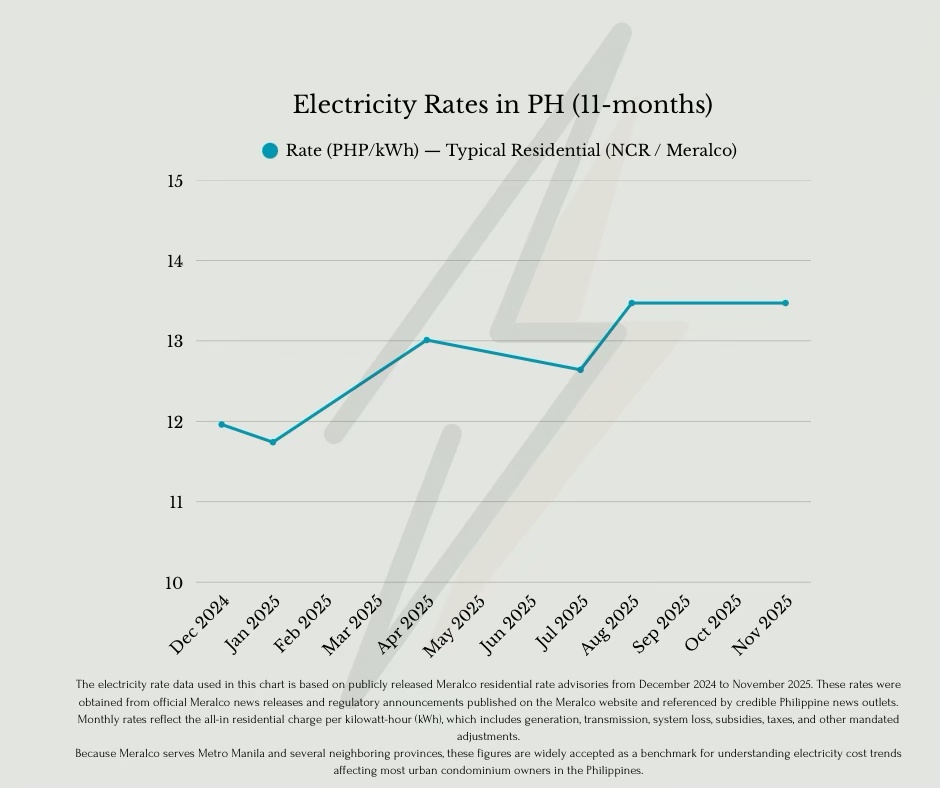
Electricity in the Philippines remains one of the most expensive in the region, driven by imported fuel dependence, complex distribution systems, and limited renewable integration. Metro Manila residents routinely experience elevated rates, and key provinces—Cebu, Iloilo, Davao—follow the same upward trajectory. Every fluctuation, every fuel adjustment, every peak-hour surge hits condo owners hardest.
Inside condominiums, the impact is amplified. Small spaces heat up fast. Large windows absorb and trap solar radiation. Cross-ventilation is rare. Concrete walls retain heat for hours. With these combined conditions, air-conditioning becomes the default—not the exception.
Result?
Cooling alone accounts for 40% to 60% of many condo electricity bills.
That number isn’t just inconvenient; it’s transformative. It affects budgeting, tenant decision-making, and long-term property value.
Filipino renters and buyers have noticed. They now compare units not just by floor area and amenities but by their ability to stay cool without punishing their wallet. They ask about:
- Inverter ACs
- Low-E glass or window films
- LED lighting
- Air sealing
- Smart monitoring tools
Units missing these features feel outdated and expensive. Units with them feel forward-thinking—and become significantly more desirable.
Market Impact on Investors & Homebuyers

Energy-efficient upgrades create a clear and measurable advantage in the Philippine condo market—one that affects both short-term cash flow and long-term value.
1. Stronger Rental Appeal
Renters are becoming increasingly cost-sensitive. With electricity consuming a large portion of their monthly expenses, a “low electric bill” unit instantly stands out. Units equipped with inverter ACs, LED lighting, and heat-control features consistently outperform standard units in tenant inquiries, bookings, and viewing-to-rental conversion rates.
2. Lower Vacancy Rates and Longer Tenant Retention
Comfort translates directly to loyalty. A cooler, more stable indoor environment encourages tenants to renew. Energy-efficient condos see fewer gaps between tenants, lower turnover costs, and more predictable cash flow—ideal for investors holding multiple units or long-term rentals.
3. Higher Rental Premiums
Energy-efficient units can legitimately charge more because they save tenants more. The perceived value is immediate, and renters willingly pay extra for predictable, lower monthly expenses. In dense rental markets like Makati, Ortigas, BGC, and Cebu IT Park, this premium often ranges from 5–10%.
4. Resale Advantage and Stronger Negotiation Power
Buyers increasingly factor in operating expenses when comparing units. They scrutinize windows, appliances, and ventilation. They ask about upgrades. They want assurance that they won’t inherit high electric bills.
Energy-efficient improvements:
- reduce objections during negotiations
- justify higher asking prices
- signal a well-maintained, forward-ready unit
- position your condo as a superior long-term value
A unit with documented upgrades doesn’t just sell—it sells smarter, faster, and at a higher price bracket.
The Condo Energy Audit: Know Your Baseline Before Upgrading
Upgrading without an audit is like prescribing medicine without a diagnosis—you might improve a few symptoms, but you’ll miss the root cause. Before buying an inverter AC or applying Low-E film, every condo owner needs one essential step: a precise, methodical energy audit.
A proper audit reveals what’s actually driving your high electricity bills and helps you avoid upgrades that look impressive but deliver weak returns. In Philippine condos—where layouts are compact, heat gain is aggressive, and ventilation is limited—an audit is the single most effective way to identify which improvements will cool your unit and protect your wallet.
What an Energy Audit Is—and Why It Matters
A condo energy audit is a structured assessment of how your unit uses, loses, and wastes energy. It uncovers inefficiencies tied to:
- solar heat entering through windows
- outdated or oversized appliances
- AC systems consuming excess power
- gaps and leaks pulling in warm air
- inefficient lighting adding unnecessary heat
- standby devices running 24/7
This matters even more in the Philippines because condos operate in a sealed environment. Unlike houses, there are no attics to insulate, no roof eaves to shade, and no natural cross-breeze to cool rooms. Every watt counts. Every source of heat matters. Every improvement must be strategic.
An audit allows you to prioritize upgrades that deliver the highest ROI, the most comfort, and the fastest bill reduction.
DIY Audit Checklist: What You Can Inspect in Under an Hour
You can identify most of your unit’s energy pain points with basic observation—no tools, no technical background, no engineer required.
1. Windows & Sliding Doors
Look for:
- warm spots on the glass
- sunlight entering directly during peak hours
- gaps or loose frames that let hot air in
- rattling or airflow when testing with a tissue
These are the top contributors to heat gain.
2. Lighting Fixtures
Scan the unit for:
- remaining CFL or incandescent bulbs
- dim, yellowish lighting that signals inefficiency
- fixtures that run hot after a few minutes
Switching to LEDs is one of the fastest wins in any condo audit.
3. Appliances (Especially AC & Refrigerator)
Check:
- age of the unit (6+ years often equals inefficiency)
- whether the AC is inverter or manual-compressor type
- frost buildup in refrigerators
- hot surfaces behind appliances
Older appliances silently drain energy in the background.
4. Air Leaks
Use the tissue test around:
- door frames
- window edges
- AC sleeves
- exhaust and utility portals
If the tissue moves, you’re leaking cool air—guaranteed energy waste.
5. Air Conditioner Performance
Evaluate:
- cooling speed
- airflow strength
- filter cleanliness
- unusual noise levels
Weak cooling signals a dirty filter, low refrigerant, or an aging compressor.
6. Standby Power
Check what’s plugged in 24/7:
- routers
- TV boxes
- chargers
- microwave clocks
- desktop setups
Idle appliances can add 5–10% to your bill without you noticing.
This quick audit reveals 70–80% of typical inefficiencies inside Philippine condos.
When to Call a Professional Auditor
You can identify most of your unit’s energy pain points with basic observation—no tools, no technical background, no engineer required.
A professional audit becomes necessary when:
- your electricity bill stays high despite basic fixes
- you’re considering major upgrades like glazing or insulation
- your AC runs nonstop but the unit still feels warm
- you want documented before-and-after data for rental or resale value
Professional services may include:
- thermal imaging scans
- appliance load metering
- concrete slab temperature mapping
- airflow and ventilation assessments
- insulation performance testing
If you want zero guesswork—and maximum savings—bring in an expert.
Why an Audit Increases ROI
A strategic upgrade sequence always outperforms a “try everything and hope it works” approach.
An audit helps you:
- Prioritize high-impact improvements first (e.g., AC, sealing, window films).
- Avoid spending on low-return upgrades that won’t affect your cooling load.
- Budget confidently by knowing which improvements deliver the fastest payback.
- Show proof of improvements when marketing to buyers or renters.
Investors treat energy audits the way analysts treat financial statements: a required baseline before making smart decisions.
High-Impact Condo Energy Upgrades (The Core Improvements That Deliver Real Results)
Energy efficiency inside a condominium isn’t achieved through guesswork. Certain upgrades consistently deliver the strongest improvements in cooling, comfort, and electric bill reduction—especially in Philippine high-rise environments where heat gain, limited airflow, and concrete structures work against you.
This section breaks down the upgrades that create the biggest returns, why they matter, and how they transform both daily comfort and long-term property value.
Window & Glazing Upgrades
Windows are the largest source of heat gain in most Philippine condos. Strengthening them dramatically reduces AC workload and stabilizes indoor temperatures.
1. Double or Triple-Glazed Windows
These multi-layer systems create a powerful insulation barrier that:
- blocks heat transfer
- reduces daytime temperature spikes
- cuts AC runtime significantly
- adds noise reduction—ideal for units near major roads, construction, or nightlife
Though higher in cost, glazing upgrades produce excellent long-term ROI and strong resale appeal. Many modern developments already support glazing upgrades as long as the façade remains consistent.
2. Low-E Glass or Window Films
Low-E (low-emissivity) films reflect solar heat outward, providing:
- cooler interiors during peak sunlight hours
- improved glare control
- significant comfort upgrades for east- or west-facing units
Films offer one of the best mid-cost, high-impact improvements for Philippine condos.
Window Upgrade Options: Cost, Benefits & Estimated Savings
| Window Upgrade Option | Typical Cost (PH) | Key Benefits | Estimated Savings / Impact |
|---|---|---|---|
| Double-Glazed / Low-E Windows (uPVC or aluminum frame, insulated glazing) | ₱ 3,500 – ₱10,500 per m² installed (Accio) | • Strong thermal insulation (reduces heat transfer) • Less heat gain → less AC runtime • Noise reduction • Enhanced comfort and resale appeal (AMC Aluminum) | Potential reduction in cooling/AC load by ≈ 10–25% vs. single-pane windows according to general studies (Thermawood) |
| Low-E Film on Existing Windows (glass coating / retrofit) | Generally lower than full glazing (varies by installer & coverage; ~ mid-range) | • Reflects solar heat → less indoor heat gain • Low-cost retrofit without full window replacement • Improves comfort, reduces glare and UV exposure | Moderate savings on cooling load; retrofit can deliver a portion of glazing benefit (exact % depends on orientation, shading) (Energy Saving Trust) |
| Weatherstripping & Gap Sealing (Sliding Doors / Window Frames) | Low — materials and labor modest (often DIY or small contractor job) | • Prevents hot outside air infiltration • Reduces conditioned air leakage • Enhances effectiveness of AC and insulation • Low upfront cost | Low to moderate savings — often among the most cost-effective first steps; reduces wasted cooling/AC runtime; may shave off notable portion of cooling costs |
Insulation & Air Sealing: Keeping Cool Air Inside
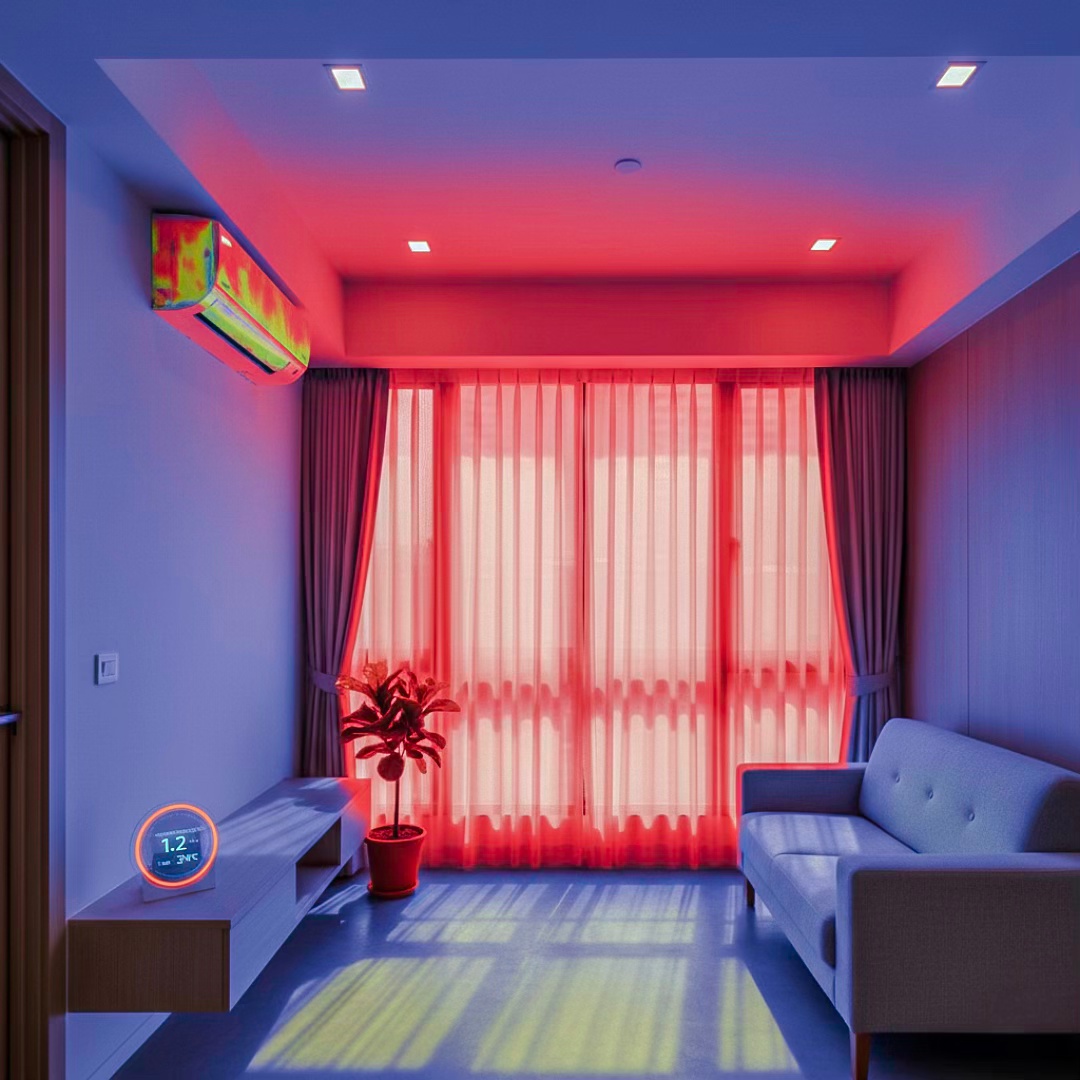
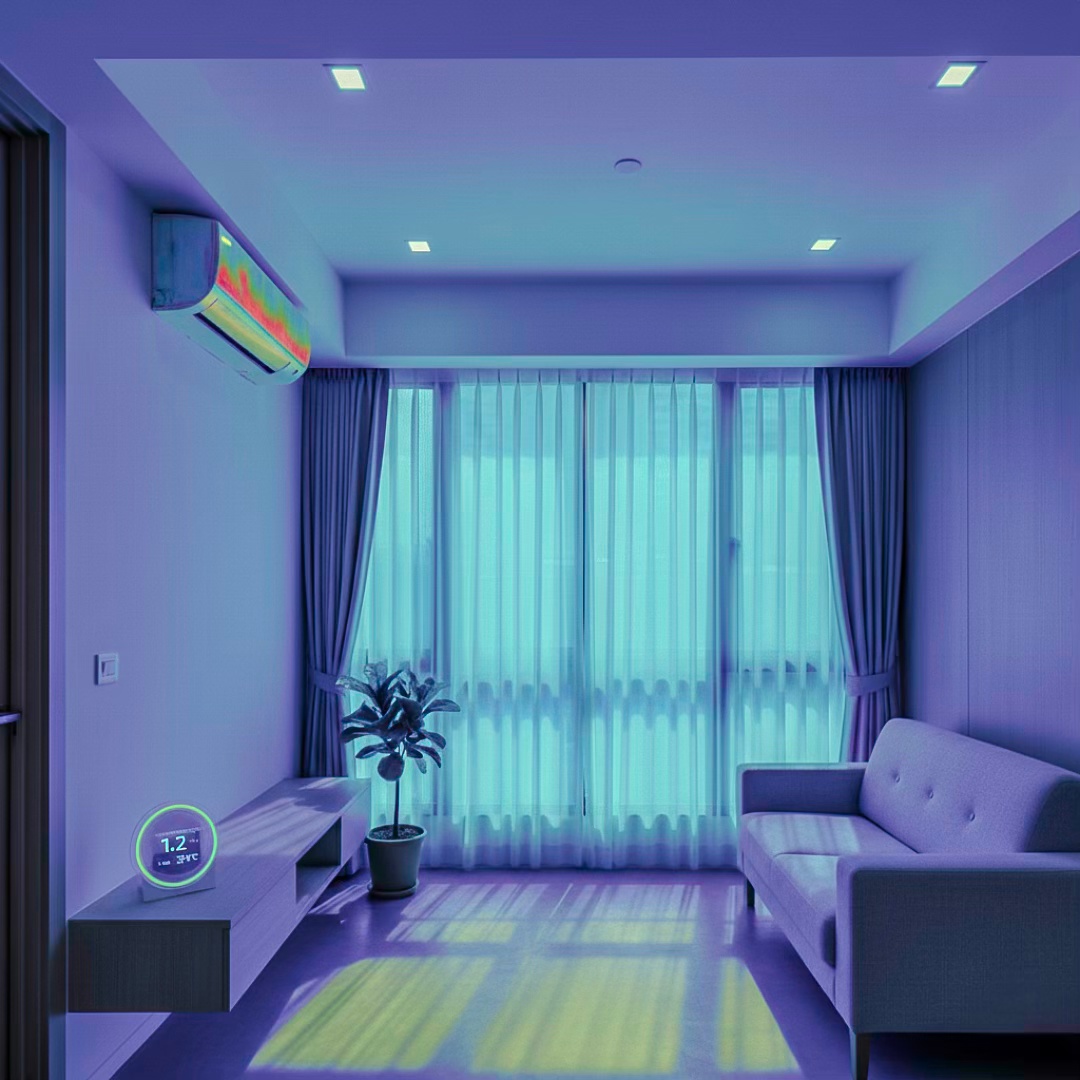
Many condo owners describe a persistent issue: “The AC is on but the room never really gets cold.”
Insulation and sealing solve this problem.
1. Ceiling / Slab Insulation
In mid- to high-rise condos, the “attic” equivalent is the concrete slab above your unit. Insulating it:
- reduces radiant heat transfer
- stabilizes room temperature
- improves AC efficiency
This is one of the strongest comfort-enhancing upgrades for top-floor and sun-exposed units.
2. Internal Wall Insulation
Ideal for hot-facing walls or noisy surroundings.
Benefits include:
- lower thermal transfer
- improved soundproofing
- better comfort in bedrooms and living spaces
Insulated gypsum boards or blown-in materials are commonly used depending on HOA guidelines.
3. Air Sealing Essentials
Even small gaps create significant energy loss. Key areas to inspect:
- door frames
- window tracks
- AC sleeve openings
- utility penetrations
Air sealing is low-cost but delivers immediate impact.
4. Thermal Curtains or Shades
A cost-effective comfort booster. Thermal blackout curtains:
- reduce heat entry
- protect furniture
- support AC performance
An excellent starter upgrade for budget-conscious owners.
HVAC & Cooling Efficiency (The Biggest Money-Saver)
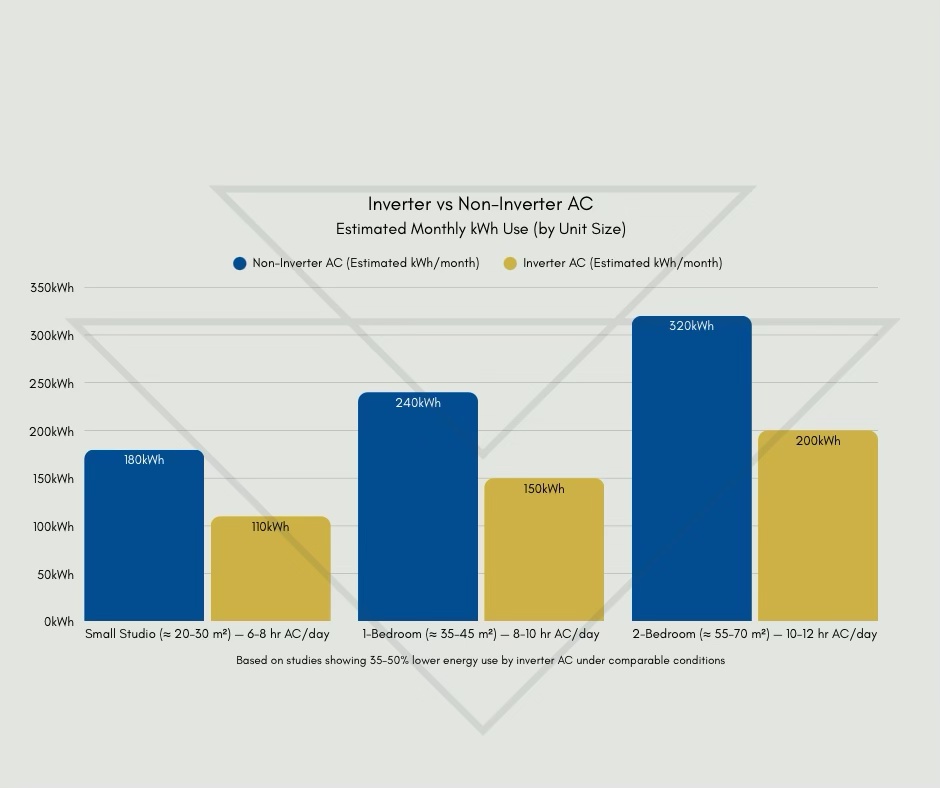
No upgrade influences your electricity bill more than improving your cooling system. In most condos, AC is the single largest energy consumer.
1. Inverter Air Conditioners
If your AC is not inverter-type, you’re losing money every month.
Upgrading yields:
- 30–50% reduction in electricity consumption
- faster cooling
- quieter operation
- longer equipment lifespan
Correct sizing is crucial. Oversized or undersized units waste energy.
2. Zoned Cooling Strategies
Instead of cooling the entire condo simultaneously:
- use a dedicated AC for the bedroom
- activate cooling only in areas being used
- add smart timers or schedules
This strategy minimizes unnecessary cooling and reduces kWh consumption dramatically.
3. Proper Maintenance = Ongoing Savings
Dirty filters and neglected systems force your AC to work harder.
Regular maintenance delivers:
- 10–15% efficiency improvement
- better airflow
- longer AC lifespan
- consistent cooling performance
This is one of the highest-return habits any condo owner can adopt.
Appliances & Lighting Upgrades
Energy-efficient appliances operate quietly in the background, lowering your bill hour by hour.
1. Inverter Appliances (Refrigerators, Washing Machines, ACs)
These systems adjust power output based on usage demand, yielding:
- reduced electricity consumption
- smoother performance
- better temperature control
For long-term renters, inverter refrigerators are often a deciding factor.
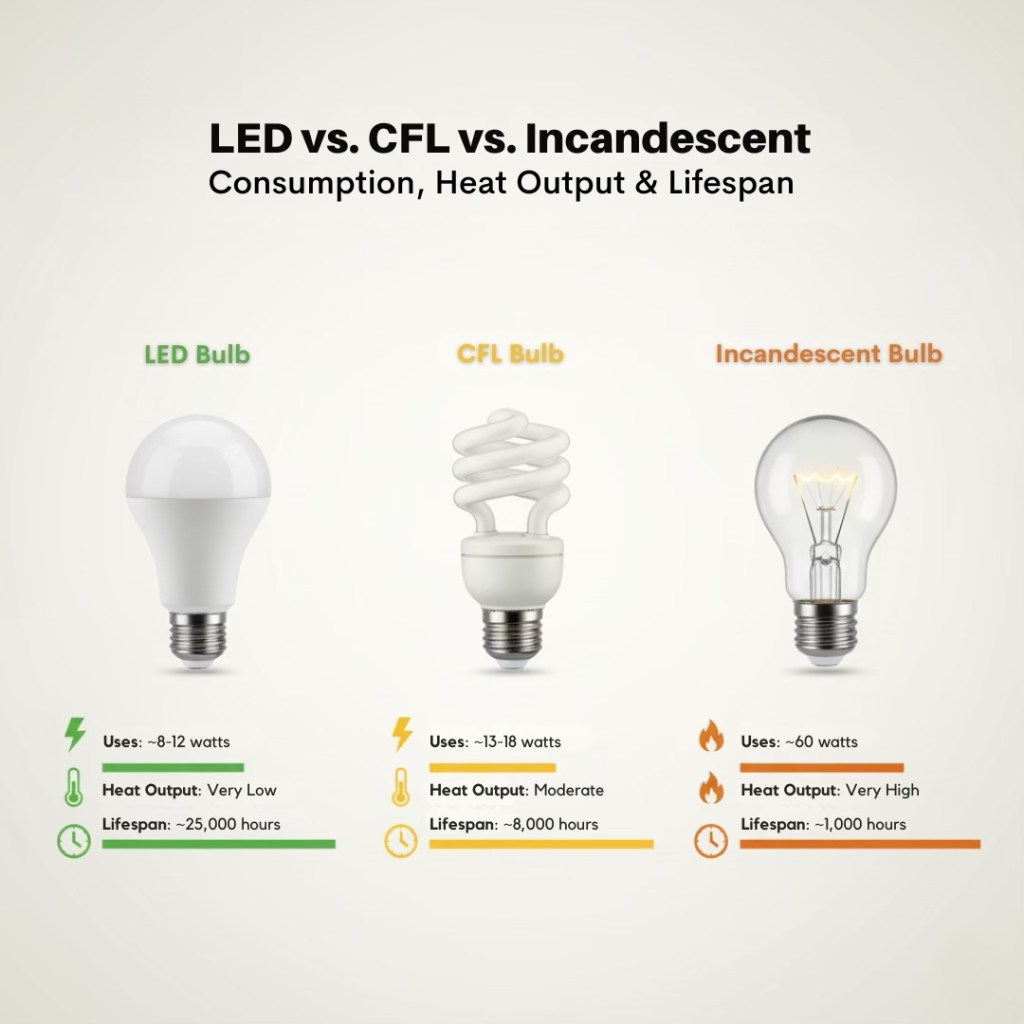
2. LED Lighting Systems
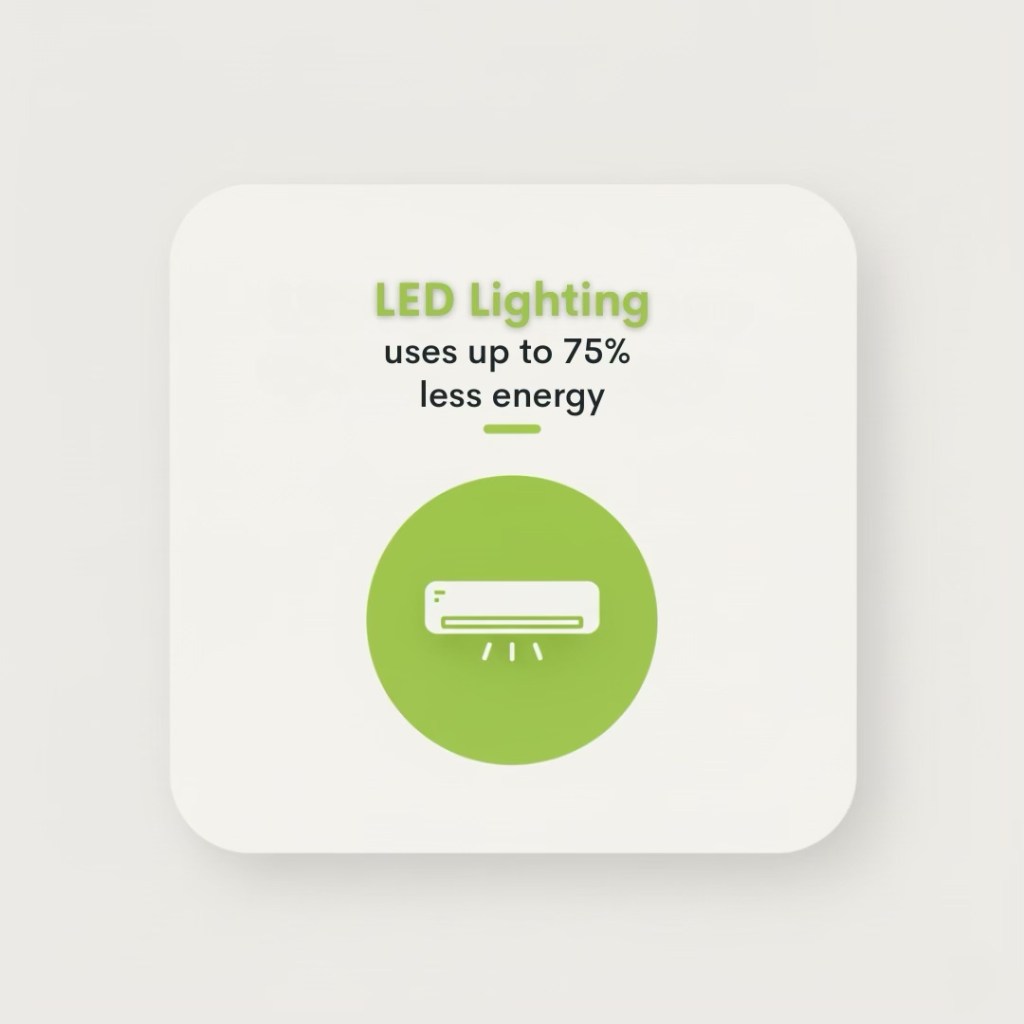
LEDs use up to 75% less energy and produce less heat—crucial in compact units.
Benefits include:
- lower electric bills
- cooler interiors
- longer bulb lifespan (up to 25,000 hours)
Replacing all bulbs with LEDs is a no-brainer upgrade.
3. Smart Plugs, Timers & Power Strips
These help reduce standby power—the quiet, invisible electricity drain.
Smart systems allow you to:
- automate shutdowns
- monitor consumption per device
- schedule appliance use
Perfect for WFH setups, entertainment systems, and kitchens.
4. Energy-Efficient Water Heaters
Tankless or instant heaters use power only when needed, reducing waste and saving space.
Renewable Energy Options for Condo Owners
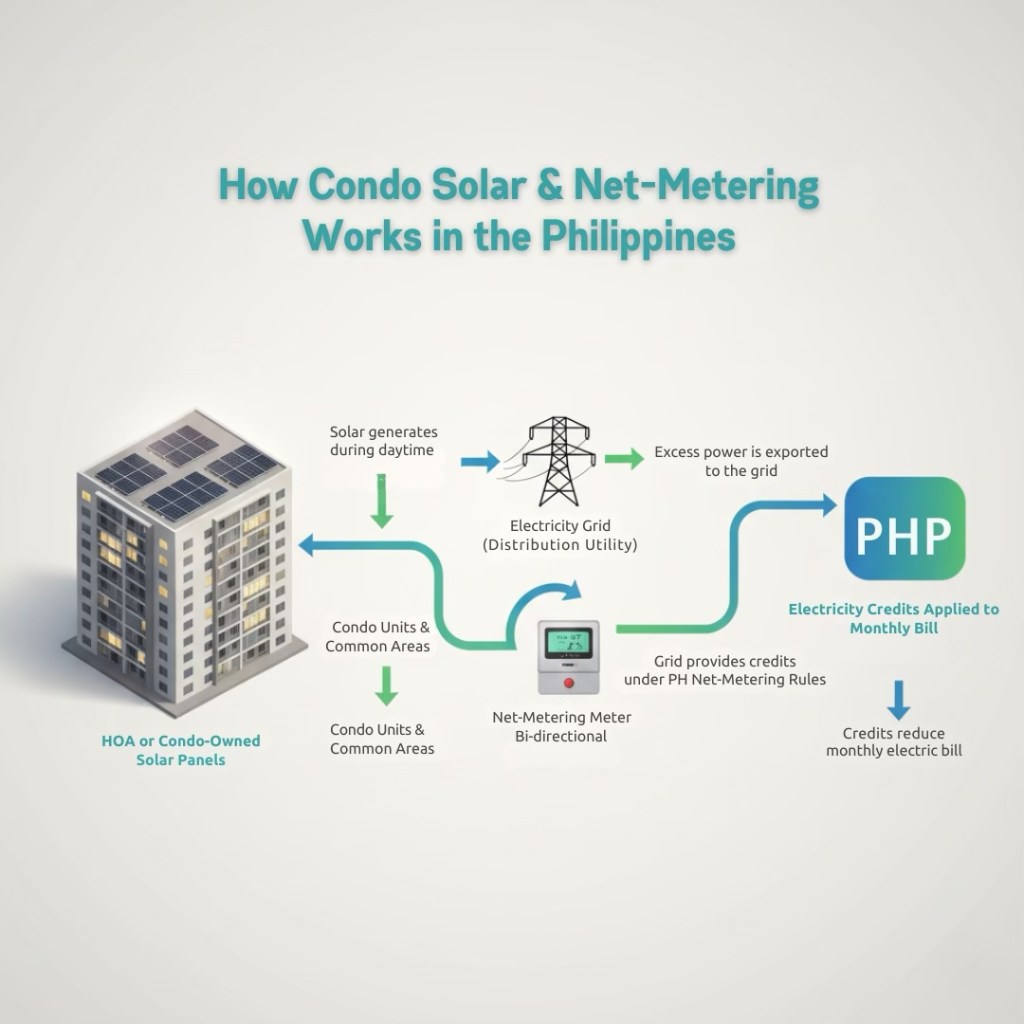
Solar and renewable options inside condos remain limited due to structural and HOA restrictions—but opportunities are growing.
1. Rooftop Solar (HOA or Building-Managed Systems)
Some condos now install solar arrays to power:
- corridor lighting
- elevators
- water pumps
- common-area ventilation
This lowers association dues and boosts building value.
2. Balcony Solar Panels / Portable Kits
Compact, portable kits can power:
- routers
- LED lights
- fans
- small devices
They don’t replace grid power but provide useful supplemental energy.
3. Net-Metering Basics (PH Context)
These help reduce standby power—the quiet, invisible electricity dAlthough more applicable to townhouses and landed homes, net-metering is essential to understand as solar policies evolve.
4. Battery Storage Solutions
Portable lithium storage units provide:
- reliable backup during outages
- peak-hour consumption management
- partial off-grid capability
Useful in cities affected by rotational brownouts.
Smart Monitoring & Efficient Habits
Once the upgrades are in place, behavior completes the energy-saving equation.
1. Smart Energy Monitoring Tools
These devices track:
- real-time consumption
- highest-load appliances
- peak-hour usage
Visibility alone helps owners cut 10–15% without major upgrades.
2. High-Impact Energy Habits
These habits compound into meaningful savings:
- keep AC at 24°C–26°C
- maximize natural light
- unplug idle devices
- combine AC with fans
- schedule heavy appliance use during off-peak hours
3. Building-Wide Practices
Encourage HOAs to adopt:
- LED retrofits
- motion sensors
- shared solar systems
These improvements lower operating expenses for everyone.
Investment & Financial ROI: Do These Upgrades Pay Off?
Energy-efficient upgrades are more than lifestyle improvements—they’re financial tools. In the Philippine condo market, where electricity rates remain among the highest in Asia and cooling demand dominates household consumption, efficiency upgrades offer one of the strongest returns you can unlock as a property owner.
This section translates technical improvements into real financial outcomes: monthly savings, payback periods, rental premiums, resale value, and long-term investment gains.
Cost vs. Savings Breakdown (Philippine Ranges You Can Actually Use)
Here’s the reality: every upgrade has a cost, but nearly all deliver measurable and consistent reductions in electricity consumption—especially those targeting cooling and heat gain.
The table below reflects realistic Philippine market ranges, based on common pricing in Metro Manila, Cebu, and Davao. Actual cost may vary depending on brand, installer, labor, and building restrictions.
Estimated Upgrade Costs & Potential Monthly Savings
| Upgrade Type | Typical PH Cost Range | Estimated Monthly Savings | Primary Benefits |
|---|---|---|---|
| Inverter AC (1–1.5HP) | ₱22,000 – ₱35,000 | ₱300 – ₱800 | Major kWh reduction in cooling-heavy climates |
| LED Lighting Retrofit | ₱1,500 – ₱8,000 | ₱100 – ₱300 | Less heat, longer lifespan, immediate impact |
| Low-E Film Installation | ₱8,000 – ₱20,000 | ₱200 – ₱600 | Lower heat gain, improved comfort |
| Window Glazing Upgrade | ₱25,000 – ₱70,000 | ₱400 – ₱900 | Better insulation + noise reduction |
| Weatherstripping / Air Sealing | ₱500 – ₱2,500 | ₱100 – ₱250 | Prevents cool air leakage |
| Ceiling/Slab Insulation | ₱12,000 – ₱40,000 | ₱300 – ₱700 | Lowers AC load, stabilizes temperature |
| Smart Energy Monitor | ₱1,000 – ₱8,000 | ₱100 – ₱250 | Identifies high-consumption habits |
| Rooftop/Shared Solar (HOA-managed) | Varies widely | ₱300 – ₱1,500 (shared savings) | Long-term operating cost reduction |
A pattern emerges: cooling-focused upgrades provide the biggest savings, because AC is the #1 electricity expense in most Philippine condos.
Even small improvements—like sealing window gaps or switching to LEDs—deliver meaningful, ongoing savings.
Payback Period Estimates (3-Year, 5-Year, and 10-Year Scenarios)

Every investor wants to know the same thing:
“How long before this upgrade pays for itself?”
Below is a realistic breakdown tailored for Philippine condo conditions.
1. Fastest Payback (Under 1 Year to 2 Years)
These improvements recover their cost quickly and deliver immediate comfort:
- LED retrofit
- Weatherstripping / air sealing
- Smart plugs, smart timers, smart strips
- Basic AC maintenance (deep cleaning + refrigerant check)
Low cost + immediate reduction in cooling load = rapid ROI.
2. Medium-Term Payback (2–4 Years)
These upgrades target the biggest energy consumer: AC.
- Inverter air conditioners
- Low-E window films
- Energy-efficient water heaters
Inverter ACs often pay for themselves faster in units with high usage (WFH setups, west-facing units, penthouses).
3. Building-Wide Practices
Bigger investments with substantial long-term benefits:
- Double or triple glazing
- Slab or wall insulation
- HOA-level rooftop solar installations
These deliver massive comfort improvements and create powerful resale and marketing advantages.
How These Upgrades Boost Condo Resale Value

Energy efficiency isn’t just a monthly savings strategy—it’s a resale multiplier.
Energy efficiency isn’t just a monthly savings strategy—it’s a resale multiplier.
Here’s how it reshapes buyer decision-making in the Philippine property market:
1. Buyers Are Willing to Pay More for Lower Operating Costs
Electricity bills are a major concern for condo buyers. A unit that promises lower monthly expenses immediately stands out—and justifies a higher price.
2. Upgraded Units Sell Faster
Consider two identical condos: one with an inverter AC, sealed windows, and LED lighting; the other untouched.
Buyers gravitate instantly to the upgraded unit. Faster decision-making = faster sale.
3. Better Valuation During Bank Appraisals
Banks and appraisers increasingly factor in:
- quality of upgrades
- condition of cooling systems
- documented efficiency improvements
A well-upgraded condo signals longevity and lower future repair risks.
4. Strong Alignment With Modern Buyer Preferences
Both groups prioritize:
- long-term cost stability
- modern systems
- ready-for-move-in efficiency
These buyers are often willing to pay a premium for a unit that aligns with their lifestyle expectations.
5. Reduced Buyer Objections During Negotiations
“Mainit po ba ang unit?” “Malakas ba sa kuryente?” “Old appliances ba ’yan?”
Energy-efficient upgrades eliminate these concerns and turn the conversation toward value—not discounts.
Legal, HOA, and Compliance Considerations in the Philippines
Energy-efficient condo upgrades offer massive advantages—but only when done correctly and legally. Philippine condominiums follow strict rules that protect the building’s structural integrity, façade uniformity, and shared utilities. Understanding these constraints isn’t just about staying compliant; it prevents renovation delays, unexpected penalties, and expensive rework.
This section lays out exactly what you can upgrade freely, what requires formal approval, and how to navigate your condo corporation efficiently and professionally.
What Condo Owners Can Usually Modify Without Approval
These interior upgrades typically fall within the boundaries of your private unit and are not visible from common areas—meaning they rarely require HOA clearance.
Allowed Without Approval:
- LED lighting upgrades (including dimmers, smart switches, accent lights)
- Inverter appliances (AC, refrigerator, washer, induction cooker)
- Weatherstripping, air sealing, and caulking
- Thermal or blackout curtains
- Smart home systems (sensors, remote switches, energy monitors)
- Internal ceiling insulation, as long as no structural or load-bearing component is affected
Golden Rule: If the upgrade is inside your unit and not visible from outside, it’s usually allowed.
Still—always check your building’s House Rules. Some management offices enforce stricter protocols.
Upgrades That Require HOA or Building Management Approval
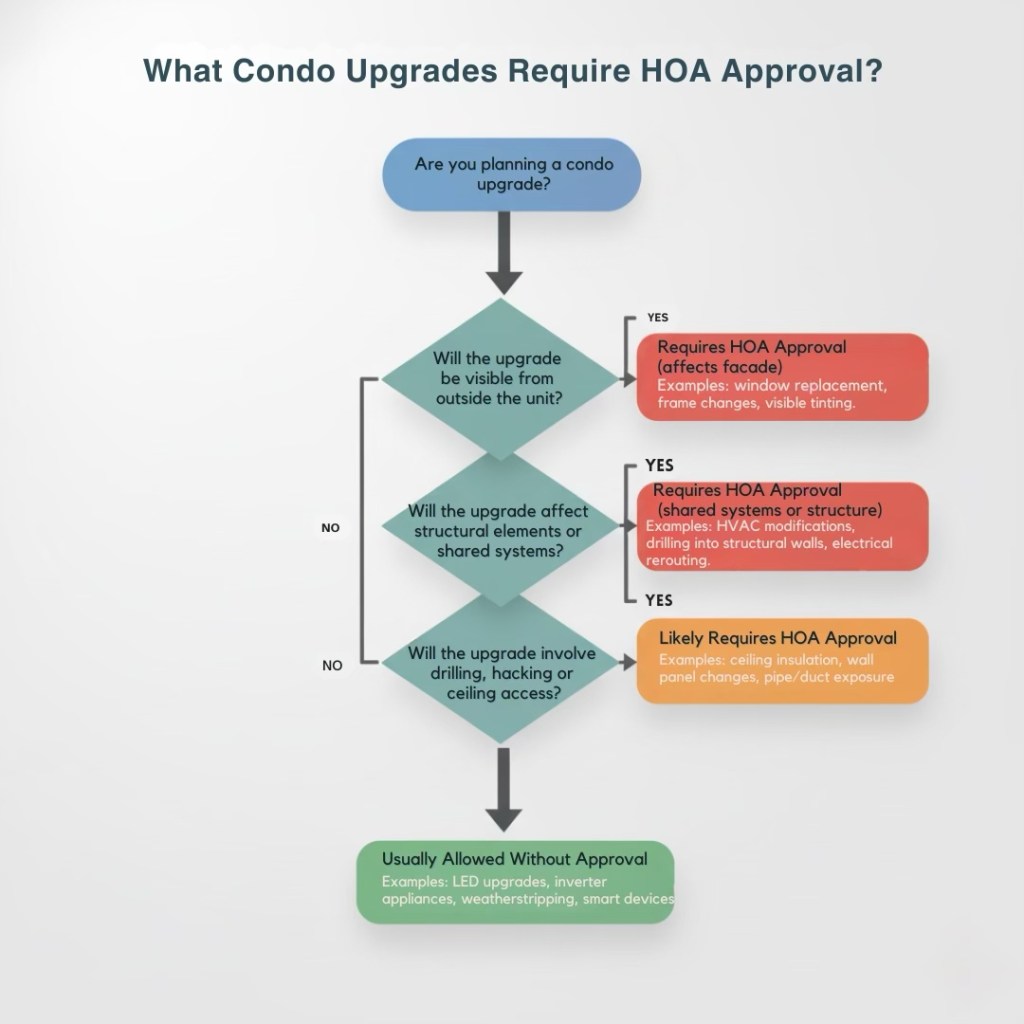
Any modification affecting the building’s exterior, structural components, or shared systems must undergo formal HOA evaluation. This is standard across Philippine condominiums and protects the entire community.
1. Window Replacements or Alterations
Because windows form part of the building façade, these require explicit approval:
- double or triple-glazed window replacements
- Low-E glass upgrades affecting tint appearance
- changes to window frames or seals
Even minor visual inconsistencies can trigger rejection. Always submit samples or technical details for review.
2. Solar Panel Installations
Rooftops are classified as common areas. Solar installations—whether private or shared—require:
- HOA board approval
- engineering load assessment
- long-term maintenance planning
Individual rooftop solar for private units is rarely approved unless you own a penthouse with exclusive roof rights.
3. Wall Insulation That Impacts Utility Lines
Walls in high-rise buildings often contain:
- electrical conduits
- plumbing lines
- sprinkler systems
- internet and fiber pathways
Any drilling or panel installation must be reviewed to avoid damaging shared utilities
4. HVAC System Modifications
Modifying or upgrading your air-conditioning infrastructure requires approval when:
- changing from window-type to split-type
- rerouting condensate drain lines
- adding ductwork or altering vents
HOAs typically require accredited contractors for these works.
5. Major Rewiring or Electrical Panel Upgrades
Anything affecting your breaker system or load allocation requires engineering review for safety compliance.
Structural and Safety Limitations You Need to Know
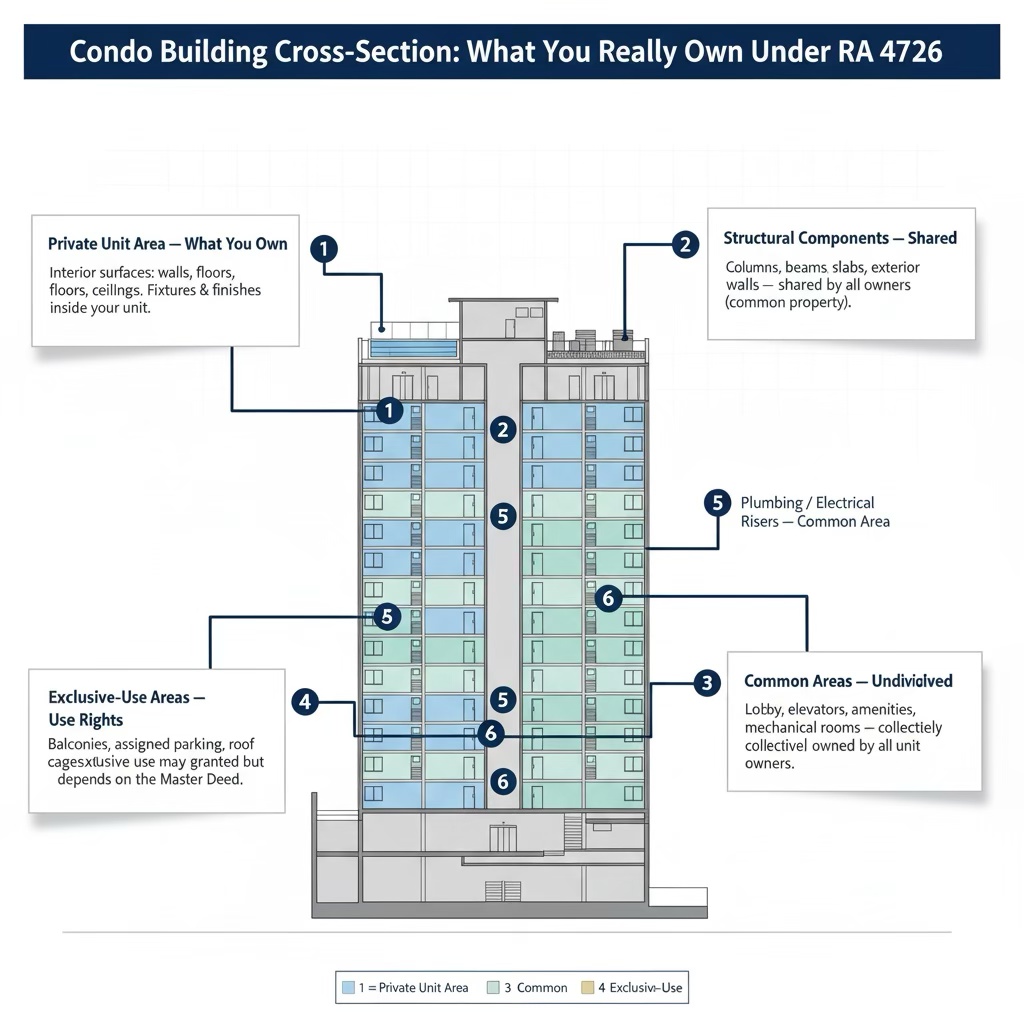
Condo buildings operate under strict engineering standards. Violating these rules can create risks—not only for you but for the entire community.
Key Limitations to Consider:
- Load-bearing restrictions: Heavy fixtures or insulation materials may exceed allowable ceiling loads.
- Fire safety rules: Some insulation types must be fire-rated and smoke-tested.
- Façade protection: Building exteriors must remain uniform across all units.
- Noise and work-hour constraints: Most condos allow noisy work only during weekday business hours.
Your building may also require:
- contractor accreditation
- proof of insurance
- renovation bonds (usually ₱5,000–₱50,000)
- submission of floor plans or sketches
Following these protocols ensures smooth approvals and prevents renovation delays
Documentation That Strengthens Compliance and Resale Value
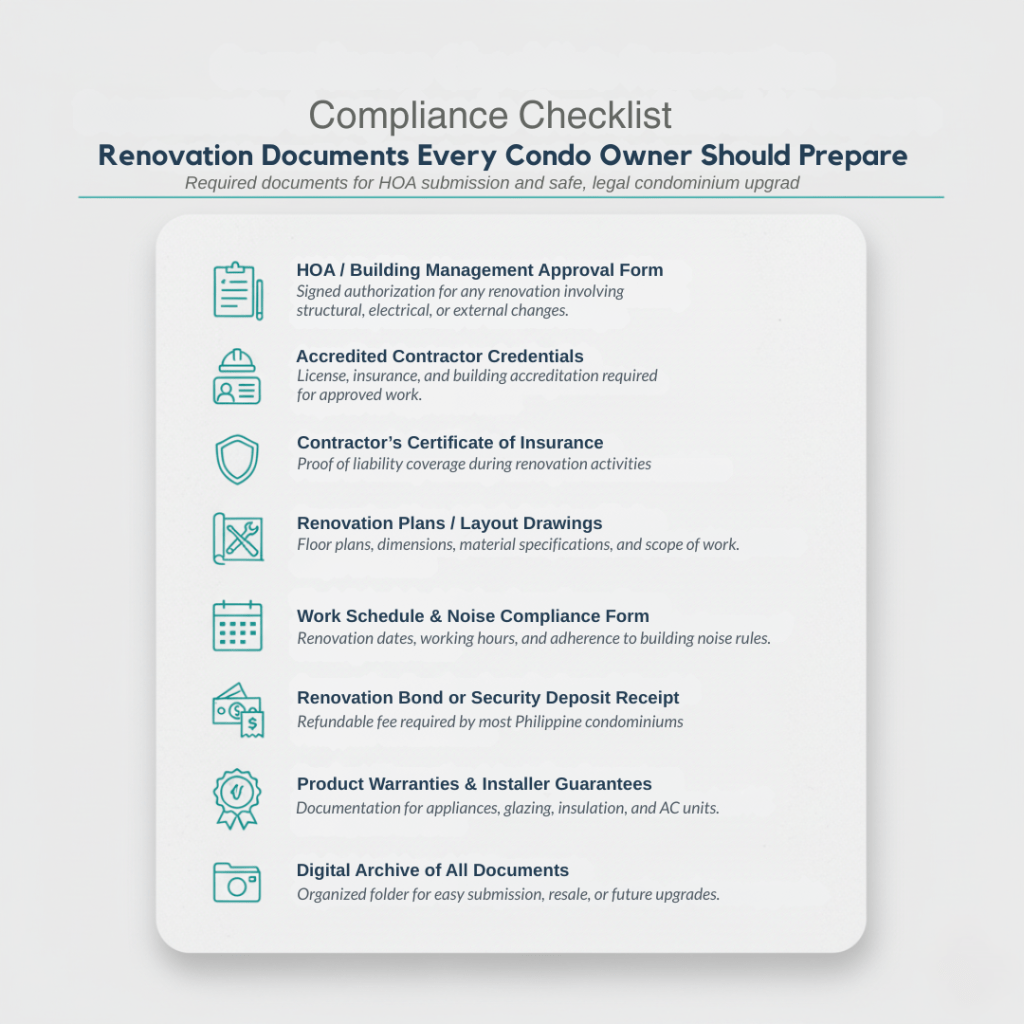
Proper documentation isn’t only for compliance—it’s a secret weapon during resale or rental negotiations.
Maintain a File Containing:
- Before-and-after photos
- Installer receipts and detailed invoices
- Appliance energy labels (EER/CSPF ratings)
- Warranty cards and service agreements
- HOA approval letters
- Engineering drawings or modification plans
- Maintenance logs for AC and appliances
This file signals professionalism and transparency—qualities buyers and renters deeply trust.
Why Documentation Matters Financially:
- Increases resale value: Proof of upgrades eliminates guesswork for buyers.
- Strengthens negotiation leverage: You justify higher prices with verified improvements.
- Speeds up rental decisions: Tenants see the unit as efficient, modern, and well-maintained.
Energy-efficient units with organized documentation consistently outperform standard units in both pricing and market velocity.
Red Flags When Upgrading Without Approval
Ignoring HOA protocols exposes you to unnecessary risk—and expensive consequences.
High-Risk Mistakes to Avoid:
Replacing windows without clearance
HOAs can impose fines or require you to reverse the modification entirely.
Using unaccredited contractors
If a fire or accident occurs, insurance may deny claims.
Installing non-fire-rated insulation
This can violate building safety standards and lead to forced removal.
Adding ductwork or rerouting AC lines without engineering review
This risks leaks, drainage issues, or neighbor complaints.
Installing unauthorized roof deck equipment
One of the most strictly enforced violations in Philippine condos.
Rule of thumb
When in doubt, submit for approval. Written clearance protects you
Case Studies: Realistic Scenarios of Filipino Condo Owners Who Cut Their Electricity Bills
Energy efficiency becomes real when you see it in action. These case studies reflect the most common scenarios encountered by Filipino condo owners—studio units, 1BR homes, high-floor penthouses, and competitive rental markets in major urban hubs.
Each example demonstrates one truth: strategic upgrades create measurable financial results.
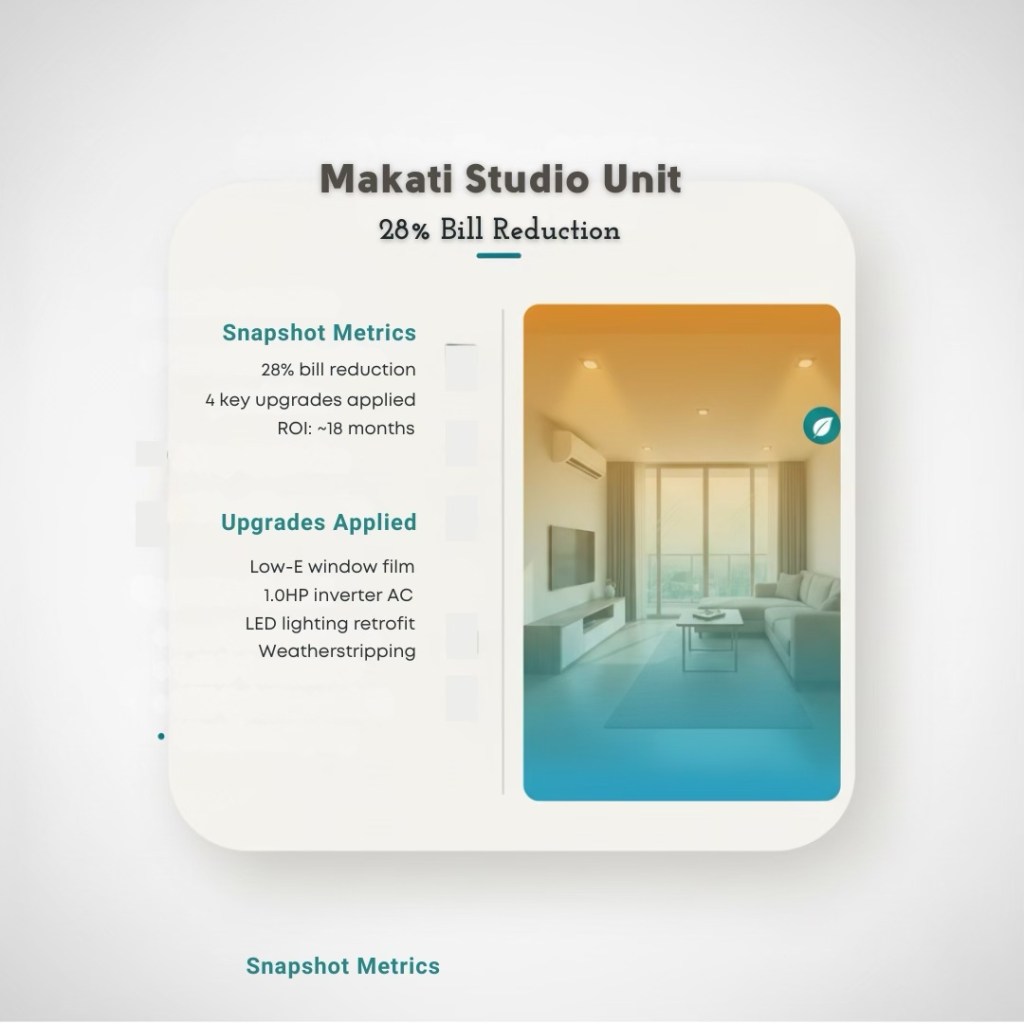
Case Study 1: Makati Studio Unit — 28% Lower Electricity Bills with Basic Upgrades
Profile:
- 27 sqm studio, Legazpi Village
- West-facing glass façade with intense afternoon heat
- Unit used for long-term rental
- Previous tenant complaints: “Mainit kahit naka-on ang AC.”
Key Problems Identified:
- High heat gain from sun exposure
- Aging non-inverter AC
- CFL bulbs generating excess heat
- Window gaps reducing cooling efficiency
Upgrades Implemented:
- Low-E window film to reduce solar heat gain
- 1.0HP inverter split-type AC (correctly sized for unit)
- LED lighting conversion for lower heat output and energy use
- Weatherstripping for sliding doors and windows
Results:
- Electric bill reduced by ~28% over three billing cycles
- Afternoon temperatures dropped noticeably
- Tenant satisfaction improved; zero cooling complaints
- Rental impact: Vacant for only 6 days (previous average: 21 days)
- ROI achieved in ~18 months
This case highlights how basic, cost-efficient improvements dramatically boost both comfort and rental performance.
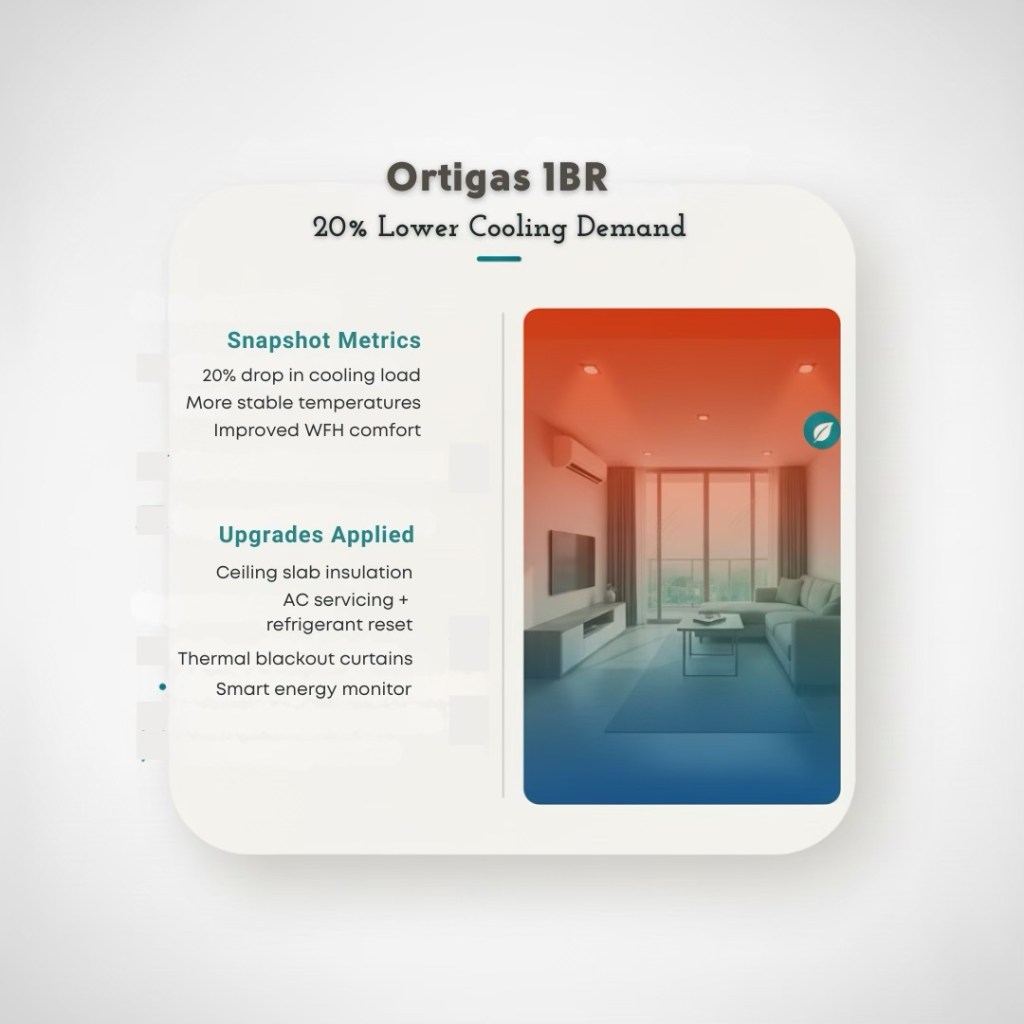
Case Study 2: Ortigas 1-Bedroom — Solving “Hindi Lumalamig” with Targeted Insulation
Profile:
- 40 sqm 1BR unit, Ortigas Center
- Owner-occupied, work-from-home usage
- East-facing windows causing morning heat spike
Key Problems Identified:
- Bedroom stayed warm despite AC at low temperature
- Uneven cooling between areas
- Slab above the bedroom absorbed direct morning heat
- No smart monitoring to track consumption patterns
Upgrades Implemented:
- Rigid board slab insulation installed above the bedroom ceiling
- Full AC servicing + refrigerant recalibration
- Thermal blackout curtains in sleeping area
- Smart energy monitor to track hourly consumption
Results:
- Cooling demand reduced by ~20%
- More stable indoor temperatures even during peak summer
- Improved work-from-home productivity
- Owner reports AC now runs at lower fan speed for longer periods
A perfect example of how insulation—not just new appliances—solves persistent cooling problems in high-rise buildings.
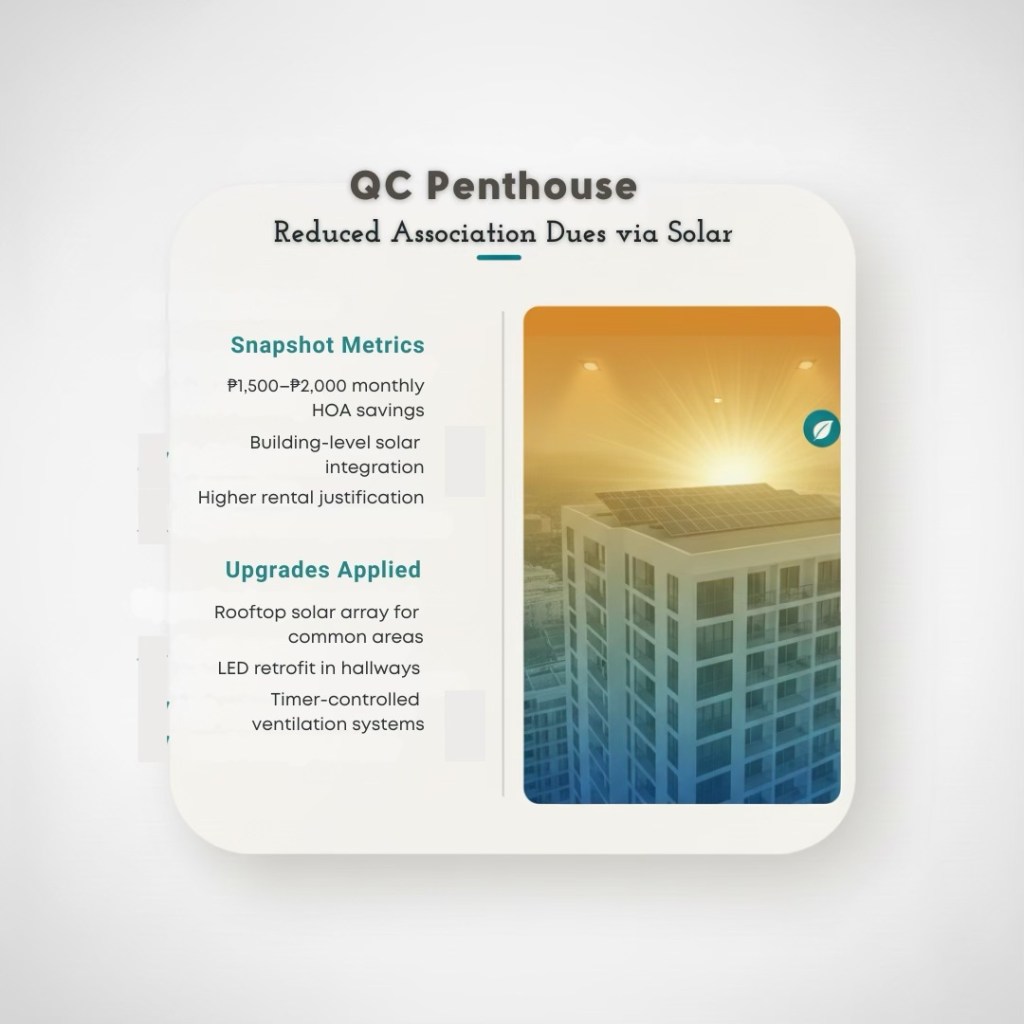
Case Study 3: QC Penthouse — HOA-Led Solar Installation Reduces Association Dues
Profile:
- 85 sqm penthouse in Quezon City
- Investor-owner leasing to long-term tenants
- Building experiencing rising association dues due to energy-heavy common area
Key Problems Identified:
- High common area electricity consumption (hallways, elevators, exhaust systems)
- HOA sought building-wide cost savings, not individual unit modifications
Upgrades Implemented:
- HOA-approved rooftop solar system powering hallway/stairwell lighting
- LED conversion for corridors and lobby areas
- Timer-based automation for ventilation systems
Results:
- ₱1,500–₱2,000 decrease in monthly association dues
- Building became more attractive to long-term renters and buyers
- Units in the project experienced improved rental inquiries
- Owner leveraged lower dues as a marketing advantage
- Long-term ROI: 7–10 years, but with significant community-wide benefit
This case proves that solar makes the biggest financial impact when implemented at the building level.
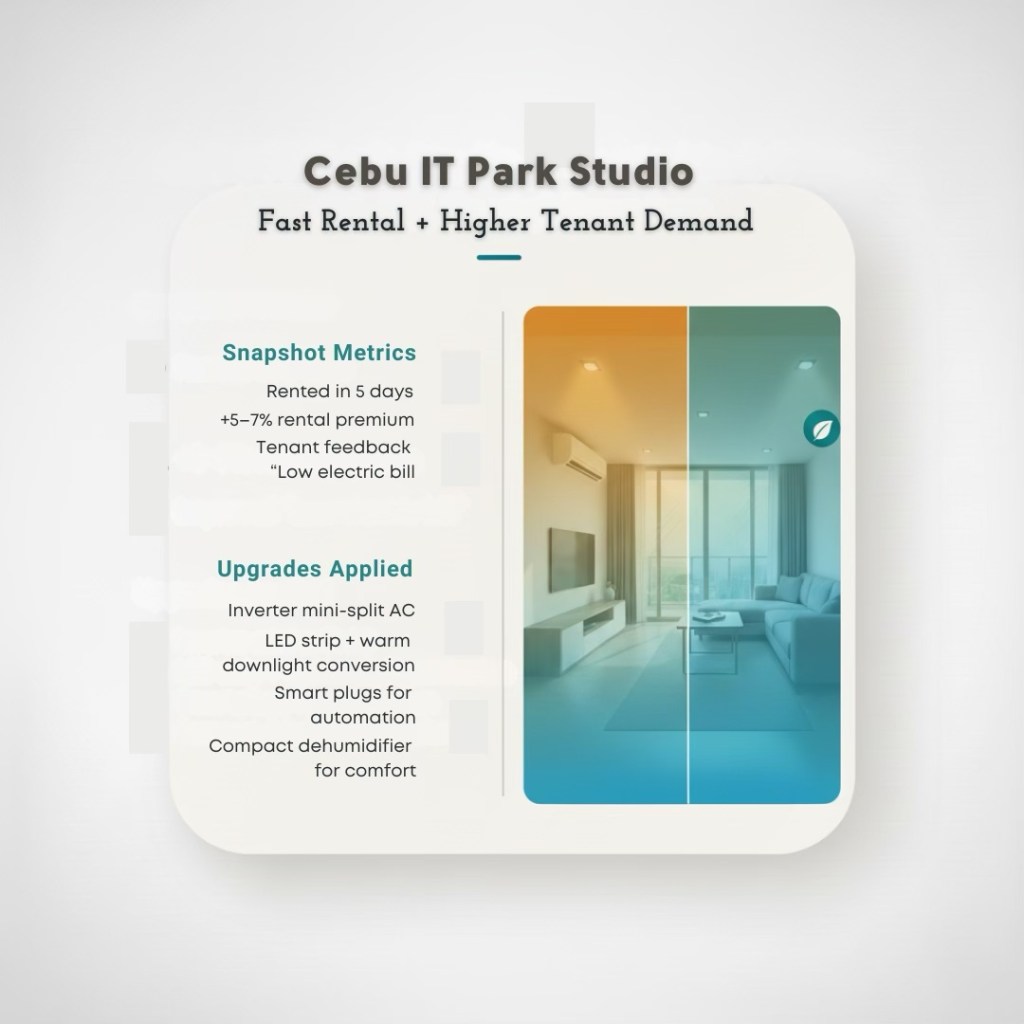
Case Study 4: Cebu IT Park Studio — Standing Out in a Crowded Rental Market
Profile:
- 24 sqm studio near major BPO hubs
- Investor facing long vacancy periods
- Tenants frequently ask: “Malakas ba sa kuryente?”
Key Problems Identified:
- High competition with similar units
- Old window-type AC driving electricity bills
- Poor lighting configuration made unit feel dim and dated
- Humidity issues common in Cebu condos
Upgrades Implemented:
- Inverter mini-split AC for efficient cooling
- LED downlights + LED strip lighting for modern ambiance
- Smart plugs for remote automation (router, TV, appliances)
- Compact dehumidifier to reduce moisture and cooling load
Results:
- Unit rented within 5 days of relisting
- Tenants cited “low electric bill” and “comfortable cooling” as deciding factors
- Achieved a 5–7% rental rate increase
- Higher-quality tenants with longer expected stay
In cities with competitive rentals, energy efficiency becomes a decisive differentiator.
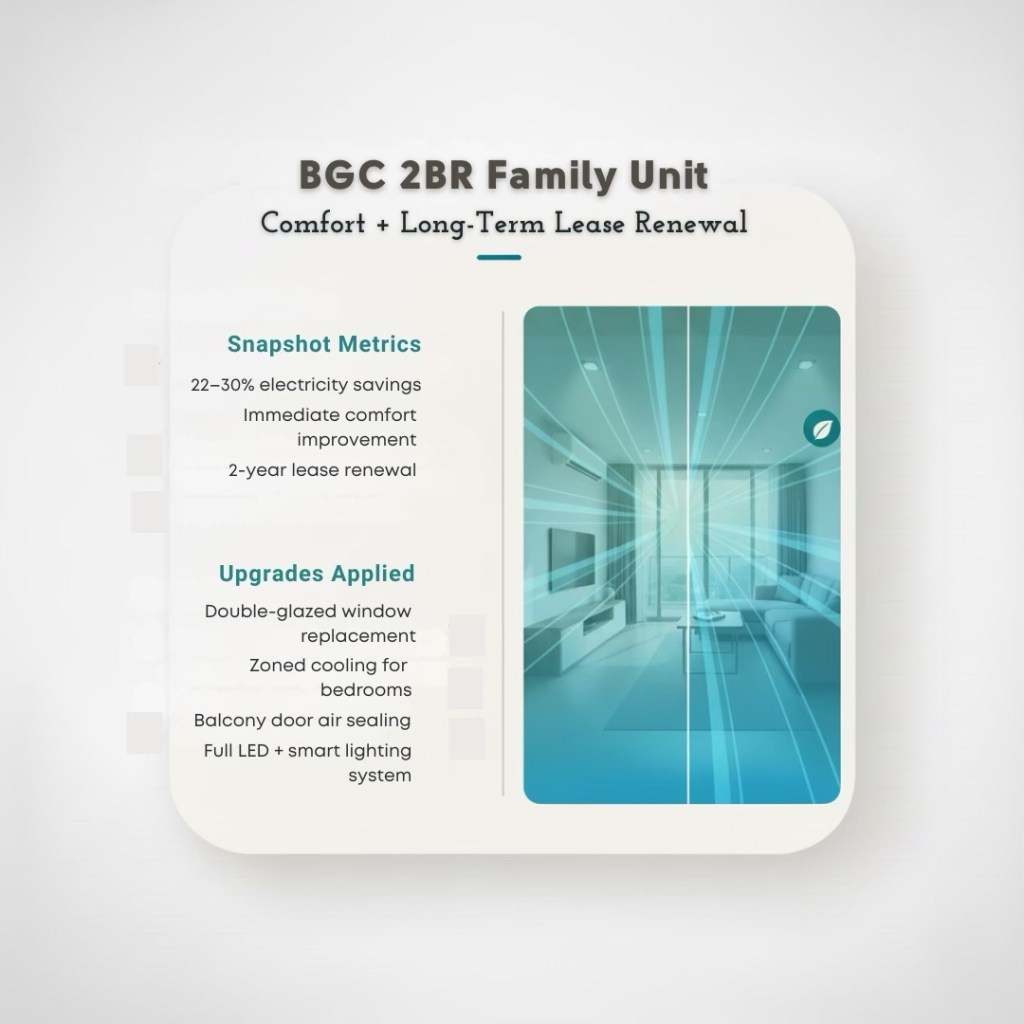
Case Study 5: BGC 2BR Family Unit — Major Comfort Improvement & Lease Renewal
Profile:
- 65 sqm 2BR condo in BGC
- Leased to a family of three
- Large glass façade with midday heat exposure
Key Problems Identified:
- Children’s room became hot in mid-afternoon
- ACs running longer at higher power
- Balcony door allowed minor air leakage
- Higher-than-expected electricity bills for the tenants
Upgrades Implemented:
- HOA-approved double-glazed window replacements
- Zoned cooling system (smaller inverter AC for each bedroom)
- Air sealing around balcony doors and window frames
- Smart lighting system for selective use in common areas
Results:
- 22–30% electricity savings depending on season
- Children’s room maintained consistent temperature
- AC runtime decreased substantially
- Tenants renewed for 2 additional years
- Owner avoided turnover and vacancy costs
Family renters value comfort deeply—making this demographic highly responsive to energy-efficient upgrades.
How to Prepare for an Energy-Efficient Renovation
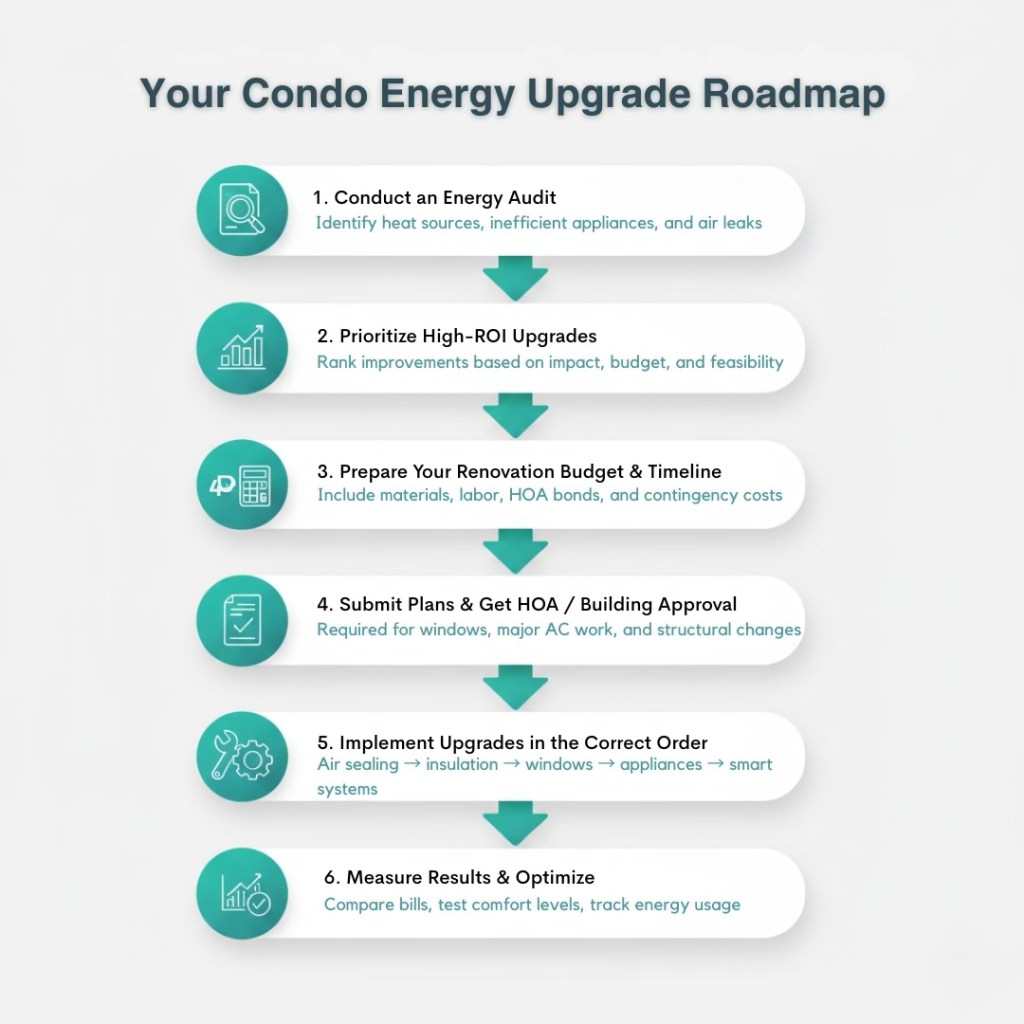
Upgrading a condominium for energy efficiency isn’t something you rush. The best results—lower electricity bills, better comfort, higher rental appeal, and stronger resale value—come from a renovation plan that is methodical, compliant, and strategic.
This section lays out a clear, Philippine-specific roadmap that eliminates guesswork, avoids HOA conflict, and ensures every peso generates measurable returns.
Step 1: Start With an Energy Audit (Your Baseline Assessment)
Every successful upgrade begins with a diagnosis. A structured audit reveals:
- where heat enters your unit
- which appliances consume the most power
- whether your AC is oversized, undersized, or underperforming
- air leaks along windows, sliding doors, and penetrations
- lighting and standby power inefficiencies
- maintenance issues affecting performance
In short, it tells you exactly where you’re losing money.
Why This Step Matters
- Prevents overspending on low-impact upgrades
- Identifies “quick wins” you can implement immediately
- Helps you prioritize high-ROI improvements
- Creates a benchmark for measuring post-renovation savings
Pro Tip: Save your audit
Step 2: Prioritize Upgrades Based on ROI and Budget
Not all upgrades deliver the same returns. Once your audit is complete, categorize your options into three tiers:
1. Quick Wins (Low Cost, High Impact)
- LED conversions
- Weatherstripping / gap sealing
- Smart plugs and timers
- Routine AC cleaning and refrigerant checks
These small adjustments often reduce electricity usage by 10–20% with minimal expense.
2. Mid-Range Upgrades (Moderate Cost, Strong ROI)
- Inverter air conditioners
- Low-E window films
- Ceiling or slab insulation
- Energy-efficient refrigerators or washers
These upgrades usually pay for themselves within 2–4 years and significantly improve tenant satisfaction.
3. Long-Term Investments (High Cost, High Comfort)
- Double/triple-glazed window replacements
- HOA-level solar installations
- Full appliance modernization
- Advanced insulation systems
Ideal for long-term investors, high-floor units, or families prioritizing comfort.
Step 3: Create a Renovation Budget and Timeline
A renovation without a plan is a guaranteed delay. Build a realistic budget that includes:
- materials and appliance costs
- labor and contractor fees
- delivery charges and haul-away fees
- renovation bonds (HOA requirement)
- contingency buffer (10–15%)
- separate budget for optional upgrades
Timeline Factors to Consider
- HOA approvals (3–21 days depending on the building)
- Contractor availability
- Work-hour restrictions (typically weekdays, 9 AM–4 PM)
- Delivery lead times for glazing and insulation materials
- Tenant schedules (if rented)
Proper planning prevents rushed decisions and costly rework.
Step 4: Secure HOA or Building Management Approvals
This is the step most owners underestimate—and the step most delays renovations.
Prepare These Before Submission:
- Technical specs of appliances or materials
- Floor plan or simple layout sketches
- Work schedule and labor roster
- Contractor accreditation and insurance
- Load calculations for electrical upgrades
- Material fire-rating certificates (if applicable)
Why HOAs Reject Applications
- Unclear plans or incomplete documents
- Safety concerns (fire ratings, drilling near utilities)
- Visible façade changes without justification
- Excessive noise or work that disrupts neighbors
- Use of non-accredited contractors
Securing written approval protects you legally and financially.
Step 5: Hire Credible, Accredited Contractors
Even the best product fails under poor installation. For condos—where space is tight and utilities are shared—you need contractors with high-rise renovation expertise.
Checklist for Choosing the Right Installer
- Experience with condominium energy upgrades
- Proof of past projects or photos
- Valid licenses and insurance
- Clear warranty terms (labor + material)
- Transparent pricing with no hidden costs
- Positive client references
Warning:
Improper installation of windows, insulation, or AC systems will erase your ROI. This step is non-negotiable.
Step 6: Implement Upgrades in the Right Order
Follow this sequence to avoid rework and optimize performance:
- Air sealing and minor repairs
- Insulation installation (ceiling/walls)
- Window replacements or Low-E film application
- Electrical modifications (if needed)
- Appliance upgrades
- Lighting retrofit (LEDs)
- Smart home setup and monitoring devices
This order ensures each step amplifies the next, giving you maximum savings for your budget.
Step 7: Validate Results After Installation
Don’t rely on gut feel—measure your results. Successful upgrades should produce verifiable outcomes.
Post-Renovation Checks
- Compare your electricity bills for 3 months before vs. 3 months after
- Evaluate indoor temperature stability
- Track real-time usage with smart monitors
- Test AC performance (cooling time, fan level, thermostat consistency)
- Document upgrades with photos, receipts, and warranties
For rental units, include these improvements in your listing. “Energy-efficient condo” is a powerful differentiator.
Why This Renovation Roadmap Works
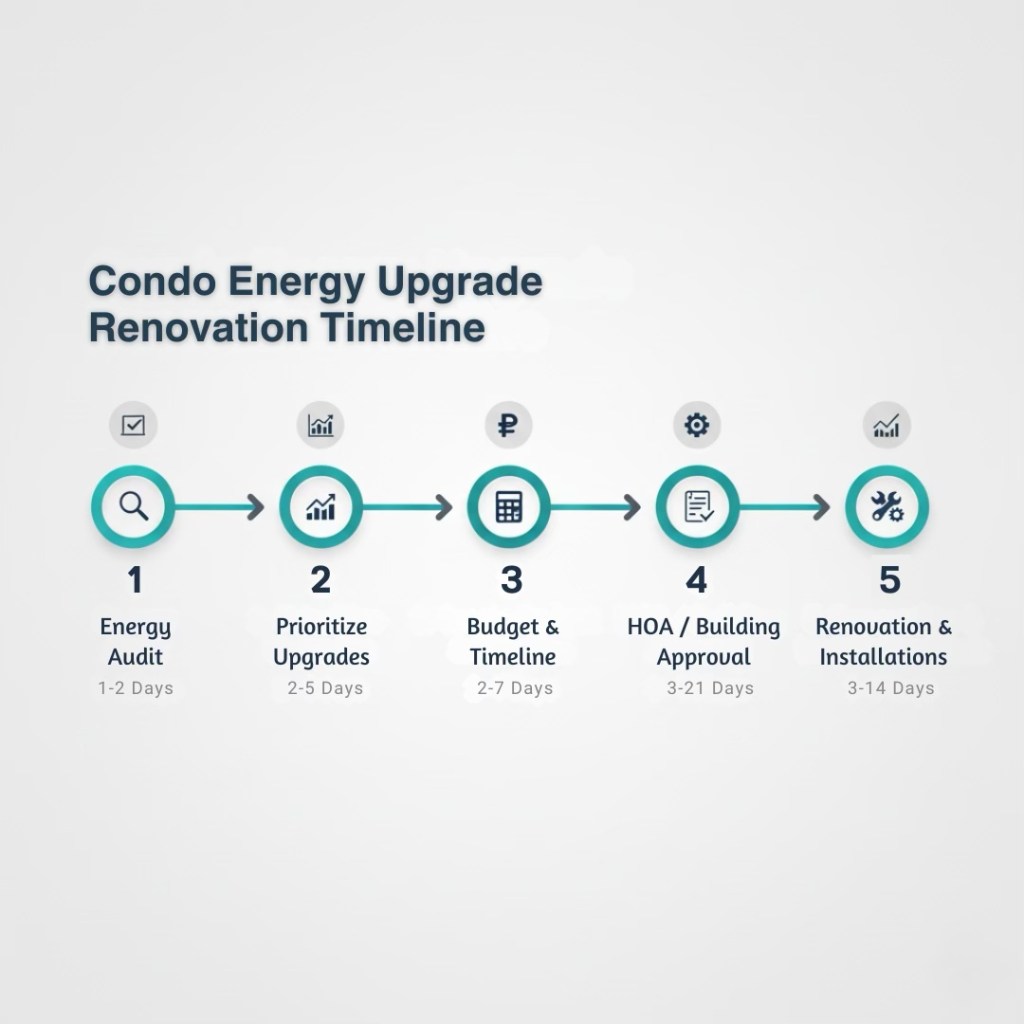
A structured approach delivers:
- Maximum savings with minimum guesswork
- Faster approvals and fewer disruptions
- Higher-quality installations
- Better comfort and reduced AC dependency
- Higher rental rates and lower vacancy
- Stronger resale value supported by documentation
When done right, an energy-efficient renovation pays for itself—and continues paying dividends long after.
Final Recommendations: Your Best Next Steps
Electricity rates will continue rising. Tenants will continue prioritizing comfort and efficiency. Buyers will continue comparing operating costs as aggressively as they compare amenities. The condo owners who upgrade now win on all fronts: lower monthly bills, higher rental performance, stronger resale value, and a future-proofed asset.
This section distills everything into clear, decisive next steps—so you know exactly what to do based on your goals, timeline, and budget.
If You Want Immediate Savings (Start This Week)
These fast, inexpensive upgrades immediately cut consumption without requiring HOA approval:
- Switch all bulbs to LEDs for instant heat reduction and lower wattage.
- Seal window and door gaps to stop cold air from leaking out.
- Clean and service your AC—dirty coils and filters waste up to 15% more electricity.
- Use smart plugs and timers to eliminate standby power and control appliance usage.
These simple changes typically reduce electric bills by 10–20%, even in small units.
If Your Goal Is Long-Term Comfort and Lower AC Usage
Address heat gain first. Philippine condos suffer heavily from direct sun exposure and poor insulation.
Prioritize these:
- Low-E window films for sun-heavy units.
- Ceiling or slab insulation to stabilize temperature in top-floor or sun-exposed units.
- Thermal blackout curtains for east- or west-facing bedrooms.
- Double-glazed windows if your HOA approves exterior modifications.
These upgrades solve the persistent “Ang init pa rin kahit naka-on ang aircon” problem and typically pay for themselves in 2–5 years.
If You’re Preparing to Rent Out Your Condo
Renters make decisions based on total monthly cost—rent + electricity. Make your unit a standout by improving efficiency and comfort.
Focus on:
- Inverter AC and refrigerator (top renter-preferred features)
- Smart home additions (timers, sensors, energy monitors)
- Comfort upgrades such as Low-E films and blackout curtains
Then use these features to position your unit:
List it as: “Energy-Efficient Unit — Low Monthly Electricity Costs.”
These words alone dramatically increase inquiries and reduce vacancy periods.
If You’re Preparing to Sell
Energy-efficient upgrades become negotiation leverage—and buyers will pay for it.
Here’s how to maximize resale value:
- Document every upgrade (receipts, warranties, before/after photos)
- Create a Spec Sheet summarizing your unit’s efficiency improvements
- Highlight long-term savings in your listing
- Prepare an energy audit result to show buyers a quantifiable advantage
You remove objections and frame your unit as a smarter, lower-cost option—often justifying a higher asking price and a faster sale.
If You Want to Future-Proof Your Condo Investment
Think in systems, not individual upgrades. Combine:
- inverter appliances
- insulated windows
- smart home automation
- Low-E films or glazing
- AC maintenance
- HOA-level solar participation (if available)
Together, these create a complete efficiency ecosystem that:
- lowers lifetime operating costs
- boosts tenant retention
- protects your property’s long-term value
- aligns with evolving buyer behavior
This positions your condo as a resilient, modern, high-performance asset.
The Smartest Next Step for Every Condo Owner
Regardless of your goal—renting, selling, upgrading, or simply lowering bills—the smartest and most impactful action is:
Conduct an Energy Audit.
It tells you:
- what to fix
- what to prioritize
- how much you’ll save
- what your expected payback period is
This single step prevents wasted spending and creates a clear, data-driven plan for your condo
Pair the audit with one or two high-impact upgrades, and you’ll feel the difference instantly—in comfort, in monthly bills, and in property value
Ready to cut your condo’s electric bill and boost its market value?
Let’s build your customized upgrade plan.
Every unit is unique—sun exposure, appliances, window design, HOA limitations, tenant behavior. A tailored plan eliminates guesswork and shows you the exact upgrades with the fastest returns.
Discover which improvements will lower your bills, raise your rental appeal, and increase your condo’s long-term value.
“Make your condo stand out. Market it as a low-electricity, energy-efficient unit.”
Get tailored recommendations on how to present your unit for maximum rental or resale appeal.
“Buying a condo? Choose one that saves you money every single month.”
Evaluate units based on efficiency, comfort, and ROI—not just amenities and floor area.







Leave a comment