

Contrary to popular belief, tiny living doesn’t mean giving up on modern conveniences. As the tiny homes trend evolves in the Philippines, a substantial portion of these compact residences comes equipped with advanced technology, effectively combining comfort, efficiency, and sustainability.
Smart Home Technology in Tiny Homes in the Philippines

Tiny homes are becoming increasingly popular in the Philippines, and many homeowners are choosing to incorporate smart home technology into their designs. Smart home technology can help tiny homeowners save energy, improve comfort, and increase security.
One of the most popular smart home features for tiny homes is smart lighting. Smart lights can be controlled remotely or set on a schedule, so homeowners can easily adjust the brightness and color temperature of their lights without having to get up. This can help homeowners save energy and create a more comfortable atmosphere in their tiny homes.
Another popular smart home feature for tiny homes is climate control. Smart thermostats can be used to adjust the temperature of a tiny home from anywhere, so homeowners can always be comfortable without having to waste energy. Smart thermostats can also be programmed to automatically adjust the temperature based on the weather, so homeowners can save even more energy.
Smart security systems are also a popular choice for tiny homeowners. Smart security systems can be used to monitor a tiny home for break-ins or other problems, and they can also be used to control access to the home. This can help homeowners feel more secure in their tiny homes, even when they are away.
Sustainable Tiny Homes in the Philippines

Tiny homes are a growing trend in the Philippines, and many homeowners are choosing to incorporate sustainable technologies into their designs. These sustainable technologies can help tiny homeowners reduce their environmental impact and live more simply.
One of the most popular sustainable technologies for tiny homes is solar power. Solar panels can be used to generate electricity from the sun, making tiny homes entirely self-sufficient in terms of power. This can save tiny homeowners money on their electricity bills and reduce their reliance on fossil fuels.
Another popular sustainable technology for tiny homes is the composting toilet. Composting toilets do not require water, so they are a great option for tiny homes in rural areas or off-grid. Composting toilets also produce nutrient-rich compost that can be used to fertilize plants.
In addition to solar power and composting toilets, many other sustainable technologies can be incorporated into tiny homes. These include rainwater harvesting, greywater recycling, and energy-efficient appliances. By choosing sustainable technologies, tiny homeowners can reduce their environmental impact and live more simply.
Maximizing Efficiency in Tiny Homes
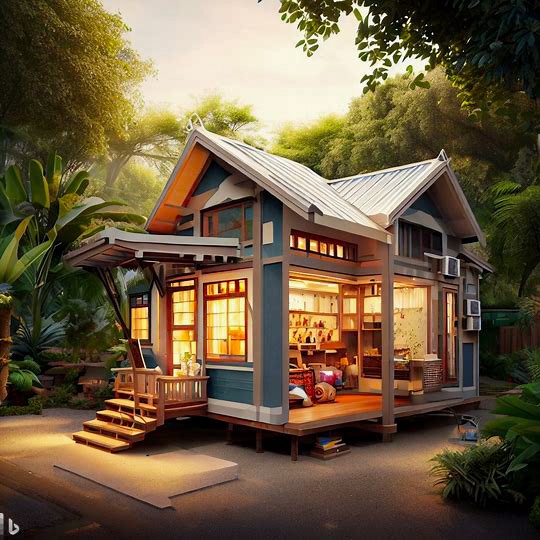
In addition to smart home technology and sustainable technologies, there are many other ways to maximize efficiency in tiny homes. These design strategies and appliances can help tiny homes be more comfortable, sustainable, and affordable.
One of the most important things to consider when maximizing efficiency in a tiny home is energy efficiency. Energy-efficient appliances, well-insulated windows, and LED lighting can all help to reduce energy consumption and save money on utility bills.
Another important factor to consider is space. In a tiny home, every square inch counts, so it is important to use space efficiently. This can be done by using multi-functional furniture, built-in storage, and vertical space.
Finally, it is important to choose sustainable materials and building practices for tiny homes. This can help to reduce the environmental impact of the home and save money on the upfront cost.
Tiny Homes: A Greener Future
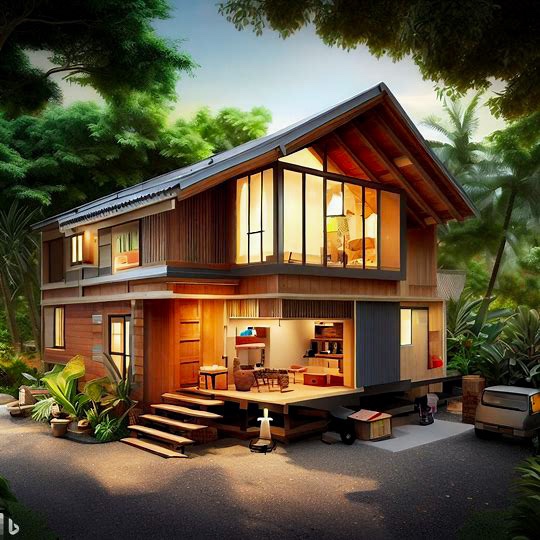
Tiny homes are becoming increasingly popular in the Philippines and for good reason. They offer a compact and affordable lifestyle that is also better for the environment.
Tiny homes are much smaller than traditional homes, which means they require less energy to heat and cool. They also often use sustainable materials and features, such as solar power and composting toilets. This makes them a great option for people who want to live a greener lifestyle.
In addition to being more environmentally friendly, tiny homes can also save you money. They are often much cheaper to build and maintain than traditional homes. This makes them a great option for people who are looking to downsize or who are on a budget.
If you are looking for a more sustainable and affordable way to live, a tiny home may be the perfect option for you.
In conclusion, high-tech tiny living represents the future of housing in the Philippines. As the country grapples with issues like urban overcrowding, rising energy costs, and environmental concerns, these compact, tech-savvy, and green homes offer a promising solution. Through the innovative use of technology and sustainable practices, they prove that size doesn’t limit comfort and convenience – in fact, it might enhance them.


Leave a comment