
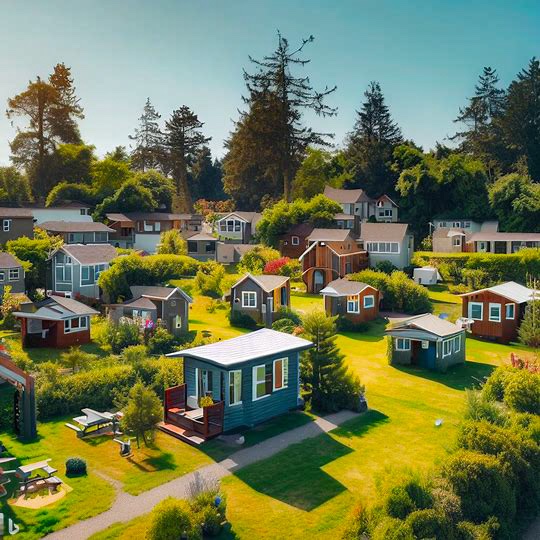
The tiny home movement is transforming the way people perceive their living spaces. However, beyond individual residences, another noteworthy offshoot has emerged: tiny home communities. These groupings of tiny homes, usually in rural or suburban areas, cater to those seeking both the benefits of tiny living and the warmth of shared community spaces.
Tiny Home Communities: A New Way to Live
Tiny home communities are a growing trend in the United States. These planned neighborhoods offer the benefits of tiny living, such as affordability, minimalism, and a smaller ecological footprint. But they also go beyond that by providing shared amenities that enrich community living.
Some of the shared amenities that you might find in a tiny home community include:
- Shared gardens for growing produce
- Communal kitchens for shared meals
- A co-working space for remote workers
- A playground for families with children
The focus of these communities is on shared resources, mutual support, and creating a sense of community among residents. This can be a great way to live for people who want to downsize their living space, live more sustainably, or connect with like-minded people.
Location and Lifestyle in Tiny Home Communities
Tiny home communities are often located in rural or suburban areas, where land is more affordable and abundant. This allows for more spacious common areas and the opportunity for residents to connect more closely with nature. Vegetable gardens, nature trails, and outdoor recreational facilities are common features, adding to the appeal of these communities.
Here are some of the benefits of living in a tiny home community in a rural or suburban area:
- Affordability: Land is typically much more affordable in rural and suburban areas than in urban areas. This can save you a lot of money on your tiny home purchase and on your monthly mortgage payments.
- Space: Tiny home communities often have more spacious common areas than traditional neighborhoods. This can give you more room to relax, entertain, and enjoy the outdoors.
- Connection with nature: Tiny home communities in rural and suburban areas are often located close to nature. This can give you the opportunity to hike, bike, fish, and enjoy the great outdoors.
- Sense of community: Tiny home communities can foster a sense of community among residents. You can get to know your neighbors, share resources, and help each other out.
Tiny home communities are more than just a place to live. They are a lifestyle. Residents of tiny home communities share more than just a roof over their heads. They share values, goals, and a commitment to living simply and sustainably.
Tiny home communities are built on the principles of cooperation, sharing, and mutual support. Residents work together to maintain the community, raise children, and plan events. They share tools, resources, and knowledge. They help each other out in times of need.
This sense of community is one of the most appealing aspects of tiny home living. It can be difficult to find a sense of belonging in today’s world. But in a tiny home community, you are surrounded by people who share your values and your vision for a better future.
In conclusion, the emergence of tiny home communities represents an exciting evolution in the tiny home movement in the Philippines. These communities encapsulate the benefits of tiny living while adding the dimension of shared spaces and community interaction. As the country continues to face urban congestion and rising property prices, tiny home communities offer a compelling alternative for those seeking a simpler, community-focused, and nature-connected lifestyle.





Leave a comment