
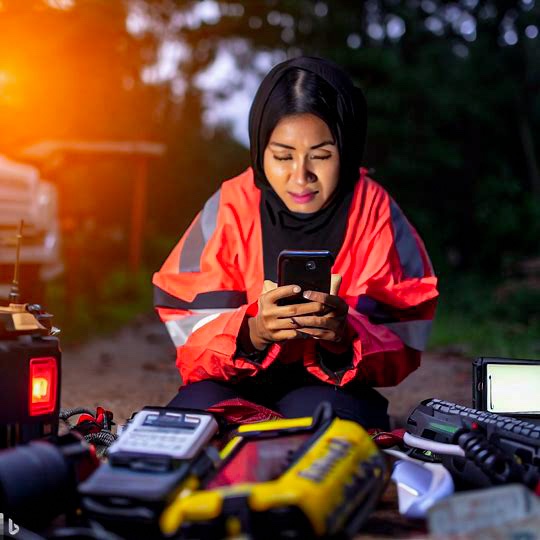
In the throes of an emergency, communication becomes more than just a tool—it’s a lifeline. Whether it’s reaching out for help, letting loved ones know you’re safe, or coordinating a response, ensuring you can communicate effectively can make a significant difference. This article delves into the importance of communication during emergencies and offers tangible steps to keep those crucial lines open.
The Challenge of Maintaining Communication in Disasters
Disasters can disrupt communication, making it difficult to stay in touch with loved ones and emergency services. Power outages can render electronic devices useless, and physical barriers can impede vocal communication.
Here are some challenges of maintaining communication during disasters:
- Power outages: Power outages can make it difficult to use electronic devices, such as phones, computers, and radios. This can make it difficult to stay informed about the disaster and to communicate with others.
- Physical barriers: Natural disasters can also create physical barriers that can impede communication. For example, a flood can wash away roads and bridges, making it difficult to travel and communicate.
- Communication overload: In the aftermath of a disaster, there can be a lot of communication happening. This can make it difficult to filter out the important information and stay focused.
The Power Bank Advantage in Disaster Preparedness
In today’s digital age, mobile phones are essential communication devices. They can be used to make calls, send texts, and access emergency apps. However, power outages can quickly drain a phone’s battery, leaving you without a way to communicate.
This is where power banks come in.
Power banks are portable battery packs that can be used to charge your phone in the event of a power outage. They come in a variety of sizes and capacities, so you can choose one that is right for your needs.
When choosing a power bank, there are a few things to keep in mind:
- Capacity: The capacity of the power bank is measured in milliampere-hours (mAh). The higher the mAh, the longer the power bank will be able to charge your phone.
- Charging ports: Most power banks come with multiple charging ports, so you can charge multiple devices at the same time.
- Fast-charging capabilities: Some power banks have fast-charging capabilities, which can quickly charge your phone’s battery.
- Solar charging: If you live in an area that is prone to power outages, you may want to consider a power bank with solar charging capabilities. This will allow you to charge your power bank even when there is no power.
Once you have chosen a power bank, it is important to keep it charged and operational.
- Make a habit of checking the power bank’s condition and charging it regularly.
- Store the power bank in a cool, dry place.
Signaling for Help with Whistles and Bells
When electronic communication fails or is inadequate, traditional methods can be invaluable. Whistles and bells are two such methods that can be used to signal for help.
High-Decibel Whistles
Whistles are a great way to signal for help because their shrill sound can travel long distances. This makes them ideal for situations where you might be trapped or need to conserve energy. Shouting can be strenuous, so a whistle can be a lifesaver in these situations.
Bells
Bells can also be used to signal for help. They can be especially useful if they are loud and resonate well. Bells can be rung intermittently to conserve energy while still sending a clear distress signal.
Universal Signals
It is important to familiarize yourself with universal emergency signals using whistles or bells. For example, three short blasts usually indicate distress.
Here are some additional tips for signaling for help with whistles and bells:
- Choose a whistle or bell that is loud and easy to blow.
- Make sure the whistle or bell is in good working condition.
- Practice using the whistle or bell so you can signal for help effectively.
- If you are signaling for help in a group, designate one person to blow the whistle or ring the bell.
- Be aware of the surroundings and signal for help in a way that will not put yourself or others in danger.
Other Effective Communication Tips for Disasters
In addition to having the right devices and tools, there are other factors to consider for effective communication in a disaster.
- Emergency numbers: Make sure you have emergency numbers saved and memorized. In many countries, numbers like 911 or 112 provide a direct line to emergency services.
- Pre-set messages: Consider having pre-set messages in your phone that you can quickly send to inform loved ones about your situation. This can be especially helpful if you are in an area with poor cell reception or if you are unable to speak.
- Stay calm: Effective communication, especially in emergencies, requires clarity of thought. Taking deep breaths and staying calm will help you to convey information effectively and understand instructions or information received.
While emergencies are inherently chaotic and unpredictable, ensuring effective communication provides a semblance of control, connection, and hope. By taking proactive measures, like investing in power banks and including signaling tools in your emergency kit, you’re not just preparing to face a crisis; you’re ensuring that when the unexpected strikes, you’re heard, connected, and not alone.





Leave a comment