
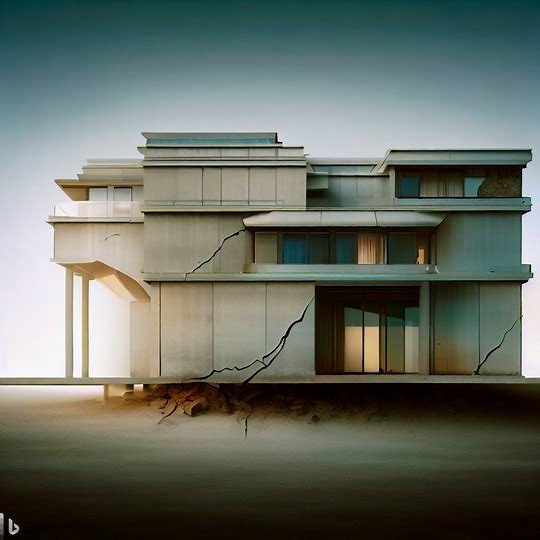
In my tenure as a real estate agent, I’ve seen countless properties, each telling its own story. I once collaborated with a renowned architect who emphasized the paramount importance of a building’s foundation. He shared a cautionary tale of a mansion, immaculately designed but with a flawed foundation. Within a short period, despite its grandeur, the structure began to show alarming signs of wear. This experience was a vivid testament to the fact that even the most aesthetically pleasing property is only as good as its foundation. With this in mind, this article aims to shed light on the various types of foundations, detailing their advantages and potential drawbacks. For anyone venturing into property investments or development, understanding these foundational aspects is a crucial step in ensuring the longevity and value of your asset.
1. Shallow Foundations (Spread Footings)
Shallow foundations, also known as spread footings, are a type of foundation that distributes the load of a building to the soil adjacent to the surface. They are typically used in areas where the soil is strong enough to support the weight of the building without sinking or shifting.
There are several different types of shallow foundations, including:
- Isolated footings: These are individual footings that support a single column or pier.
- Strip footings: These are continuous footings that support a row of columns or a wall.
- Combined footings: These are footings that support two or more columns or piers.
- Mat foundations: These are large, flat footings that support an entire structure.
Shallow foundations are a cost-effective and efficient way to support buildings on relatively stable soil. They are also relatively easy to construct, which can save time and money on construction.
- Pros:
- Economical: Shallow foundations are less expensive to construct than deep foundations.
- Quick and easy to build: Shallow foundations can be built quickly and easily, which can save time and money on construction projects.
- Requires fewer materials: Shallow foundations require fewer materials than deep foundations, which can also save money.
- Cons:
- Not suitable for heavy structures: Shallow foundations are not suitable for heavy structures, such as skyscrapers or industrial buildings.
- Vulnerable to soil shifts: Shallow foundations can be vulnerable to soil shifts, which can cause damage to the foundation and the building above it.
- Can be affected by frost heave: Shallow foundations can be affected by frost heave in colder climates, which can cause the foundation to heave upward.
Read More: Guide to Spread Footings: Why Shallow Foundations Dominate Modern Construction
2. Slab-on-Grade Foundation
A slab-on-grade foundation is a type of foundation that is made by pouring concrete directly onto the ground. It is a popular choice for foundation construction because it is simple and affordable.
Slab-on-grade foundations are typically used in areas with stable soil conditions. They are not suitable for areas with expansive soils, as the concrete slab can crack due to the expansion and contraction of the soil.
Here are some of the pros and cons of slab-on-grade foundations:
- Pros:
- Simple and affordable: Slab-on-grade foundations are relatively easy to construct, which can save time and money on construction projects.
- Efficient use of space: Slab-on-grade foundations do not require a basement or crawlspace, which can save space in the home.
- Durable: Slab-on-grade foundations can be very durable if they are properly constructed.
- Cons:
- Not suitable for all soil conditions: Slab-on-grade foundations are not suitable for areas with expansive soils.
- Vulnerable to moisture: Slab-on-grade foundations can be vulnerable to moisture, which can cause cracking and decay.
- Not as energy-efficient as other foundation types: Slab-on-grade foundations are not as energy-efficient as other foundation types, such as basements and crawlspaces.
Read More: The Complete Guide to Slab-on-Grade Foundation Construction
3. Pier and Beam Foundation (Crawlspace Foundation)
Pier and beam foundations are a type of foundation that consists of piers or columns that support beams or girders, which in turn support the structure. The beams or girders are typically spaced 8 to 10 feet apart, and the piers or columns are typically 4 feet tall. The space between the ground and the bottom of the structure is called a crawlspace.
Pier and beam foundations are versatile and can be used in a variety of soil conditions. They are also durable and can withstand a lot of weight. Additionally, pier and beam foundations create a crawlspace, which provides access to the plumbing and electrical systems of the home.
Here are some of the pros and cons of pier and beam foundations:
- Pros:
- Versatile: Pier and beam foundations can be used in a variety of soil conditions.
- Durable: Pier and beam foundations are durable and can withstand a lot of weight.
- Creates a crawlspace: The crawlspace provides access to the plumbing and electrical systems of the home.
- Cons:
- More expensive than other foundation types: Pier and beam foundations are more expensive to construct than other foundation types, such as slab-on-grade foundations.
- Requires more labor: Pier and beam foundations require more labor to construct than other foundation types.
- Can be more difficult to repair: Pier and beam foundations can be more difficult to repair than other foundation types.
Read More: Pier and Beam Foundations: Building Above Ground for Enhanced Durability and Flexibility
4. Pile Foundations
Pile foundations are deep foundations that transfer the load of a structure to deeper, more stable soil strata. They are often used in areas with weak surface soils or where there is potential for soil shifting.
- Advantages of Pile Foundations
- Suitable for buildings with heavy loads
- Can be used in areas with weak surface soils
- Effective in areas with potential soil shifting
- Can be used to support structures in seismically active areas
- Can be installed in difficult-to-reach areas
- Disadvantages of Pile Foundations
- Expensive and time-consuming to install
- Requires specialized equipment and expertise
- Potential noise and vibration issues during installation
- Can damage existing structures
When to Use Pile Foundations
Pile foundations are a good choice for buildings with heavy loads, structures in seismically active areas, and structures in areas with weak or unstable soils. They can also be used to support structures in difficult-to-reach areas.
Read More: Stable from the Ground Up: The Essential Guide to Pile Foundations in Construction
5. Mat or Raft Foundations
Mat or raft foundations are thick concrete slabs that are reinforced with steel. They are designed to cover the entire contact area of a structure, which helps to distribute the load evenly and reduce the risk of differential settlement.
- Advantages of Mat or Raft Foundations
- Even load distribution: Mat or raft foundations distribute the load of a structure evenly over a large area, which helps to reduce the risk of differential settlement. This is important for buildings with heavy loads or that are located on weak soils.
- Suitable for difficult soils: Mat or raft foundations can be used in areas with difficult soils, such as areas with expansive clays or areas that are prone to flooding.
- Reduces settlement: Mat or raft foundations can help to reduce settlement by distributing the load evenly over a large area. This can help to prevent damage to the structure and its foundations.
- Disadvantages of Mat or Raft Foundations
- Cost: Mat or raft foundations are more expensive than other types of shallow foundations, such as footings or piers.
- Excavation and site preparation: Mat or raft foundations require excavation and site preparation, which can add to the cost of the project.
- Affected by soil moisture: Mat or raft foundations can be affected by soil moisture variations. This can cause the foundation to expand or contract, which can lead to damage to the structure.
When to Use Mat or Raft Foundations
Mat or raft foundations are a good choice for buildings with heavy loads or that are located on weak soils. They can also be used in areas with difficult soils, such as areas with expansive clays or areas that are prone to flooding.
Read More: Laying a Firm Foundation: A Detailed Examination of Mat or Raft Systems in Construction
6. Basement Foundation
Basement foundations are a type of deep foundation that extends below ground level to create a room or space below the main level of a home. They offer a number of advantages, including:
- Additional living or storage space: Basements can be finished into living space, such as bedrooms, bathrooms, or recreation rooms. They can also be used for storage, providing much-needed space for belongings.
- Stability and robustness: Basement foundations are very stable and can offer protection against extreme weather events, such as hurricanes and tornadoes. They can also help to reduce noise levels from outside the home.
- Good insulation properties: Basements are naturally well-insulated, which can help to save energy costs on heating and cooling.
However, basement foundations also have some disadvantages, including:
- Expensive to construct and waterproof: Basement foundations can be more expensive to construct than other types of foundations, and they also require careful waterproofing to prevent moisture problems.
- Potential for moisture and flooding issues: If not properly waterproofed, basements can be susceptible to moisture and flooding. This can damage the foundation and the contents of the basement.
- Requires rigorous design for adequate ventilation: Basements need to be properly ventilated to prevent moisture buildup and mold growth. This can require careful planning and design.
Read More: Digging Deep: The Benefits and Challenges of Basement Construction
The foundation you choose for your building will largely depend on the type of structure, soil conditions, climate, and budget constraints. Engaging a professional like a geotechnical engineer or an architect can provide insights into the best foundation choice for your specific requirements. Remember, the foundation is a crucial component of any structure – investing time and resources into its proper selection and construction will ensure the longevity and safety of your building.






 U-Property PH
Leave a comment