

In the architectural realm, various foundation types are chosen based on the nature of the soil, the load of the structure, and specific project requirements. Among these, Pile Foundations stand out as a deep foundation system designed to ensure stability in challenging ground conditions. This article aims to provide a comprehensive understanding of Pile Foundations, exploring their design, benefits, and potential challenges.
What is a Pile Foundation?
Pile foundations are a type of foundation that uses long, slender columns, known as piles, to transfer the weight of a building to deeper, more stable layers of soil or bedrock. Piles are driven or inserted into the ground until they reach a level where they can bear the load of the building.
Pile foundations are often used in areas with weak or unstable soil, such as near rivers or coastlines. They can also be used to support buildings on sloping or uneven ground.
There are two main types of pile foundations: driven piles and bored piles. Driven piles are hammered into the ground, while bored piles are drilled into the ground. Bored piles are typically stronger than driven piles, but they are also more expensive to install.
Pile foundations are a reliable and effective way to support buildings in a variety of soil conditions. They are also versatile and can be used in a variety of applications.
Key Components of Pile Foundations

Pile foundations are a type of foundation that uses long, slender columns, known as piles, to transfer the weight of a building to deeper, more stable layers of soil or bedrock. The two key components of pile foundations are:
- • Piles: The main structural elements of a pile foundation, piles are typically made of concrete, steel, or timber. They are driven or inserted into the ground until they reach a level where they can bear the load of the building.
- Pile Cap: A thick concrete mat that rests on the pile heads and distributes the building load across the piles. The pile cap also helps to protect the piles from the elements.
Pile foundations are often used in areas with weak or unstable soil, such as near rivers or coastlines. They can also be used to support buildings on sloping or uneven ground.
Types of Piles
Piles are long, slender columns that are driven or inserted into the ground to transfer the weight of a building to deeper, more stable layers of soil or bedrock. There are two main types of piles: end-bearing piles and friction piles.
- End-bearing piles transfer the building’s load to a stable soil layer located deep below the ground. The pile is driven or inserted until it reaches a point where it can bear the load of the building.
- Friction piles transfer the load to the surrounding soil across the full height of the pile, using friction. The pile is driven or inserted into the ground until it reaches the desired depth, and then the surrounding soil is compacted around the pile.
There are also two main methods for installing piles: driven piles and bored piles.
- Driven piles are hammered into the ground using specialized equipment. This method is faster and less expensive than bored piles, but it can be more disruptive to the surrounding area.
- Bored piles are cast in place by first drilling a hole and then filling it with concrete. This method is more precise and less disruptive than driven piles, but it is also more time-consuming and expensive.
Benefits of Pile Foundations

Pile foundations offer several benefits over other types of foundations, including:
- Deep Stability: Pile foundations can reach depths of up to 100 feet, which allows them to transfer the weight of a structure to stable soil or bedrock. This makes them ideal for structures in areas with unstable surface soils or high water tables.
- Versatility: Pile foundations can be used in a variety of soil types and conditions, including those that are not conducive to shallow foundations. This makes them a versatile option for a wide range of projects.
- Load-bearing Capacity: Pile foundations are capable of supporting extremely heavy structural loads. This makes them a good choice for large or heavy buildings, such as skyscrapers or bridges.
- Reduced Settlement: Pile foundations help to reduce settlement, which is the sinking or movement of a structure over time. This can help to prevent cracks in walls or foundations, and it can also improve the stability of a structure.
In addition to these benefits, pile foundations can also offer several other advantages, such as:
- Durability: Pile foundations are made from strong materials, such as concrete and steel, which can withstand the elements and the passage of time.
- Reliability: Pile foundations are a reliable way to support structures, and they are less likely to fail than other types of foundations.
- Maintenance: Pile foundations require very little maintenance, which can save money in the long run.
Potential Limitations of Pile Foundations
Pile foundations offer several benefits, but they also have some potential limitations. These limitations include:
- Cost: Pile foundations can be more expensive than other types of foundations, due to the depth and materials involved.
- Complexity: The construction process for pile foundations requires specialized equipment and expertise.
- Noise and Vibration: The driving process for piles can cause noise and vibration, potentially affecting surrounding structures or areas.
- Limited Accessibility: Pile foundations may not be suitable for sites with limited access to installation equipment.
- Maintenance: Pile foundations may require more maintenance than other types of foundations.
- Potential for Failure: If not designed or installed correctly, pile foundations can fail.
Considerations for Optimal Pile Foundation Construction
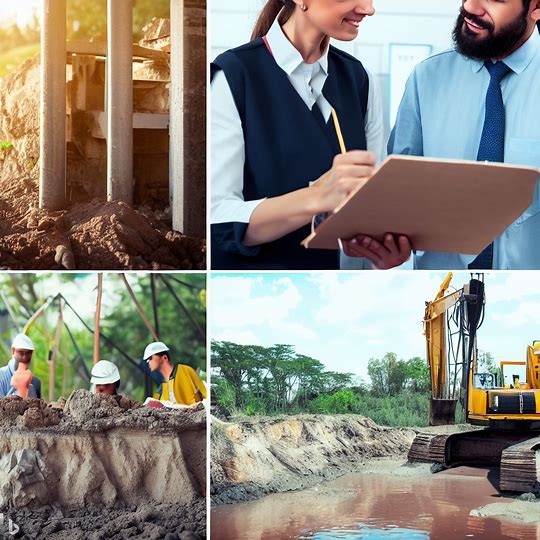
Pile foundations are a reliable and effective way to support structures in a variety of conditions. However, several factors need to be considered to ensure optimal construction. These include:
- Soil testing: Conducting thorough geotechnical investigations can provide valuable insights into soil profiles and help in determining pile depth and type. This is important because the type of pile that is best suited for a particular project will depend on the soil conditions.
- Load analysis: Understanding the precise load of the structure ensures appropriate pile selection and spacing. This is important because the piles need to be able to support the weight of the structure without exceeding their capacity.
- Environmental concerns: Consider potential impacts on nearby structures or water bodies when opting for pile driving. Pile driving can cause noise and vibration, which can potentially damage nearby structures. It can also stir up sediment in water bodies, which can impact aquatic life.
In addition to these considerations, it is also important to select a qualified and experienced contractor to perform the work. Pile foundation construction is a complex process that requires specialized knowledge and equipment. By carefully considering all of the factors involved, you can help to ensure that your pile foundation is constructed properly and will provide years of service.
Pile Foundations, while complex, offer unparalleled stability and support for structures built in challenging terrains or soils. Their ability to reach stable soil strata deep below the surface makes them a go-to choice for many heavy or critical structures. By partnering with experienced geotechnical engineers and understanding the nuances of the ground below, one can harness the full potential of pile foundations, ensuring a resilient and enduring base for any structure.








Leave a comment