
Step-by-Step Process of Buying Property in the Philippines
Buying property in the Philippines involves multiple steps, from defining your budget and buyer profile to final turnover and move-in. This guide covers the full buying sequence in a clear, step-by-step format, but it does not delve into the fine print of legal documents, tax computations, or detailed risk analysis. Use it as a roadmap: read it from start to finish for a complete picture or jump to the step that matches your current situation. This is the definitive backbone buyers return to whenever they need clarity and confidence in the process.
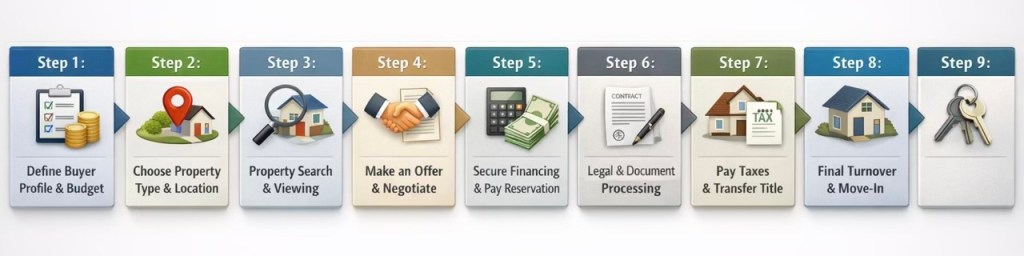
Step 1: Define Your Buyer Profile and Budget
Before you even start scrolling listings, you need a clear picture of who you are as a buyer and what your financial framework looks like. Skipping this step leads to wasted time, emotional decisions, and costly mistakes.
End-Use vs Investment vs Hybrid Intent
Determine your primary objective. Are you buying to live in the property, rent it out for income, or a combination of both? This decision shapes location, property type, and financing strategy. Investment-focused buyers prioritize yield and exit flexibility, while end-users focus on lifestyle, commute, and amenities.
Local Buyer vs OFW vs Foreign Buyer
Your residency status dictates eligibility and options. Local buyers have full access; OFWs can buy under the same rules but often rely on power of attorney or remote processes; foreigners face legal limits on land ownership but can invest in condominiums or enter joint-ownership structures. Knowing your status upfront prevents dead-end inquiries.
Cash vs Bank Financing vs In-House Financing
Decide how you’ll pay. Cash simplifies transactions and speeds up turnover but ties up liquidity. Bank loans spread the cost over years but require pre-approval, proof of income, and adherence to bank timelines. In-house developer financing may offer flexibility but often comes with higher interest or stricter conditions.
Budget Range with Buffer, Not Sticker Price Fantasy
Set a realistic budget that accounts for purchase price, taxes, fees, financing costs, and contingencies. Never base your plan on the exact listing price—always include a buffer of 10–20% to cover unexpected expenses or minor upgrades.
—> Buyer eligibility in the Philippines
This step ensures you enter the property market with clarity and a solid decision-making framework, saving time and reducing risk before you even visit a single property.
Step 2: Choose Property Type and Location
Before falling in love with a listing, narrow your options by property type and location. This step filters choices based on practical fit rather than emotional appeal, saving time and avoiding costly mistakes.
Condo vs House and Lot vs Townhouse
Condos offer convenience, security, and often amenities, but limited space and ownership of common areas only. House and lot properties provide full ownership, more space, and long-term appreciation potential but require maintenance and longer commutes in some areas. Townhouses strike a middle ground—smaller than a house but more privacy and outdoor space than a condo.
Preselling vs RFO vs Resale
Preselling units allow early entry at lower prices but involve waiting for construction completion. Ready-for-Occupancy (RFO) properties are move-in ready, offering certainty and immediate use. Resale properties provide negotiation opportunities and real-world insights on location, developer quality, and community—but may require renovation. Your choice affects financing, timing, and risk profile.
Metro vs Provincial Dynamics
Metro areas offer jobs, amenities, and resale value but come with higher prices and congestion. Provincial locations may provide better affordability, larger lots, and lifestyle appeal but often lower liquidity and longer commute times. Align location with your priorities and expected returns.
Lifestyle Fit vs Yield Expectations
Balance what you want to live with against what the property can deliver financially. End-users prioritize proximity to work, schools, and daily conveniences. Investors focus on rental yield, occupancy rates, and future capital appreciation. Understanding this trade-off upfront prevents misaligned purchases.
Choosing the right property type and location sets the foundation for a purchase that meets both your lifestyle needs and financial goals.
Step 3: Property Search, Viewing, and Initial Due Diligence
This is where your budget and buyer profile meet the market—but before you commit a single peso, you need rigorous filtering. The goal is to separate viable options from distractions, ensuring you invest time only in properties that pass early tests.
Shortlisting Properties
Start with a focused list based on your profile, budget, and preferred property type. Eliminate properties that don’t meet your basic criteria—location, price range, developer reputation, or unit size. A curated shortlist prevents decision fatigue and speeds up the evaluation process.
On-Site Viewings vs Virtual Tours
Whenever possible, visit the property in person to assess condition, surroundings, and community. If travel isn’t feasible, virtual tours can provide a first impression, but they cannot replace firsthand inspection. Always verify photos, videos, and floor plans against reality.
Red Flags to Watch Early
Early due diligence helps avoid costly errors. Look for warning signs such as inconsistent or delayed developer communications, unclear or disputed titles, and pricing anomalies that seem too good to be true. Early detection saves time and reduces risk later in the transaction.
Why “Looks Good” Is Not Due Diligence
A property may appear perfect at first glance, but aesthetics alone do not guarantee a sound investment or suitable home. Confirm permits, developer credibility, and compliance with local regulations. Visual appeal should complement, not replace, a disciplined evaluation process.
—> Property viewing checklist
—> Early red flags when buying property in the Philippines
Filtering aggressively at this stage ensures that only credible, suitable options move forward, keeping your time, energy, and finances protected.
Step 4: Price Negotiation and Offer to Purchase
Once you’ve shortlisted properties, it’s time to formalize your interest—but without locking yourself into unnecessary risk. This step ensures your intent is clear while keeping flexibility for negotiation.
Reservation vs Offer Mechanics
A reservation secures the property temporarily, giving you exclusive rights while finalizing your decision and financing. An Offer to Purchase (OTP) is a more formal commitment outlining proposed price, terms, and contingencies. Understanding the distinction prevents accidental overcommitment.
Negotiation Levers (Price, Terms, Inclusions)
Negotiation isn’t just about lowering the price. You can adjust payment terms, request additional inclusions like appliances or parking, or negotiate move-in dates. Identifying what’s flexible versus non-negotiable for both parties strengthens your position.
Why Verbal Agreements Mean Nothing
Until an agreement is documented in writing—typically via OTP or signed contracts—nothing is legally binding. Developers, agents, or sellers may verbally agree, but enforceability requires formal documentation. Protect yourself by confirming all terms in writing.
Timeline Expectations
From reservation to signed OTP, expect a process that can range from a few days to several weeks, depending on developer policies and buyer readiness. Being aware of typical timelines allows you to coordinate financing, document preparation, and due diligence without pressure.
—> How property pricing and negotiation works in PH
—> Reservation fees explained
This step lets you assert your interest professionally, leveraging negotiation tools while keeping your options secure.
Step 5: Contract Review and Legal Verification
Before transferring any money, you must confirm that the contract and ownership documents are accurate and enforceable. Skipping this step can lead to irreversible mistakes, disputes, or even loss of the property.
Contract to Sell vs Deed of Absolute Sale
The Contract to Sell (CTS) outlines the terms and conditions before full payment, including payment schedule and developer obligations. The Deed of Absolute Sale (DOAS) is the final document transferring ownership once payments are complete. Knowing the distinction ensures you understand your rights and obligations at each stage.
Why Legal Review Matters Even for Developers
Even reputable developers can have clerical errors, ambiguous clauses, or outdated legal references in their contracts. A professional legal review confirms the contract protects your interests, aligns with Philippine property law, and prevents future disputes.
Title Verification Basics
Confirming the title is genuine, unencumbered, and properly registered with the Registry of Deeds is critical. Early verification helps avoid issues such as liens, ownership disputes, or fraudulent listings. A preliminary check at this stage flags red flags without getting bogged down in technicalities.
—> Common legal risks when buying property
—> Understanding CTS vs DOAS
—> Title verification guide
This step ensures that your purchase rests on a secure legal foundation, minimizing risk before you commit significant funds.
Step 6: Payment Execution and Financing Completion
With contracts in place, the next step is moving funds and completing financing—aligning your cash flow with bank timelines and ensuring all paperwork is accurate. Misalignment here is a common source of delays and stress.
Cash Payment Flow
For cash buyers, the process is straightforward: funds are transferred according to the payment schedule, often via bank’s Manager Check. Even here, confirmation of receipts and acknowledgment by the developer or seller is essential to avoid disputes.
Bank Loan Processing Sequence
Bank financing involves several stages: loan application, document submission, property appraisal, credit evaluation, and final approval. Each step has its own timeline, so coordinating with the bank early ensures payments are released on schedule and prevents hold-ups in turnover.
In-House Financing Risks
Developer-provided or in-house financing may appear convenient but often carries higher interest rates or stricter conditions than banks. Verify the terms carefully and compare against alternative financing options to avoid overpaying or getting locked into unfavorable schedules.
Common Delay Points
Delays can occur due to incomplete documentation, mismatched signatures, late approvals, or bank processing bottlenecks. Anticipating these risks and preparing early helps keep the purchase on track.
—> Home loan approval process
—> Bank financing requirements
—> In-house financing pros and cons
This step ensures that funds and financing align seamlessly with the purchase schedule, keeping your transaction on track and stress-free.
Step 7: Taxes, Fees, and Transfer of Ownership
After payment, the next step is settling taxes, fees, and formally transferring ownership. Understanding what’s expected keeps the process smooth and prevents surprises.
When Taxes Are Triggered
Taxes come into play at two key points: upon sale (capital gains tax and documentary stamp tax, typically for the seller) and upon transfer of ownership (transfer tax and registration fees, typically for the buyer). Knowing these triggers ensures timely compliance and avoids penalties.
Who Pays What (Buyer vs Seller Norms)
In standard practice, the buyer covers transfer taxes, registration, and notarial fees, while the seller handles capital gains tax and documentary stamp tax. Some variations occur depending on negotiation or developer policies, but this division is widely recognized.
Timeline for Title Transfer
Once payment and documents are complete, title transfer can take several weeks to a few months depending on whether the property is new, resale, or developer-handled. Staying in touch with the registry office, your broker, or lawyer helps you track progress and plan move-in or financing milestones.
—> Taxes and fees when buying property in the Philippines
—> Title transfer process explained
This step ensures clarity on obligations, keeps your transaction on schedule, and secures legal ownership of your property.
Step 8: Final Turnover, Title Release, and Move-In
This is the final step where your property officially becomes yours. Proper execution here ensures a smooth transition from purchase to occupancy and protects your investment.
Turnover Inspection
Before accepting the property, conduct a thorough inspection. Check that all fixtures, finishes, and amenities match the agreed specifications. Document any defects or missing items to address with the developer or seller immediately.
Title Release and Safekeeping
Once the transfer is complete, ensure the original title is released and securely stored. This is your ultimate proof of ownership—losing or mishandling it can complicate future transactions or refinancing.
Utility Transfers and HOA Registration
Coordinate with utility providers for electricity, water, and internet setup. If the property is part of a homeowners’ association (HOA), complete registration and compliance requirements. Early action prevents service interruptions and access issues.
Why Many Buyers Drop the Ball Here
Many buyers treat this as a formality, overlooking inspections, documentation, and service transfers. Neglecting these details can lead to unresolved defects, delayed occupancy, or administrative headaches later.
—> Turnover checklist
—> Post-purchase responsibilities
Closing the loop properly ensures you move in with confidence, full legal ownership, and a fully operational property.
If This Is Your Situation, Start Here
Not every buyer starts at Step 1. This section helps you jump directly to the guidance that fits your situation, saving time and reducing overwhelm.
First-Time Buyer
Focus on beginner-friendly guides covering budgeting, financing, and step-by-step property selection. Start here if you want a structured, low-risk path through your first purchase.
Investor
Access guides on rental yield, capital appreciation, and exit strategies. Tailored for those prioritizing ROI and portfolio growth over lifestyle considerations.
OFW (Overseas Filipino Worker)
Find guidance on remote buying, using power of attorney, and managing transactions from abroad. Essential for buyers who can’t be on-site during the process.
Foreigner
Understand ownership limitations, condominium investment options, and legal structures available to non-Filipino buyers. Critical for compliance and maximizing opportunities within legal bounds.
By clicking the link that matches your profile, you land directly on resources designed for your needs, improving navigation, reducing friction, and enhancing internal link flow across the site.

 U-Property PH