

Sweat dripping down your brow the moment you step inside your house? The Philippine summer heat can be brutal, and your electricity bill can feel just as scorching. But what if you could keep your home comfortably cool without constantly reaching for the thermostat? We know how it is – that intense heat is no joke! That’s why we’ve put together this ultimate guide packed with practical and effective energy-saving tips to help you survive the Philippine summer heat while keeping your hard-earned pesos in your pocket.
1. Maximize Coolness: Tips for Your Air Conditioning and Fans
Let’s be real—during a sweltering Philippine summer, a cold blast of aircon can feel like a lifeline. But without smart habits, comfort can come at the cost of a painful Meralco bill. Here’s how to stay chill while keeping energy use in check.
Regular Aircon Maintenance Is Your First Defense
A neglected aircon doesn’t just underperform—it also guzzles electricity. Clogged filters and dirty coils can reduce efficiency by up to 15%, making your unit work harder than it should. Cleaning your filters every 2–4 weeks is a quick DIY win. For deeper maintenance (like checking refrigerant levels and cleaning internal parts), schedule a professional service at least once a year—preferably before the summer rush.
Real Talk: I once skipped servicing my AC for a year. My electric bill spiked by over ₱1,000, and the room still felt humid. After a quick ₱500 service call and filter change, the difference was massive.
Find Your Sweet Spot: Thermostat Settings That Work
Cranking your aircon to 16°C might feel refreshing—but it’s also an energy hog. The ideal indoor temperature for energy savings is 24°C to 25°C. Every degree below that can increase your cooling costs by 6% to 8%. If your unit has a built-in eco mode, use it. You’ll maintain a steady temp with fewer power spikes.
🎯 Pro Tip: Use a programmable timer or smart plug to switch off your AC an hour before you wake up or leave the house.
The Dynamic Duo: Fans + AC = Cooling Power Couple
Fans don’t cool air—they move it. But when used together with your aircon, they make your space feel cooler while allowing you to set the temperature a bit higher (saving energy). Ceiling fans are ideal, but even portable fans help.
Make sure your ceiling fan rotates counterclockwise during summer. This pushes cool air down, creating a wind-chill effect that feels refreshing on your skin. When you leave a room? Turn the fan off—fans cool people, not spaces.
Natural Refreshment: Harnessing Cross Ventilation
You don’t always need machines to cool off. During early mornings or evenings—when temperatures dip—open windows on opposite sides of your home to create natural airflow. This cross ventilation draws in cool air and flushes out hot, stale indoor air.
💰 Bonus Tip: If you live in a high-rise condo, check the wind direction before opening windows. A well-placed window fan can help pull in or push out air, depending on what you need.
2. Shield Your Home: Making Your Windows Heat-Proof
If your home feels like an oven by noon, your windows could be to blame. In the Philippines, solar heat gain through windows accounts for up to 40% of unwanted indoor heat. But with the right adjustments, your windows can become your first line of defense against the summer blaze.
Seal the Gaps: Don’t Let Cool Air Leak Out
Even small gaps can lead to significant energy loss. Hot air sneaks in, cool air leaks out—and your aircon works overtime.
| How to Check: Light a candle or incense stick near the edges of your windows and doors. If the smoke wavers or gets sucked toward a crack, that’s a leak. |
| Quick Fixes: Use weather stripping (readily available at local hardware stores like Ace Hardware or Handyman) or silicone caulk to seal gaps. Not only does this improve insulation, but it also helps reduce outside noise and dust. |
| 👌🏻 Real Tip from a Makati Condo Owner: “After sealing the window edges with foam weather strips, my aircon ran quieter and didn’t kick on as often. I noticed about ₱800 savings on my next bill!” |
Reflect the Sun’s Rays: The Power of Window Films
Window films are like sunglasses for your home. Reflective or tinted films can block up to 78% of solar heat, reducing glare and UV rays without sacrificing natural light.
- Best for: East- and west-facing windows that get intense morning or afternoon sun.
- Where to Buy: Check Wilcon Depot, Shopee, or Lazada for DIY window film kits. For a more polished look, professional installers can tailor the film for your window size.
- Bonus Benefit: UV-blocking films also help protect your furniture, curtains, and wooden floors from sun damage.
Light is Right: Pick Smart Curtains and Blinds
Window coverings don’t just add style—they serve as thermal barriers when chosen wisely.
- Light-colored curtains reflect sunlight rather than absorb it. Pair these with sheer drapes to let in diffused light while keeping the heat out.
- For ultimate protection, invest in blackout curtains. These can reduce heat gain by up to 33% and are widely available in home sections of SM or Landmark.
- Use Strategically: Close curtains during peak heat hours (10 AM to 4 PM) and open them early in the morning or after sunset to promote air circulation.
Quick Fix: If you’re renting and can’t install permanent fixtures, try using removable curtain rods or temporary window shades with suction cups.
3. Breathe Easier, Save More: The Importance of Clean Filters
Keeping your home cool is only half the battle—keeping your indoor air clean is just as important, especially during the sweltering summer months in the Philippines. Dirty filters not only force your appliances to work harder (consuming more electricity), but they can also pollute the very air you’re trying to enjoy.
Aircon Filters: Clean Air, Cooler Bills
Air conditioners are among the biggest energy consumers in a Filipino household, especially during summer. A clogged filter restricts airflow, making the compressor work double time to cool your space. The result? Sky-high electricity bills and shortened AC lifespan.
| ✅ How Often Should You Clean? At least once a month, or every two weeks if you live in a high-dust area like Metro Manila. |
| ✅ DIY Tip: Slide the filter out, vacuum loose dust, then rinse with mild soap and water. Dry completely before reinstalling. |
| 🎯 Pro Tip: Schedule a full aircon cleaning service every 3–6 months. Many condo residents in Makati or BGC book trusted technicians via platforms like Gawin.ph or Fixman. |
Other Appliances Matter Too: Clean Beyond the AC
Clean filters are not just for aircons. Appliances like air purifiers, vacuum cleaners, kitchen hoods, and dehumidifiers also rely on healthy filtration systems.
- Vacuum Cleaners: Check the HEPA filter every month and replace as needed—especially if you have pets.
- Air Purifiers: In areas with high pollution or allergens (hello, Metro traffic and pollen season), replace filters every 3–6 months.
- Range Hoods: A greasy, clogged filter affects ventilation and can even be a fire hazard. Clean them monthly if you cook often.
Well-maintained appliances can cut energy use by up to 15%, and clean indoor air contributes to better sleep, fewer allergies, and stronger immunity.
Department of Energy Philippines
4. Smart Choices, Big Savings: Using Appliances the Energy-Efficient Way
Appliances may seem like passive background players in your home, but when used wisely, they can become your secret weapon against skyrocketing summer electricity bills. From the fridge in your kitchen to the chargers in your bedroom, every decision matters.
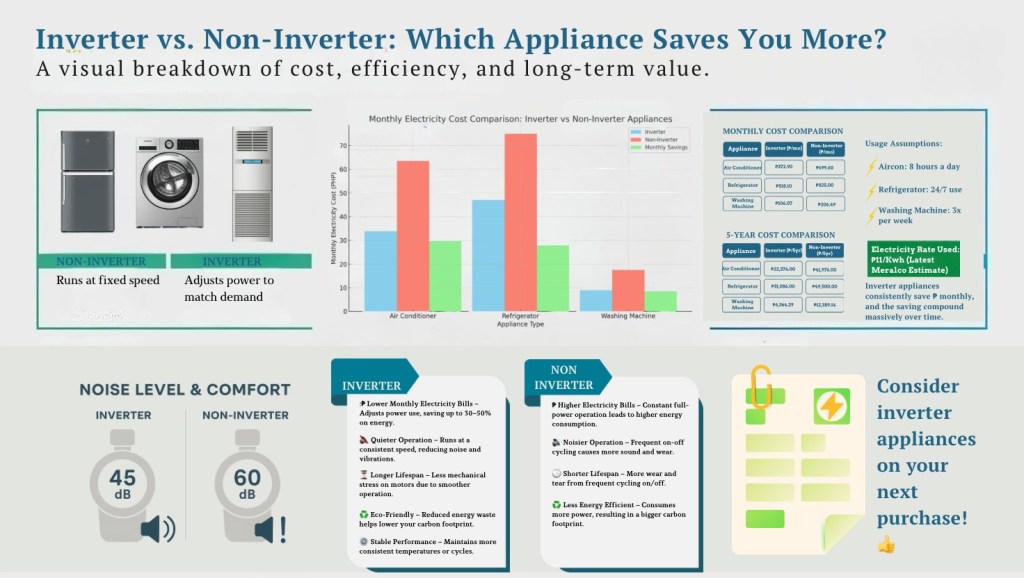
Invest Wisely: Energy-Efficient Appliances Are Worth Every Peso
When replacing or upgrading appliances, always consider energy efficiency—not just upfront cost. It may feel like a splurge at first, but it pays off fast.
| Look for the Yellow Label 🏷️ | In the Philippines, appliances with the Energy Guide Label help you compare annual energy consumption. A higher Energy Efficiency Factor (EEF) means lower consumption. |
| Best Bets for Savings: 💰 | Focus on your air conditioning units, refrigerators, washing machines, and even LED lighting. These are high-use devices that eat up a lot of power. |
No More Sneaky Power Drain: Eliminate Phantom Load
Many electronics sip electricity even when they’re turned off. This stealthy usage is called phantom load, and while each device consumes a little, it adds up.
| ✅ Unplug Chargers and Devices: Especially items like TVs, microwave ovens, Wi-Fi routers, and laptop chargers. |
| ✅ Use Power Strips with Switches: These let you turn off multiple devices at once—great for entertainment centers or home offices. |
| 🎯 Pro Insight: Studies show that phantom load can account for 5–10% of your household energy consumption. |
Time it Right: Run Appliances During Off-Peak Hours
Electricity demand—and prices—fluctuate throughout the day. In some areas of the Philippines, providers offer time-of-use (TOU) billing, which means cheaper rates during off-peak hours.
- What Are Off-Peak Hours? Usually late at night (10 PM to 6 AM), though this depends on your utility company.
- Plan Smart: Schedule laundry, dishwashing, or ironing during these times. You can also use a timer plug to automate appliances.
- Check With Your Provider: Meralco and other utility companies have resources online to help you understand TOU options.
5. The Secret Weapon: Insulating Your Home Against the Heat
Think of insulation as your home’s invisible shield—like a cozy blanket during cool nights or an umbrella under the scorching sun. Proper insulation doesn’t just improve comfort—it’s a game-changer for energy savings, especially during brutal Philippine summers.
Roof and Attic Insulation: Your First Line of Defense
Did you know that up to 70% of indoor heat gain can come through your roof? In a tropical country like the Philippines, your roofing material is constantly exposed to intense sunlight, turning your attic or top-floor ceiling into a heat trap. Without insulation, this heat easily radiates downward, making your indoor spaces feel like an oven.
| Solution: |
|---|
| ✅ Install fiberglass batt insulation – Easy to find in local hardware stores and effective in reducing conductive heat. |
| ✅ Use reflective foil insulation – A lightweight, low-cost material that reflects radiant heat before it penetrates the roof deck. |
| ✅ Add insulated roof panels or foam boards – Great for newly built homes or during renovations. These materials create a continuous barrier to heat entry. |
| Real-Life Impact: Homeowners who invest in roof insulation often report temperature drops of up to 5°C indoors and monthly energy bill savings of 10–15%. |
Wall and Floor Insulation: The Next Level of Energy Efficiency
While walls and floors may not seem like primary culprits, they retain and radiate heat—especially concrete walls that absorb sunlight all day. Over time, this can overwork your air conditioning and increase energy costs.
Consider These Upgrades:
- Install insulated wall panels or use double-wall construction with insulation in between.
- Use foam insulation boards behind drywall or decorative panels for an added layer of protection.
- Seal floor gaps and consider insulated flooring systems in upper floors or exposed foundations.
| Insulation Tips for Filipino Homes: |
|---|
| ✔️Start small: Even DIY insulation in the attic or behind ceiling panels can make a noticeable difference. |
| ✔️ Combine insulation with proper ventilation for best results. |
| ✔️ Use light-colored roofing or install a cool roof coating to reflect more sunlight. |
Note for Condo Owners: While full insulation might not be possible, applying thermal wallpaper, window films, and even insulated floor mats can still offer measurable comfort.
6. Keep it Clean, Keep it Cool: The Impact of Your Living Space
A tidy home isn’t just for aesthetics – it can actually help you stay cooler!
- Dusting is Your Friend: Improve Air Quality and Efficiency: Regularly dust and vacuum your home. This helps remove dust and allergens that can worsen in the summer heat and also ensures better airflow for your cooling systems.
- Declutter for Better Airflow: Piles of stuff can actually trap heat and restrict air circulation. A clutter-free home allows for better airflow, helping to keep the temperature more comfortable.
7. Extend the Cool Outdoors: Optimizing Your Surroundings
What you do outside your home can also impact the temperature inside.
- Create Your Own Shade Oasis: Use umbrellas, awnings, or build pergolas to create shaded areas around your house. This reduces the amount of direct sunlight hitting your walls and windows, preventing them from heating up as much.
- Go Green for Natural Cooling: Planting trees and shrubs around your home is a fantastic way to provide natural shade. As a bonus, the process of evapotranspiration from plants releases moisture into the air, creating a subtle cooling effect. Consider planting native Philippine tree species that thrive in the local climate.
Ready to transform your home into a cool and energy-efficient oasis this summer? Share your own tried-and-tested tips in the comments below and let’s help each other beat the heat while saving on our electricity bills!
Want to Dive Deeper into Energy Efficiency?
For more comprehensive information and resources on energy efficiency and conservation initiatives in the Philippines, be sure to check out:
- Department of Energy (DOE) Philippines – Energy Efficiency Programs: DOE Energy Efficiency Programs
- Energy Efficiency and Conservation (EEC) Program: Explore the DOE website or official government publications for details on the Energy Efficiency and Conservation Act and related programs.
By putting these practical tips into action, you can significantly enhance your home’s comfort during the Philippine summer while also making smart choices that benefit your wallet and the environment. Stay cool, stay wise, and enjoy a more comfortable and affordable summer!






 U-Property PH
Leave a comment