
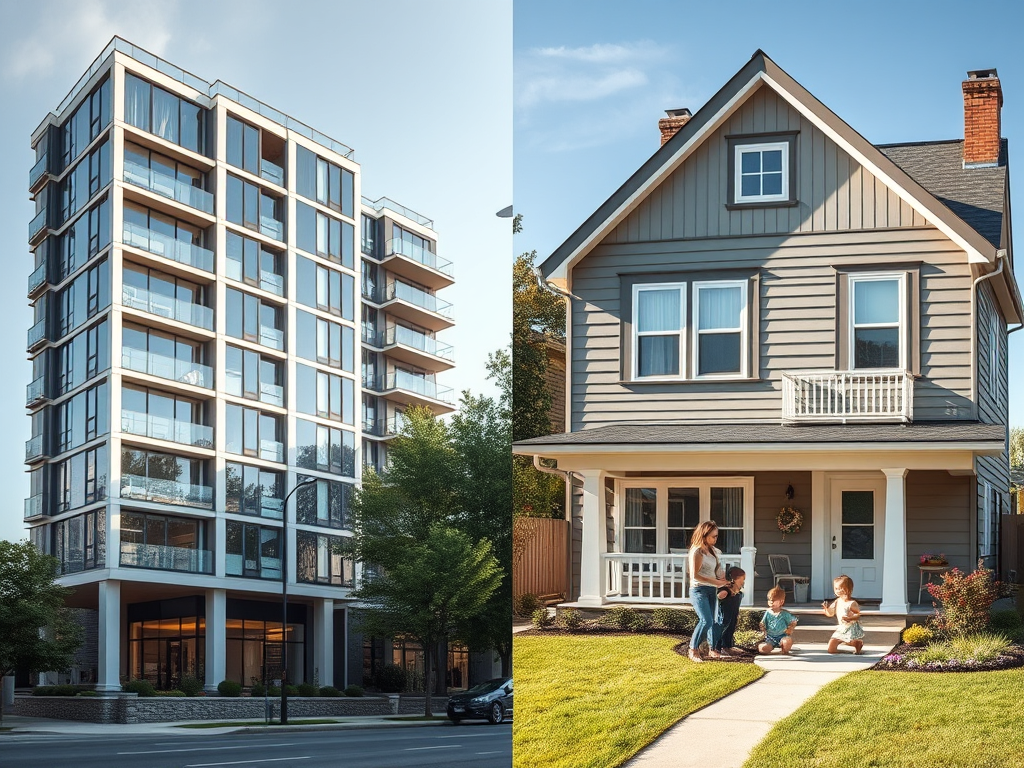
Choosing your dream home in the Philippines is a major milestone! But before you start Browse listings, a fundamental question arises: should you invest in a condominium unit or a traditional house and lot?
This isn’t just about property type; it’s about selecting a lifestyle that aligns with your priorities, finances, and future goals. Both condos and houses offer unique experiences, advantages, and trade-offs. Let’s dive deep to help you make an informed decision.
The Condo Life: Urban Convenience and Community 🏢
Imagine living in the heart of the city, minutes away from your office, favorite restaurants, and entertainment hubs. That’s the appeal of condo living. Condominiums offer a compact, often vertical, lifestyle centered around shared amenities and managed services.
Why Choose a Condo? The Upsides: ☑️
1. Affordability & Accessibility
Condos are generally more budget-friendly than houses and lots, especially in prime business districts and urban centers like Metro Manila, Cebu, or Davao.
- This makes them an attractive entry point for first-time buyers, young professionals, or investors.
- Payment schemes for pre-selling condos are often flexible, requiring lower monthly down payments spread over several years.
- While initial prices are lower, consider the per-square-meter cost, which can sometimes be higher than houses in less central locations. However, the total contract price is typically more manageable.
2. Lower Maintenance Responsibilities
Tired of worrying about roof leaks, exterior painting, or garden upkeep? Condo living significantly reduces these burdens.
- The building management corporation handles the maintenance and repair of common areas (hallways, lobbies, facades, amenities) and often structural issues. This frees up your time and energy.
- You are still responsible for everything inside your unit, but the major exterior and structural headaches are usually not yours alone.
3. Ready Access to Lifestyle Amenities
Many modern condominiums boast impressive amenities that promote convenience and well-being.
- Imagine swimming pools, fitness gyms, function rooms, children’s play areas, and sometimes even integrated retail spaces.
- These are typically included in your monthly dues, offering value and activities right at your doorstep without the cost or effort of maintaining them yourself.
- High-end condos might offer concierge services, laundry pick-up, or even co-working spaces. Check the specific amenities offered by the development.
4. Enhanced Security Features
Safety is a top priority for many, especially individuals or small families.
- Condos usually provide multi-layered security, including 24/7 security guards, CCTV surveillance, keycard access to building entrances, elevators, and even specific floors. This controlled environment offers peace of mind.
- Living in closer proximity to neighbors can also provide an informal sense of security and community watch.
Considerations for Condo Living: The Downsides ❌
1. Limited Living Space:
Condominium units, by nature, offer less square footage compared to most houses.
- This can be a significant constraint for growing families, individuals who need a home office, or those who simply desire more room for hobbies or storage.
- Outdoor private space, like a garden, is typically non-existent, aside from a small balcony.
- Unit sizes vary greatly, from compact studios to spacious three-bedroom units, but even the largest condos are often smaller than typical houses.
2. Monthly Association Dues
While amenities and maintenance are covered, they come at a cost.
- Monthly association or condo dues are mandatory fees paid by all unit owners to cover the operating expenses of the building and common areas (staff salaries, utility bills for common spaces, repairs, reserves).
- These dues can increase over time and must be factored into your monthly budget.
- Be aware of potential “special assessments” which are extra fees charged to all unit owners for unexpected major repairs or improvements not covered by the reserve fund.
3. Potential for Noise and Reduced Privacy
Living in close proximity to neighbors means sharing walls, floors, and ceilings. Noise from adjacent units or common areas can sometimes be an issue.
- While rules are in place, complete silence and solitude can be harder to achieve compared to a standalone house.
- Balconies can offer some private outdoor space but are still overlooked by neighbors.
4. Building Rules and Regulations
Condo living involves adhering to the rules set by the Condominium Corporation.
- These rules can govern everything from pet ownership restrictions (size, number, type) and renovation guidelines to noise curfews, garbage disposal protocols, and even guest policies.
- While necessary for communal living, they can feel restrictive to some.
- Always review the Master Deed and House Rules before purchasing to understand the specific limitations.
“I bought a pre-selling condo in BGC for ₱12 million in 2020. It was completed and turned over in 2024. By then, similar units in the building were already listed for ₱16 million or even higher. That ₱4 million increase in value in just four years was a fantastic return, proving urban condos can be excellent investments.”
Anna, Condo Owner in Taguig
The House and Lot Dream: Space, Privacy, and Freedom 🏠
For many Filipinos, owning a house and lot represents a long-held dream – a tangible asset providing space, privacy, and the freedom to create a truly personal sanctuary. This option typically means owning both the structure and the land it sits on.
Why Choose a House and Lot? The Advantages: ☑️
1. Ample Space and Unparalleled Privacy
This is often the primary driver for choosing a house. You get significantly more indoor living space, room for multiple bedrooms, a dedicated home office, and ample storage.
- Crucially, you also gain outdoor space – a yard, garden, or patio – perfect for families, pets, or simply enjoying fresh air.
- With no shared walls, you enjoy a higher degree of privacy and less disturbance from neighbors.
- This space is invaluable for families with children who need room to play or for individuals who enjoy gardening or outdoor entertaining.
2. Freedom for Customization and Renovation
As the sole owner of the property, you have the liberty to renovate, remodel, or expand your home as you see fit (within local building codes, of course).
- Want to add an extra room, change the floor plan, paint the exterior a unique color, or build a gazebo in the garden? The decision is yours.
- This allows you to truly tailor your living space to your evolving needs and personal taste.
3. Strong Investment Potential
A house and lot, particularly in a desirable or developing location, can offer substantial long-term appreciation. Land values in prime areas tend to increase steadily over time.
- Renovations and improvements can also significantly boost your property’s market value.
- Unlike condos where you own a share of the land, with a house and lot, you own the land title outright, which is often a key driver of long-term value growth.
4. No Monthly Association Dues (Usually)
Standalone houses do not typically incur the monthly association dues common in condominiums.
- While you will have ongoing expenses like property taxes (Amilyar) and utility bills, you avoid the recurring fee for shared amenities and common area maintenance.
- Note that houses within gated subdivisions will have their own set of monthly or annual homeowner association dues, but these are usually lower than condo dues and cover village-specific services like security and road maintenance.
Considerations for the House and Lot Lifestyle: The Challenges ❌
1. Higher Initial Costs and Ongoing Expenses
Houses generally require a larger upfront investment for the purchase price, down payment, and closing costs compared to condos.
- Beyond the purchase, you are solely responsible for all ongoing maintenance, repairs, and upgrades, which can be significant and unpredictable expenses (e.g., roof repairs, plumbing issues, exterior painting).
- Factor in costs for landscaping, pest control, and potentially higher utility bills due to larger square footage.
2. Full Responsibility for Maintenance and Repairs
The convenience of low maintenance in a condo is replaced by the responsibility of doing everything yourself (or hiring someone).
- This requires time, effort, and budgeting for unexpected issues.
- Regular preventative maintenance is crucial to avoid costly major repairs down the line.
3. Lack of Built-in Shared Amenities
Unless you purchase within a subdivision with its own facilities, a standalone house typically doesn’t come with shared amenities like pools or gyms.
- If you want these, you’ll need to join a private club or build them yourself, incurring additional costs.
- Some may see this as a positive, as they aren’t paying for amenities they don’t use.
4. Varying Security Considerations
Security can be more diverse for houses depending on the location.
- A standalone house on a public street might require more personal security measures (gates, alarms, dogs, reinforced doors) compared to a unit in a high-security condo building or a house within a well-guarded subdivision.
- Security is a crucial factor to research thoroughly based on the specific neighborhood.
“After years of living in a condo in Makati, we realized we needed more space for our growing family and our two dogs. We found a house in Antipolo. The transition meant more chores, but the extra space, the garden for the kids and dogs, and the freedom to paint or redecorate whenever we wanted made it absolutely worth it. It feels truly like our home.”
Mark & Sarah, Homeowners in Antipolo
Making Your Decision: Factors Beyond the Basics ⚖️
Choosing isn’t just about pros and cons; it’s about matching the property type to your unique situation. Ask yourself these crucial questions:
1. What is Your Lifestyle Like?
Are you a young professional who thrives on the city’s energy and prioritizes convenience and proximity to work and leisure? Or do you prefer a quieter, more spacious environment with room for a garden or outdoor activities? Your daily routine and long-term vision for how you want to live are paramount.
2. What is Your Budget – Now and in the Future?
Look beyond the initial purchase price. Factor in ongoing costs like property taxes, potential association dues (for both types), utility bills, and the significant difference in maintenance/repair expenses. Can your budget comfortably handle unexpected house repairs?
3. What are Your Long-Term Goals?
Do you plan to start or expand your family? Do you envision needing more space for hobbies or aging parents? Are you primarily buying for investment, personal use, or a blend of both? Your plans for the next 5, 10, or 20 years will heavily influence which property type is more suitable.
4. Where Do You Need or Want to Live?
Location often dictates availability and price. Condos are concentrated in urban centers, while houses and lots are more prevalent in suburban or provincial areas. Consider your commute to work, proximity to schools, family, and essential services.
5. How Much Time and Effort Are You Willing to Commit to Maintenance?
Be honest with yourself. Are you handy and enjoy DIY projects, or would you prefer to pay monthly dues and let management handle the upkeep?
Condo vs. House and Lot: A Quick Comparison 📊
Here’s a simplified visual guide to help summarize the key differences:
| Feature | Condominium | House and Lot |
|---|---|---|
| Initial Cost | Generally Lower | Generally Higher |
| Ongoing Fees | Monthly Association Dues + Property Taxes | Property Taxes (and potentially Village Dues) |
| Maintenance | Common Areas & Structure (Covered by Dues) | Entire Property (Owner’s Full Responsibility) |
| Living Space | Limited (Unit Size) | More Spacious (House + Lot Area) |
| Outdoor Space | Balcony (Limited Private) | Yard/Garden (Ample Private) |
| Amenities | Shared Facilities Often Included (Pool, Gym) | Generally No Shared Amenities (Unless in Subdivision) |
| Privacy | Less (Shared Walls, Proximity) | More (Standalone Structure, Distance from Neighbors) |
| Customization | Limited (Interior Only, Subject to Rules) | Extensive (Structure, Interior, Exterior, Landscaping) |
| Security | Often Multi-layered & Centralized | Varies by Location, Requires Personal Measures |
| Appreciation | Unit Value + Share of Land Value | Land Value + Building Value |
Ready to Find Your Philippine Home? 🗝️
The choice between a condo and a house and lot is deeply personal. There’s no universal “better” option, only the one that best fits you. Weigh the pros and cons against your specific needs, budget, and desired lifestyle.
Whether you’re dreaming of a minimalist urban pad or a sprawling suburban haven, understanding these differences is the first step.
Ready to explore properties that match your preferences? Contact us today to connect with a real estate expert who can guide you through the available listings and help you take the next step towards owning your ideal Philippine property.





Leave a comment