

As a real estate professional here in the Philippines, I’ve seen firsthand the dreams and hard work that go into owning a property. It’s more than just a structure; it’s your sanctuary, your family’s future, and a significant investment. Given our location in the Pacific Ring of Fire, understanding earthquake preparedness isn’t just a good idea – it’s absolutely essential for protecting everything you’ve built.
An earthquake can strike without warning, and while the thought can be daunting, being prepared is your most powerful tool. It’s about empowering yourself and your loved ones to navigate potential seismic events safely and minimize impact on your valuable property.
Here’s what you need to know to make sure you’re ready, because a prepared homeowner is a confident homeowner.
Understanding Our Seismic Reality in the Philippines
Let’s face it: earthquakes are a part of life here. From the activity along the Philippine Fault Zone to the potential “Big One” from the West Valley Fault affecting Metro Manila and surrounding areas, seismic risk is real. This isn’t meant to cause alarm, but rather to underscore the importance of proactive steps. Knowing the risk specific to your location is the first step in effective preparedness.
Essential Pillars of Earthquake Preparedness for Filipino Homeowners
Think of earthquake preparedness like building the foundation for your safety and property protection. It requires multiple layers working together.
1. Develop Your Family’s Emergency Game Plan
Communication can be challenging during a disaster. Having a clear plan ensures everyone knows what to do, where to go, and how to reconnect.
- Designate Safe Spots: Identify safe places within each room of your home – under sturdy tables or desks, away from windows and heavy furniture.
- Establish Meeting Points: Choose two meeting points: one right outside your home (in case of a sudden need to evacuate) and one further away (like a relative’s house or community center) in case you can’t return home. Make sure everyone knows the routes to both.
- Out-of-Town Contact: Designate a relative or friend outside your immediate area as your family’s check-in point. If local communication lines are down, it might be easier to call long-distance. Ensure everyone has this contact’s information.
- Practice, Practice, Practice: Walkthrough your plan with your family regularly. Conduct drills (“Drop, Cover, Hold On”). Knowing the plan by heart reduces panic during a real event.
2. Assemble Your Go-To Emergency Kit (Katastropi Kit)
This isn’t just a collection of items; it’s your family’s lifeline for the first 72 hours, or even longer, if needed. Keep it in an easily accessible, sturdy container near an exit.
- Water & Non-Perishable Food: At least one gallon of water per person per day for several days. Stock up on canned goods, energy bars, and dried food. Don’t forget a manual can opener!
- First Aid & Medications: A comprehensive first-aid kit. Include prescription medications (with a list of dosages and allergies), pain relievers, and sanitation items.
- Light, Communication, and Power: Flashlights with extra batteries, a battery-powered or hand-crank radio (to receive official updates), and a power bank for charging phones. A whistle is vital for signaling for help.
- Documents and Cash: Waterproof bag containing copies of essential documents like IDs, property titles (TCT/CCT), insurance policies, birth certificates, and bank records. Include some cash, as ATMs and credit card machines may not work. Don’t forget local maps!
3. Secure Your Property: Inside and Out
Preventing items from falling or becoming projectiles is a simple yet crucial step to prevent injuries and minimize damage to your interiors.
- Anchor Heavy Furniture: Secure tall bookshelves, cabinets, and appliances (refrigerators, water heaters) to the wall studs using straps or L-brackets.
- Latch Cabinets: Install latches on kitchen and other cabinets to prevent contents from spilling out and causing hazards or damage.
- Secure Wall Decor & Overhead Fixtures: Use closed-loop hooks for hanging pictures or mirrors. Ensure lighting fixtures and ceiling fans are securely installed. Consider flexible connections for gas appliances.
- Clear Evacuation Paths: Make sure hallways and exits are free from clutter or furniture that could block your escape route.
4. Assess and Strengthen Your Property’s Structural Integrity
This is where protecting your real estate investment truly comes into play. The structural soundness of your home is its primary defense against earthquake damage.
- Professional Structural Assessment: For older homes, or if you have concerns, seriously consider hiring a licensed structural engineer in the Philippines to evaluate your property. They can identify vulnerabilities specific to its construction type and age.
- Address Common Vulnerabilities: Engineers often look for issues like inadequate foundations, weak connections between walls and foundations, “soft stories” (like open carports on the ground floor), or unreinforced masonry.
- Explore Retrofitting Options: Based on the assessment, discuss potential retrofitting techniques. This could involve adding shear walls, reinforcing columns and beams, installing anchor bolts, or strengthening connections. While an investment, it can significantly improve seismic resistance and protect your asset.
- Regular Maintenance: Address cracks in walls or foundations promptly. Ensure your roof is in good condition. While not direct seismic reinforcement, overall structural health is key.
5. Stay Informed and Educated on Local Seismic Risks
Knowledge is power, especially when dealing with natural hazards.
- Know Your Local Faults: Familiarize yourself with major fault lines near your property using resources like the Philippine Institute of Volcanology and Seismology (PHIVOLCS) faultfinder maps. Understand the potential intensity of shaking in your area.
- Monitor Official Channels: Follow PHIVOLCS and local government unit (LGU) social media accounts and websites for updates, advisories, and educational materials.
- Understand Earthquake Intensity: Learn the difference between Magnitude (energy released at the source) and Intensity (effect on people and structures at a specific location, measured by PHIVOLCS Earthquake Intensity Scale – PEIS). This helps you understand reports and potential impacts.
- Participate in Local Drills: Join community-organized earthquake drills or encourage your barangay to conduct them.
6. Master the “Drop, Cover, and Hold On” Technique
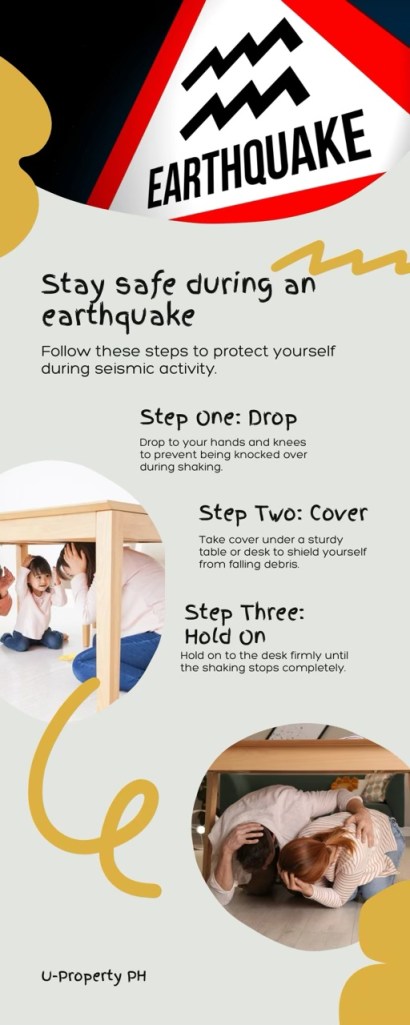
This simple action during an earthquake is your best immediate protection against falling debris.
- DROP: As soon as you feel shaking, drop down onto your hands and knees. This position prevents you from being thrown down by the shaking and allows you to crawl if necessary.
- COVER: Protect your head and neck with your arms. If possible, crawl under a sturdy table or desk for additional protection from falling objects. Stay away from windows, glass, and walls.
- HOLD ON: If you are under a table or desk, hold onto it firmly. Be prepared to move with it if the shaking causes it to shift. Continue to hold on until the shaking stops completely.
- If Outdoors or In a Vehicle: If outside, move to an open area away from buildings, trees, power lines, and streetlights. If in a vehicle, pull over safely away from structures or overpasses, stay in the vehicle, and wait for the shaking to stop.
After the Shaking Stops: What’s Next?
Preparedness doesn’t end when the ground stops moving.
- Assess for Safety: Check yourself and others for injuries. Be aware of potential hazards like fallen objects, damaged utilities, or structural damage.
- Check Utilities: If you smell gas, hear hissing sounds, or see damaged electrical wiring, turn off the main valves/switches if it is safe to do so. If unsure, evacuate and report it immediately.
- Communicate Carefully: Use text messages or social media to contact loved ones first, as phone lines may be congested. Use calls only for emergencies.
- Inspect Your Property: Once it’s safe, carefully inspect your property for damage. Take photos for insurance purposes. Look for cracks in walls, foundation issues, roof damage, or leaning structures.
- Tune into Official Updates: Listen to your radio or check official online sources for emergency instructions and information.
Protecting Your Property Value: Insurance and Structural Integrity
As your real estate partner, I want to emphasize this: earthquake preparedness isn’t just about safety; it’s about safeguarding your asset.
- Earthquake Insurance: Does your property insurance policy include earthquake coverage? Many standard policies don’t. Review your policy or talk to your provider about adding this crucial protection. It’s an added layer of security for your investment.
- Structural Integrity is Key: A structurally sound property is not only safer but also retains its value better in the long run, especially in a seismically active region. Proactive assessment and reinforcement are investments in your property’s future and marketability.
The Takeaway Here Is…
Preparedness is an ongoing process, not a one-time task. By taking these steps – from planning with your family to ensuring the structural resilience of your home – you are making a powerful commitment to their safety and protecting your significant real estate investment here in the Philippines.
Don’t wait for the shaking to start. Start preparing today. Your peace of mind and the safety of your loved ones are worth it.


 U-Property PH
Leave a comment