
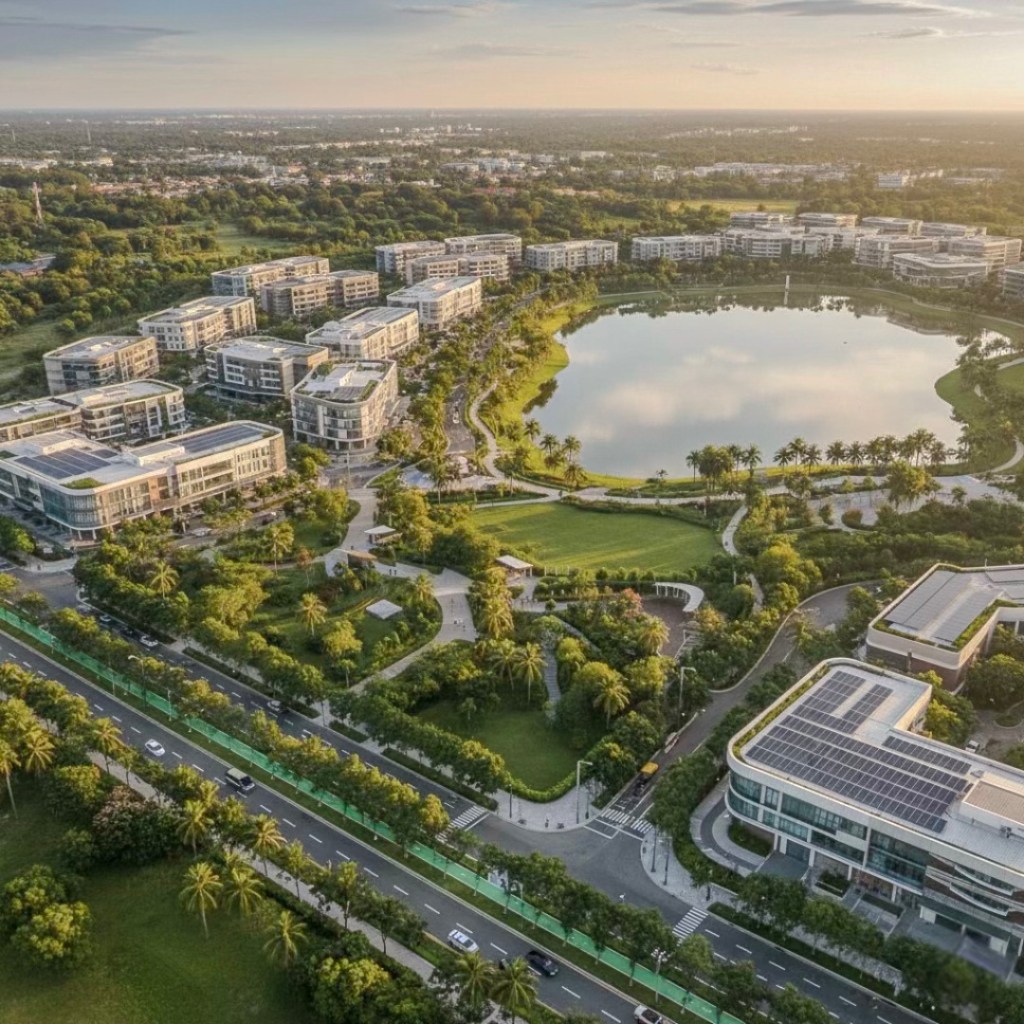
Did you know that nearly 40% of global carbon emissions come from buildings and construction? In the Philippines — where cities are expanding faster than ever — the real estate industry is turning this challenge into an opportunity to build better. Enter integrated green communities: master-planned developments that blend sustainability, technology, and livability into one cohesive ecosystem.
These communities are more than just eco-friendly enclaves with solar panels and bike lanes — they’re a blueprint for how future cities can thrive without compromising the planet. From Nuvali in Laguna to Arca South in Taguig, developers are reimagining how Filipinos live, work, and move in a post-pandemic world that demands cleaner air, greener spaces, and smarter design.
In this article, you’ll learn what integrated green communities are, how they’ve evolved in the Philippines, and why they’re redefining both lifestyle and investment value for today’s homebuyers. Whether you’re a first-time buyer or a property investor, this guide will help you see how sustainability is not just a trend — it’s the future of real estate.
What Are Integrated Green Communities?
Definition
An integrated green community is a master-planned development designed to balance people, planet, and profit. It seamlessly combines residential, commercial, and recreational spaces within a sustainable, self-sufficient ecosystem — reducing dependence on cars, cutting energy use, and improving quality of life.
Unlike traditional housing projects that grow outward without coordination, integrated green communities are strategically designed to minimize environmental impact while maximizing accessibility and livability. They use green architecture, renewable energy, smart infrastructure, and mixed-use planning to create cities that are efficient, walkable, and resilient to climate change.
Core Principles of Integrated Green Communities
1. Mixed-Use and Walkable Design
Homes, offices, shops, and leisure spaces are located within walking or biking distance — minimizing travel time and car emissions.
2. Green and Smart Architecture
Buildings feature energy-efficient designs, passive cooling, and eco-certified materials to lower operational carbon footprints.
3. Renewable Energy Integration
Solar panels, rainwater harvesting systems, and waste-to-energy technologies power communities sustainably.
4. Mobility and Accessibility
Transport systems prioritize pedestrians, cyclists, and public transit — reducing traffic congestion and pollution.
5. Community Resilience and Inclusivity
These developments encourage social interaction, local business growth, and long-term climate adaptability through community-led programs and eco-governance.
Comparison: Integrated Green Communities vs. Traditional Developments
| Feature | Traditional Developments | Integrated Green Communities |
|---|---|---|
| Land Use | Zoning separates residential, commercial, and industrial areas | Mixed-use planning integrates homes, offices, and leisure spaces for efficiency |
| Energy Source | Fully dependent on the national grid | Uses solar, renewable, and energy-efficient systems |
| Mobility | Car-oriented; limited public transport access | Pedestrian-first, bike-friendly, and transit-oriented |
| Environmental Design | Minimal green building features | Incorporates green roofs, permeable pavements, and natural ventilation |
| Lifestyle Impact | High commute times, limited open spaces | Promotes active living, wellness, and community engagement |
Evolution of Green Developments in the Philippines
The rise of integrated green communities in the Philippines is the result of over a decade of progress in sustainable design, urban planning, and environmental policy. What began as isolated green-certified buildings has evolved into large-scale eco-estates that integrate residential, commercial, and recreational spaces with sustainability at their core.
Below is a timeline showing how the country’s green real estate movement has matured through the years:
Timeline: The Growth of Green Real Estate in the Philippines
2010 – The First LEED-Certified Buildings: Zuellig and Net Lima
The decade began with trailblazing projects like the Zuellig Building in Makati and Net Lima in Bonifacio Global City (BGC) — the first LEED-certified structures in the country. These developments proved that energy-efficient designs and sustainable construction were achievable even in dense urban areas, setting a new benchmark for Philippine real estate.
2013 – Launch of the BERDE Rating System by PHILGBC
The Philippine Green Building Council (PHILGBC) introduced BERDE (Building for Ecologically Responsive Design Excellence) — the country’s own green building rating system. This localized framework provided developers with standards tailored to the Philippine climate, economy, and regulatory environment, democratizing access to sustainability across all development scales.
2018 – Growth of Eco-Estates and Green Communities
Developments like Nuvali in Laguna, Arca South in Taguig, and Filinvest City in Alabang began redefining what it meant to live sustainably. These integrated eco-estates combined residential zones with business districts, bike trails, solar-powered amenities, and vast open spaces — paving the way for large-scale green urban planning.
2024–2025 – ESG-Driven Real Estate Investments Surge
Today, sustainability has become a core investment driver. Real estate developers are now aligning with ESG (Environmental, Social, and Governance) standards as both investors and homebuyers increasingly favor sustainable projects. According to Colliers Philippines, the demand for green-certified office and residential spaces continues to rise, with many developers integrating renewable energy systems and smart mobility to future-proof their estates.
From Green Buildings to Green Cities
This evolution reflects a fundamental shift: sustainability is no longer an optional feature but a central strategy for long-term property value. As urban populations grow and climate challenges intensify, green communities are emerging as the new foundation for resilient, livable cities in the Philippines.
Key Features of Integrated Green Communities
1. Smart and Sustainable Urban Design
Modern green communities are designed to reduce commute times, promote walkability, and minimize carbon emissions. These developments integrate mixed-use zoning — allowing residential, commercial, and recreational spaces to coexist within walkable distances.
Transit-Oriented Layouts
By positioning developments near major transport hubs, residents rely less on cars.
Energy-Efficient Infrastructure
Buildings are designed for optimal natural light and ventilation, reducing reliance on air conditioning.
Example
Arca South in Taguig City features a highly connected pedestrian network and an intermodal transport terminal that supports eco-friendly commuting and reduces traffic congestion.
2. Green Infrastructure & Renewable Energy
Sustainability is achieved through technologies that conserve resources and reduce environmental impact.
Solar Power & Microgrids
Communities are increasingly adopting renewable energy systems to power common areas and reduce utility costs.
Water Conservation
Rainwater harvesting and wastewater recycling systems help sustain landscaping and reduce city water use.
Example
McKinley Hill operates solar-powered streetlights and energy-efficient systems, while Filinvest City in Alabang has earned LEED certification for its district cooling and green building standards.
3. Healthy and Active Lifestyles
Green living extends to promoting health and well-being. These communities prioritize open spaces, wellness facilities, and activities that encourage movement and social connection.
Wellness-Oriented Design
Bike paths, jogging trails, and parks are designed to make fitness accessible to everyone.
Community Farms & Green Zones
Residents can participate in organic gardening or urban farming initiatives.
Example
Nuvali in Laguna features a 17-kilometer bike trail, open-air gyms, and lakeside zones that blend recreation with nature conservation.
4. Community Engagement & Sustainability Programs
A truly green community isn’t just about infrastructure — it’s about cultivating an eco-conscious lifestyle among residents.
Zero-Waste Initiatives
Recycling, composting, and waste segregation programs are often implemented at the estate level.
Eco-Education
Developers host events and campaigns that teach sustainability practices.
Example
Ayala Land’s estate management teams in developments like Circuit Makati and Bonifacio Global City run continuous sustainability drives promoting energy efficiency, waste reduction, and green living awareness.
Benefits of Living in an Integrated Green Community
Choosing to live in an integrated green community is more than a lifestyle decision — it’s an investment in your well-being, financial stability, and the planet’s future. Here’s how residents and investors alike benefit from this sustainable way of living:
1. Environmental Benefits
Green communities are designed to harmonize urban growth with environmental stewardship.
Reduced Carbon Footprint
Buildings and transport systems within these communities rely on renewable energy and low-emission designs, significantly cutting greenhouse gases. According to the International Finance Corporation (IFC), green-certified buildings can reduce carbon emissions by up to 40%.
Cleaner Air and Water
The integration of green roofs, tree-lined streets, and water recycling systems improves air quality and conserves natural resources.
Biodiversity Conservation
Many developments, such as Nuvali and Vermosa, preserve native flora and fauna, creating urban ecosystems that thrive alongside human settlements.
2. Health and Wellness
Sustainability isn’t just about technology — it’s about people. Green communities are built to promote a balanced and healthy lifestyle.
Lower Stress Levels
Exposure to natural elements has been shown to reduce stress by 15–20%, based on studies from the University of Exeter’s Green Spaces Project.
Active Living Opportunities
With jogging trails, cycling lanes, and open parks, fitness becomes a part of daily life rather than a chore.
Access to Fresh Air and Natural Light
Properly designed green buildings provide better ventilation and lighting, which support mental clarity and productivity.
3. Social Connection
Sustainable communities foster belonging and shared purpose — qualities often lost in dense urban areas.
Community-Driven Sustainability Projects
From recycling drives to tree-planting events, residents work together toward environmental goals.
Shared Open Spaces:
Parks, gardens, and community centers encourage interaction and collaboration.
Inclusive Design
These developments are intentionally designed to be accessible and engaging for families, professionals, and seniors alike, reinforcing social cohesion.
4. Economic and Investment Value
Beyond the ecological and social perks, green communities are proving to be smart financial investments.
Higher Property Appreciation
Studies by JLL and Colliers International show that green-certified buildings can command up to 10% higher rental rates and sell 5–8% faster than conventional properties.
Lower Utility Costs
Energy-efficient systems can reduce electricity and water expenses by 20–30% annually.
Future-Proofing
Properties within sustainable developments are more resilient to economic shifts and climate-related disruptions, ensuring long-term asset stability.
Challenges and Opportunities for Developers
As sustainability takes center stage in Philippine real estate, developers face both complex challengesand game-changing opportunities. The shift toward integrated green communities demands more than just green certifications — it requires a long-term commitment to environmental, social, and economic transformation.
1. Challenges Developers Face
Higher Initial Development Costs
Building green often requires greater upfront investment. From renewable energy systems to sustainable materials, developers must shoulder costs that can be 10–20% higher than conventional projects, according to the Philippine Green Building Council (PHILGBC). However, these expenses often balance out through lower operating costs and long-term property value appreciation.
Regulatory and Compliance Complexity
Navigating compliance with local building codes, the BERDE rating system, and LEED standards can be time-consuming. Developers must coordinate with multiple agencies — from local governments to environmental boards — to meet sustainability benchmarks, which can slow project timelines.
Maintenance and Performance Standards
Sustainability doesn’t end at completion. Ensuring long-term energy efficiency, proper waste management, and community engagement requires consistent monitoring and maintenance, often needing specialized staff or management systems.
2. Opportunities That Drive the Future
Access to ESG-Driven Funding and Incentives
The global rise of Environmental, Social, and Governance (ESG) investing is transforming real estate financing. Green projects now attract lower-interest loans and international sustainability funds, as institutions favor climate-resilient developments. Local banks such as BPI and RCBC have begun offering green financing programs for certified sustainable projects.
Growing Market Demand for Eco-Living
A Colliers Philippines report (2024) revealed that over 60% of mid- to high-income homebuyersnow consider sustainability features when purchasing property. Eco-conscious living is no longer a niche — it’s a mainstream expectation, especially among young professionals and OFW investors.
Long-Term Cost Efficiency and Brand Leadership
Developers that embrace sustainability early gain a competitive edge. Reduced operational costs, higher tenant retention, and stronger brand trust make green communities more profitable in the long run. Early adopters such as Ayala Land, Filinvest, and Arthaland are now industry benchmarks for balancing profitability with sustainability.
3. The Path Forward
The path to sustainable development may be complex, but it’s also transformative. As PHILGBCemphasizes, “Green building is not a trend — it’s a transition to resilience.” Developers who invest in innovation, transparent reporting, and community engagement today will shape the sustainable skylines of tomorrow.
Top Integrated Green Communities in the Philippines
The Philippines is now home to several master-planned developments that embody the principles of sustainable living — blending green architecture, smart infrastructure, and community-centered design. Below are six standout examples that illustrate how integrated green communities are redefining urban life in the country.
| Community | Developer | Key Sustainability Features | Location |
|---|---|---|---|
| Arca South | Ayala Land | Mixed-use eco-district with centralized waste management, rainwater harvesting, and green open spaces. Designed for walkability and connectivity to Skyway and PNR South Rail. | Taguig City |
| Nuvali | Ayala Land | 2,290-hectare eco-city featuring renewable energy use, man-made lakes, bike lanes, and an integrated transport system. | Sta. Rosa, Laguna |
| Bonifacio Global City (BGC) | Bases Conversion and Development Authority (BCDA) / Fort Bonifacio Development Corp. | LEED-certified buildings, tree-lined streets, and smart zoning integrating offices, residences, and lifestyle centers. | Taguig City |
| Arthaland Cebu Exchange | Arthaland Corp. | First net-zero certified building in Southern Philippines; advanced energy recovery systems, water recycling, and biophilic design. | Cebu IT Park, Cebu City |
| Filinvest City Alabang | Filinvest Land | Certified by the LEED Neighborhood Development (LEED-ND); uses eco-loop transport, district cooling, and green corridor systems. | Muntinlupa City |
| Clark Green City (New Clark City) | Bases Conversion and Development Authority (BCDA) | Flagship green metropolis with renewable energy integration, smart mobility, and climate-resilient infrastructure. | Tarlac Province |
Highlights and Insights
1
Arca South and BGC showcase how urban renewal can prioritize both accessibility and livability, transforming former industrial zones into walkable green districts.
2
Nuvali remains the benchmark for large-scale sustainability, combining eco-tourism, residential living, and green business parks.
3
Filinvest City demonstrates how redevelopment of business districts can adopt LEED-ND principles for greener operations.
4
New Clark City represents the future of sustainable urban governance, designed to withstand natural disasters and integrate renewable energy at scale.
How to Choose the Right Green Community
Not all “green” developments are created equal. While many projects claim to be sustainable, only a few truly integrate environmental design, mobility, and community balance into everyday living. Here’s how you can evaluate if a property genuinely aligns with sustainable and future-ready living.
1. Check for Green Certifications
Look for official sustainability credentials such as BERDE, LEED, or EDGE certifications. These verify that the development meets rigorous standards for energy efficiency, water conservation, and environmental design.
Pro Tip: Visit the official sites of PHILGBC or USGBC to confirm a project’s certification status. A certified project often delivers long-term savings and higher resale value due to its proven performance.
2. Evaluate Community Integration
The best green communities offer mixed-use environments, meaning you can live, work, and unwind in one neighborhood. Prioritize developments with easy access to:
- Residential, commercial, and retail zones within walking distance
- Essential institutions like schools, hospitals, and offices
- Public spaces such as parks and open-air plazas that encourage social interaction
3. Assess Mobility and Public Transport Options
A sustainable lifestyle thrives on connectivity. Look for developments that:
- Promote pedestrian and cycling infrastructure (bike lanes, shaded walkways)
- Are near mass transport systems (MRT, bus terminals, P2P stops)
- Reduce car dependency through electric shuttles or car-free zones
Did You Know? A walkable neighborhood can reduce individual carbon emissions by up to 30%compared to car-dependent areas.
4. Measure the Green Space Ratio
An ideal community maintains a healthy green-to-built ratio — meaning ample parks, gardens, and tree-lined streets per resident. Prioritize developments that dedicate at least 30% of land to open spaces. Green spaces not only improve air quality but also enhance mental well-being and urban biodiversity.
5. Consider Amenities and Resource Efficiency
Sustainability extends beyond buildings. Examine the amenity-to-resident ratio and the use of eco-efficient systems such as:
- Solar panels and rainwater harvesting
- Centralized waste segregation and composting
- District cooling or natural ventilation designs
Expert Insights & Market Outlook (2025 and Beyond)
As sustainability transitions from a global trend to a local standard, the Philippine green real estate market is poised for exponential growth over the next decade. Industry experts and analysts predict that integrated green communities will soon become the defining benchmark of premium urban living.
Market Forecast and Growth Trends
According to Colliers Philippines, nearly 45% of office transactions in Metro Manila during the first nine months of 2024 were in green-certified buildings. They further project that 61% of new office supply in Metro Manila between 2025-2027 — approximately 722,000 sqm out of 1.2 million sqm — will hold green building certifications such as LEED or WELL.
According to the Santos Knight Frank forecast (2022), the share of LEED-certified buildings in Metro Manila was expected to rise to 32 % by the end of 2025 — up from 22.3 % in Q2 2022.
Similarly, a 2024 government report noted younger home-buyers are increasingly prioritizing green features such as energy-efficient appliances and open spaces when choosing a property.
💬 According to Colliers Philippines, sustainable buildings are no longer optional — “green, healthy and sustainable office space is becoming popular” for corporate occupiers in Metro Manila.
Government Policies and Green Development Initiatives
The Philippine Green Building Code (DPWH, 2015) continues to guide both public and private construction, mandating that new developments adopt design and operational measures that achieve at least 20% reduction in energy and water consumption compared to conventional buildings.
In addition, several Metro Manila cities have strengthened the national Green Building Code through local ordinances. For instance, Taguig (Ordinance No. 90-2022), Quezon City (SP-1917, S-2009), and Muntinlupa (Ordinance No. 2021-274) all implement green building programs that offer incentives such as tax rebates, development charge discounts, and expedited permits for projects certified under standards like BERDE, LEED, or EDGE.
The Department of Energy (DOE) and the Department of Environment and Natural Resources (DENR) have taken steps to align the Philippines’ sustainability agenda with global ESG (Environmental, Social, and Governance) standards.
Through initiatives like the Philippine Energy Plan 2020–2040, the Sustainable Finance Roadmap (2021), and recent DOE circulars allowing 100% foreign ownership in renewable energy projects, the country is fostering a more attractive climate for foreign green investments and renewable energy integration in real estate development.
Developer Response and Future Direction
Leading developers like Ayala Land, Filinvest, and Megaworld are scaling up their sustainable portfolios. For example:
- Ayala Land plans to make all its estates carbon-neutral by 2030.
- Filinvest City achieved LEED Gold certification for its master plan — the first in the country.
- Megaworld is piloting solar microgrids and rainwater recycling systems across its mixed-use estates.
These commitments indicate a clear shift toward ESG-driven design and climate-resilient construction, signaling a maturing market where sustainability is now a business imperative.
Outlook: The Decade of Green Transformation
By 2035, experts anticipate that nearly half of new urban developments in the Philippines will feature integrated green design, renewable infrastructure, and community-scale sustainability programs.
As investors, developers, and residents continue to prioritize environmental well-being, green real estate will not just reshape skylines — it will redefine how Filipinos live, work, and connect.
🌱 “The next wave of property value will be measured not just in square meters, but in sustainability per square meter.”
Conclusion: Building the Future, Sustainably
As cities across the Philippines evolve, one truth stands out — sustainability is no longer a niche; it’s the new foundation of progress. Integrated green communities are redefining what it means to live well: combining modern comfort with environmental responsibility, innovation with wellness, and convenience with purpose.
From Nuvali’s eco-trails to Arca South’s smart urban systems, and Filinvest City’s LEED-certified infrastructure, these developments prove that greener living isn’t just possible — it’s profitable, practical, and deeply human.
Choosing to live in or invest in a sustainable community means joining a movement that values both people and the planet. Whether you’re a homebuyer seeking balance, an investor eyeing long-term growth, or a professional inspired by the future of real estate, green living offers unmatched potential.
💬 Call-to-Action
Ready to make sustainability your lifestyle?
Discover how integrated green communities are shaping the next generation of Philippine real estate.
👉 Explore our featured eco-developments and property listings — and find your home where modern living meets environmental purpose.




Leave a comment