
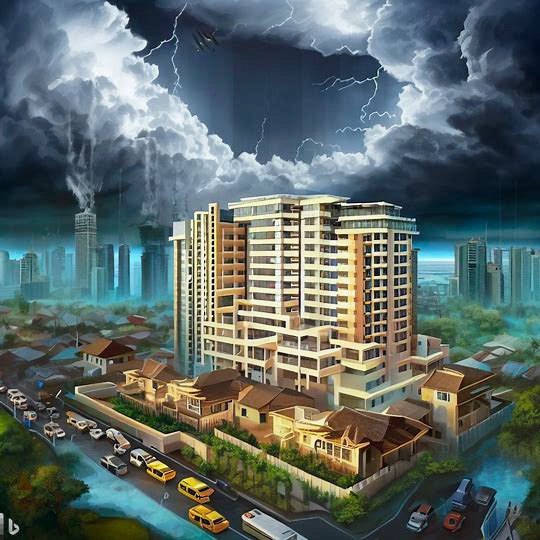
Residing in a condominium in the Philippines presents a myriad of advantages, but with these advantages come certain vulnerabilities. The nation grapples with a unique blend of natural and man-made risks that every condo dweller should be intimately familiar with. Here’s an in-depth look at these threats and why they matter.
Typhoons
The Philippines is no stranger to typhoons. The country experiences an average of 20 typhoons annually, making it one of the most typhoon-hit countries in the world. These powerful storms can cause widespread damage, including:
- Wind damage: Typhoon winds can reach up to 200 miles per hour, easily destroying homes and businesses.
- Rainfall: Typhoons can dump several feet of rain in a short period, causing flooding and mudslides.
- Storm surge: The strong winds and rains of a typhoon can cause a storm surge, which is a wall of water that can reach up to 20 feet high.
High-rise condominiums are particularly vulnerable to typhoon damage. The strong winds can cause balconies to collapse, windows to shatter, and external installations to fall off. Prolonged heavy rainfall can also lead to water seepage and leaks.
Here are some tips for keeping your condo safe during a typhoon:
- Secure loose items: Bring outdoor furniture and decorations indoors.
- Close windows and doors: This will help to keep out the wind and rain.
- Have a plan: Know where you will go and what you will do if the power goes out or the water supply is cut off.
- Stay informed: Monitor the weather forecast and follow the instructions of local officials.
Earthquakes
The Philippines is located in the Pacific Ring of Fire, making it one of the most seismically active countries in the world. The country has multiple fault lines, with the most active being the Philippine Fault Zone and the Manila Trench. These fault lines are capable of producing large earthquakes, which can cause widespread damage.
How do earthquakes impact condos?
The impact of earthquakes on condos can vary depending on the severity of the earthquake and the construction of the building. However, some common hazards that condo residents should be aware of include:
- Structural damage: Earthquakes can cause buildings to collapse or sustain significant structural damage. This can lead to injuries or death.
- Damage to fixtures and appliances: Earthquakes can cause loose fixtures and appliances to fall, which can pose a safety hazard.
- Personal injury: Earthquakes can cause people to be injured by falling objects or by being thrown from their feet.
- Loss of life: In severe earthquakes, loss of life can occur.
How can condo residents stay safe during an earthquake?
There are several things that condo residents can do to stay safe during an earthquake:
- Know the earthquake safety procedures: Condo residents should familiarize themselves with the earthquake safety procedures for their building. These procedures may include things like knowing where to go to take shelter, how to turn off utilities, and how to help others.
- Secure loose items: Before an earthquake, condo residents should secure loose items such as furniture, appliances, and decorations. This will help to prevent them from becoming projectiles during the earthquake.
- Stay calm: It is important to stay calm during an earthquake. This will help you to make better decisions and to avoid injuries.
- Take cover: If you are indoors during an earthquake, take cover under a sturdy table or desk. If you are outside, move to a clear area away from buildings and trees.
Floods
The Philippines is a country prone to flooding. The topography of the country, coupled with poor urban planning, makes it a breeding ground for floods. Metro Manila, in particular, is particularly vulnerable to flooding, especially during the monsoon season.
Why is Metro Manila prone to flooding?
There are a few reasons why Metro Manila is prone to flooding:
- Poor drainage systems: The drainage systems in Metro Manila are not well-maintained and are often clogged with debris. This prevents rainwater from flowing freely, which can lead to flooding.
- Blocked waterways: The waterways in Metro Manila are often blocked by informal settlements and other structures. This prevents rainwater from flowing into the ocean, which can also lead to flooding.
- Urban congestion: The high population density in Metro Manila makes it difficult to build new drainage systems and waterways. This further exacerbates the problem of flooding.
How do floods impact condos?
Floods can impact condos in several ways, including:
- Inundation of ground-floor facilities: Ground-floor facilities such as parking areas, lobbies, and even basements of some condos are at risk of being inundated. This can damage property and equipment, and make it difficult for residents to access their homes.
- Damage to building foundations and utilities: Prolonged flooding can damage the foundations of condos and their utilities. This can lead to structural problems and power outages.
- Health hazards: Floodwaters can be contaminated with sewage and other pollutants. This can pose a health hazard to residents, especially children and the elderly.
How can condo residents stay safe during floods?
There are several things that condo residents can do to stay safe during floods:
- Know the flood safety procedures: Condo residents should familiarize themselves with the flood safety procedures for their building. These procedures may include things like knowing where to go to take shelter, how to turn off utilities, and how to help others.
- Secure loose items: Before a flood, condo residents should secure loose items such as furniture, appliances, and decorations. This will help to prevent them from becoming projectiles during the flood.
- Stay calm: It is important to stay calm during a flood. This will help you to make better decisions and to avoid injuries.
- Move to higher ground: If you are in an area that is prone to flooding, it is important to have a plan to move to higher ground. This could be a friend or family member’s home, a hotel, or a government evacuation center.
Fires
Fires are a major concern for condo residents, as they can quickly spread and cause extensive damage. Here are some common causes of fires in condos:
- Electrical malfunctions: This is the most common cause of fires in condos, accounting for about 70% of all cases. Electrical fires can be caused by faulty wiring, overloaded outlets, and loose connections.
- Overloaded power outlets: When too many appliances are plugged into one outlet, it can overheat and cause a fire.
- Unattended cooking: Cooking is another common cause of fires in condos. It is important to stay in the kitchen when cooking and to never leave food unattended on the stovetop.
- Careless handling of flammable items: Candles, matches, and other flammable items should be handled with care. They should never be left unattended or placed near anything that could catch fire.
Here are some safety protocols that condo residents can follow to stay safe from fire:
- Have functioning smoke alarms: Smoke alarms are essential for early fire detection. They should be installed on every level of your condo, including the basement and attic.
- Have easy access to fire extinguishers: Fire extinguishers can be used to put out small fires before they get out of control. They should be placed in strategic locations throughout your condo, such as the kitchen, hallway, and garage.
- Participate in regular fire drills: Fire drills help to familiarize residents with the escape plan and how to use the fire extinguishers. They should be held at least twice a year.
- Buildings should be equipped with sprinkler systems: Sprinkler systems are the most effective way to suppress fires. They should be installed in all condos, regardless of size or height.
- Ensure that fire exits are always clear: Fire exits should be kept clear of obstructions so that residents can escape quickly in the event of a fire.
Understanding the risks associated with living in the Philippines, especially in condominium settings, is the first step toward effective preparedness. By recognizing these threats, condo residents can make informed decisions on safety measures, ensuring not just their peace of mind but also the security of their homes and loved ones.




Leave a comment