

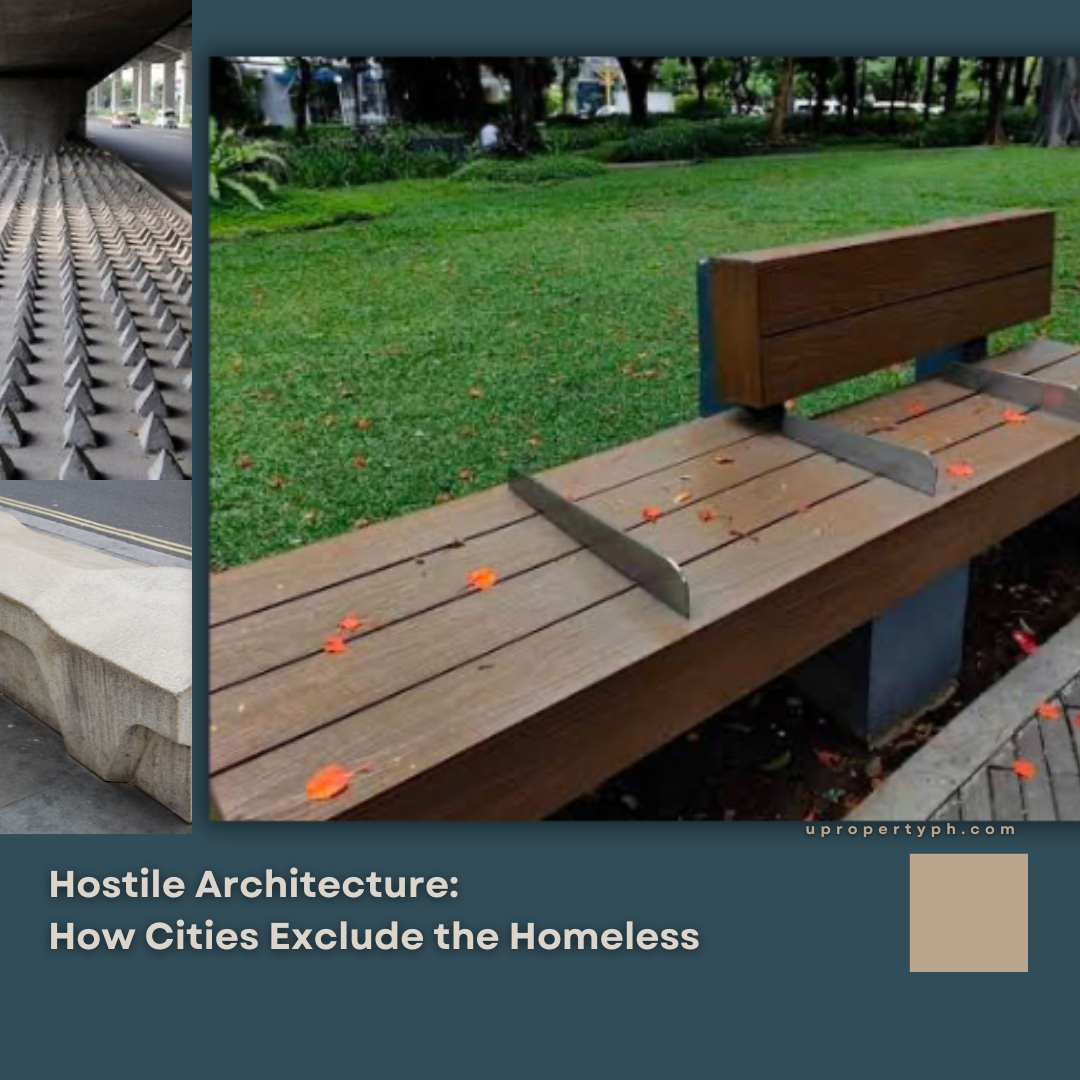
Hostile architecture, also known as defensive architecture, is a form of urban design that aims to prevent or discourage certain behaviors or groups of people from using public spaces. It can take various forms, such as metal spikes, boulders, sloped benches, armrests, sprinklers, or lack of amenities. While some may argue that hostile architecture is necessary to maintain order, safety, and cleanliness in the city, others contend that it is an inhumane way of dealing with the problem of homelessness.
The Rise of Hostile Architecture in Philippine Cities
The Philippines is one of the countries with the highest rates of urbanization and population growth in the world. According to the 2020 census, the population of the country reached 109.04 million, with 51.8% living in urban areas. However, urbanization also brings challenges such as poverty, inequality, congestion, pollution, and inadequate housing. According to the United Nations Human Settlements Programme (UN-Habitat), there were about 4.5 million homeless people in the Philippines in 2015, and the number is expected to rise due to the impacts of the COVID-19 pandemic.
As a result of the growing number of homeless people in Philippine cities, some local governments and private entities have resorted to hostile architecture to deter them from occupying public spaces. For instance, in 2019, photos of large rocks placed under a flyover in Quezon City went viral on social media, sparking outrage and criticism from netizens who accused the city government of being insensitive and heartless. The city officials claimed that the rocks were part of a beautification project and not intended to drive away the homeless, but many doubted their explanation.
Another example of hostile architecture in Philippine cities is the installation of metal spikes on sidewalks, railings, ledges, and other flat surfaces where homeless people might sleep or rest. These spikes are not only uncomfortable but also dangerous, as they can cause injuries or infections. Some of these spikes are installed by private property owners who want to protect their premises from vandalism or theft, while others are installed by public authorities who want to enforce anti-loitering or anti-mendicancy laws.

The Effects of Hostile Architecture on the Homeless and Society
Hostile architecture has negative effects not only on the homeless people who are directly affected by it but also on society as a whole. Some of these effects are:
- It violates human rights and dignity. Hostile architecture deprives homeless people of their basic rights to shelter, security, health, and dignity. It treats them as nuisances or threats rather than as human beings who deserve respect and compassion. It also stigmatizes them as criminals or undesirables who do not belong in the city.
- It worsens the problem of homelessness. Hostile architecture does not address the root causes of homelessness, such as poverty, unemployment, lack of affordable housing, or social exclusion. Instead, it pushes homeless people further into the margins of society, making it harder for them to access services, opportunities, or support that could help them improve their situation. It also increases their vulnerability to violence, abuse, exploitation, or discrimination.
- It harms the environment and aesthetics. Hostile architecture often uses materials that are harmful to the environment, such as concrete, metal, or plastic. These materials contribute to pollution, waste, or greenhouse gas emissions. They also create an unpleasant and unwelcoming atmosphere in the city, affecting its beauty and livability.
The Alternatives to Hostile Architecture
Instead of resorting to hostile architecture, there are more humane and effective ways of dealing with the problem of homelessness in Philippine cities. Some of these alternatives are:
- Providing adequate and affordable housing. The most obvious and fundamental solution to homelessness is to provide adequate and affordable housing for all. This can be done by increasing public investment in social housing programs, implementing rent control policies, regulating land use and development, or promoting community-based initiatives such as cooperatives or self-help groups.
- Enhancing social protection and inclusion. Another important solution to homelessness is to enhance social protection and inclusion for homeless people and other vulnerable groups. This can be done by expanding access to health care, education, employment, legal aid, or social welfare services; strengthening social safety nets such as cash transfers or subsidies, or fostering social participation and empowerment through civic engagement or advocacy.
- Promoting inclusive and compassionate urban design. A third possible solution to homelessness is to promote inclusive and compassionate urban design that respects and accommodates the needs and rights of all urban dwellers. This can be done by designing public spaces that are accessible, safe, comfortable, and attractive for everyone; providing amenities such as benches, fountains, shelters, or toilets that enhance convenience and well-being; or creating opportunities for interaction, expression, or recreation that fosters community and diversity.
Hostile architecture is a form of urban design that aims to prevent or discourage certain behaviors or groups of people from using public spaces. It is often used to exclude homeless people from occupying public spaces in Philippine cities. However, hostile architecture has negative effects on the homeless people who are directly affected by it, as well as on society as a whole. It violates human rights and dignity, worsens the problem of homelessness, and harms the environment and aesthetics. Instead of resorting to hostile architecture, there are more humane and effective ways of dealing with the problem of homelessness in Philippine cities, such as providing adequate and affordable housing, enhancing social protection and inclusion, or promoting inclusive and compassionate urban design. These alternatives can help create a more just, livable, and beautiful city for all.


 U-Property PH
Leave a comment