
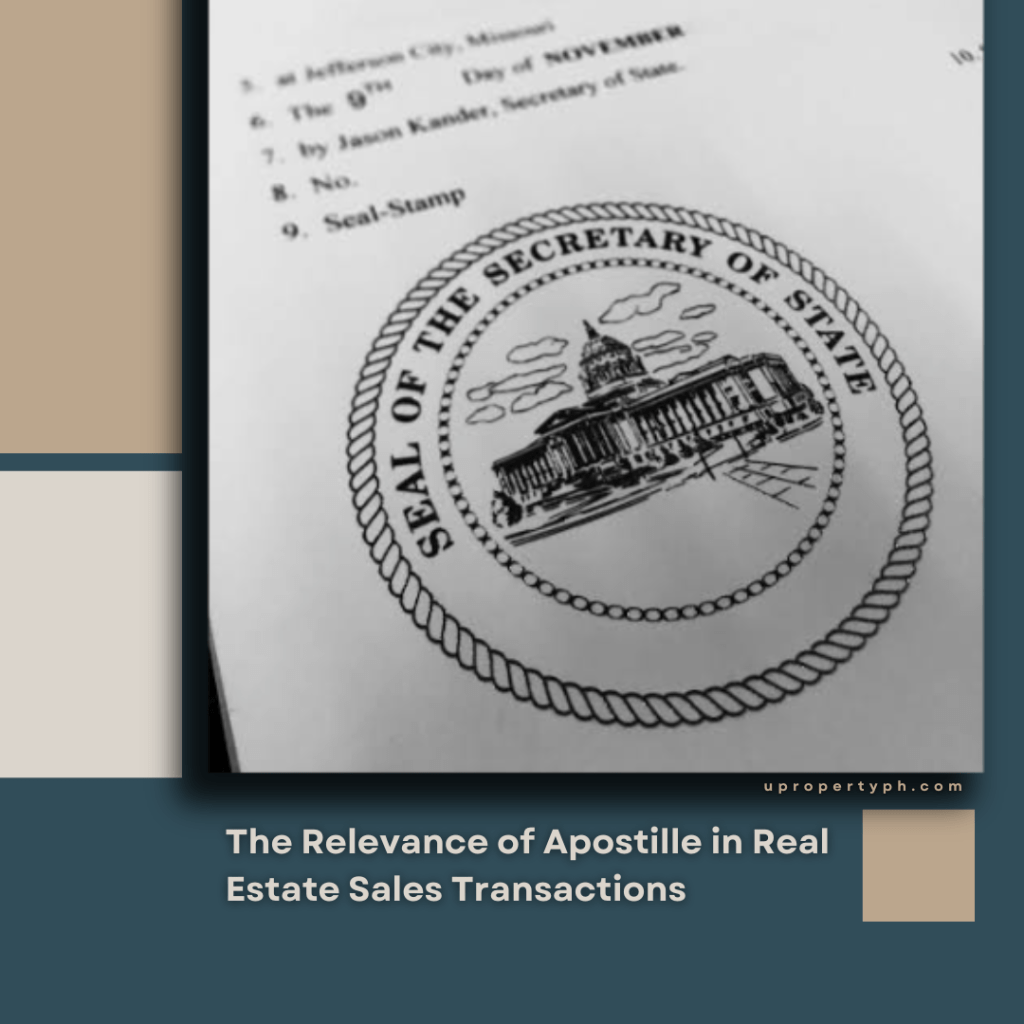
In an increasingly globalized world, real estate transactions often involve parties from different countries. When such transactions require the authentication of documents like deeds, powers of attorney, or corporate documents, the apostille becomes indispensable.
The Apostille Convention, also known as the Hague Convention Abolishing the Requirement of Legalisation for Foreign Public Documents, simplifies the process of certifying documents for international use. Instead of a lengthy chain of authentication involving multiple authorities, an apostille—a form of certification issued by a designated authority in the country where the document was issued—suffices.
For instance, the Philippines, a member of the Apostille Convention since May 14, 2019, no longer requires its embassies or consulates to authenticate public documents issued abroad for use within its jurisdiction. This streamlines real estate transactions for Overseas Filipino Workers and foreigners, saving time and reducing costs.
The apostille ensures that documents executed in one member country are recognized as valid in another, provided they bear the apostille certificate. This uniform method eliminates the need for embassy or consular legalization, which was previously a cumbersome and expensive step.
In real estate, where timely and accurate documentation is paramount, the apostille provides a standardized level of trust. It confirms the authenticity of official documents such as sales contracts, notarial deeds, or property certificates, which is crucial for the smooth progression of transactions.
Key Considerations for Apostille Use in Real Estate
- Verify the Document’s Eligibility: Not all documents may require an apostille. Ensure that the documents involved in your transaction are the type that the apostille convention covers.
- Understand the Issuing Authority: Know which local government office issues apostilles in the country where your document originated. In the Philippines, it’s the Department of Foreign Affairs (DFA).
- Check for Updates: Apostille requirements can vary and may change. Always check for the most current information before proceeding.
Tips for a Smooth Apostille Process
- Prepare Your Documents: Ensure all necessary documents are complete, accurate, and ready for the apostille process. This includes verifying that signatures, seals, and stamps are clear and legible.
- Know the Costs: Be aware of the fees associated with obtaining an apostille. These can vary by country and the urgency of the request.
- Use Trusted Services: If you’re unable to obtain an apostille in person, use reputable services to handle your documents. This can prevent delays and ensure the integrity of your documents.
- Plan for Timing: The apostille process can take time. Factor this into your transaction timeline to avoid any last-minute hurdles.
In conclusion, the apostille is a testament to the international community’s effort to facilitate cross-border transactions. Its relevance to real estate sales cannot be overstated, as it ensures the legitimacy of property documents across borders, fostering a more efficient and secure global real estate market.




 U-Property PH
Leave a comment