
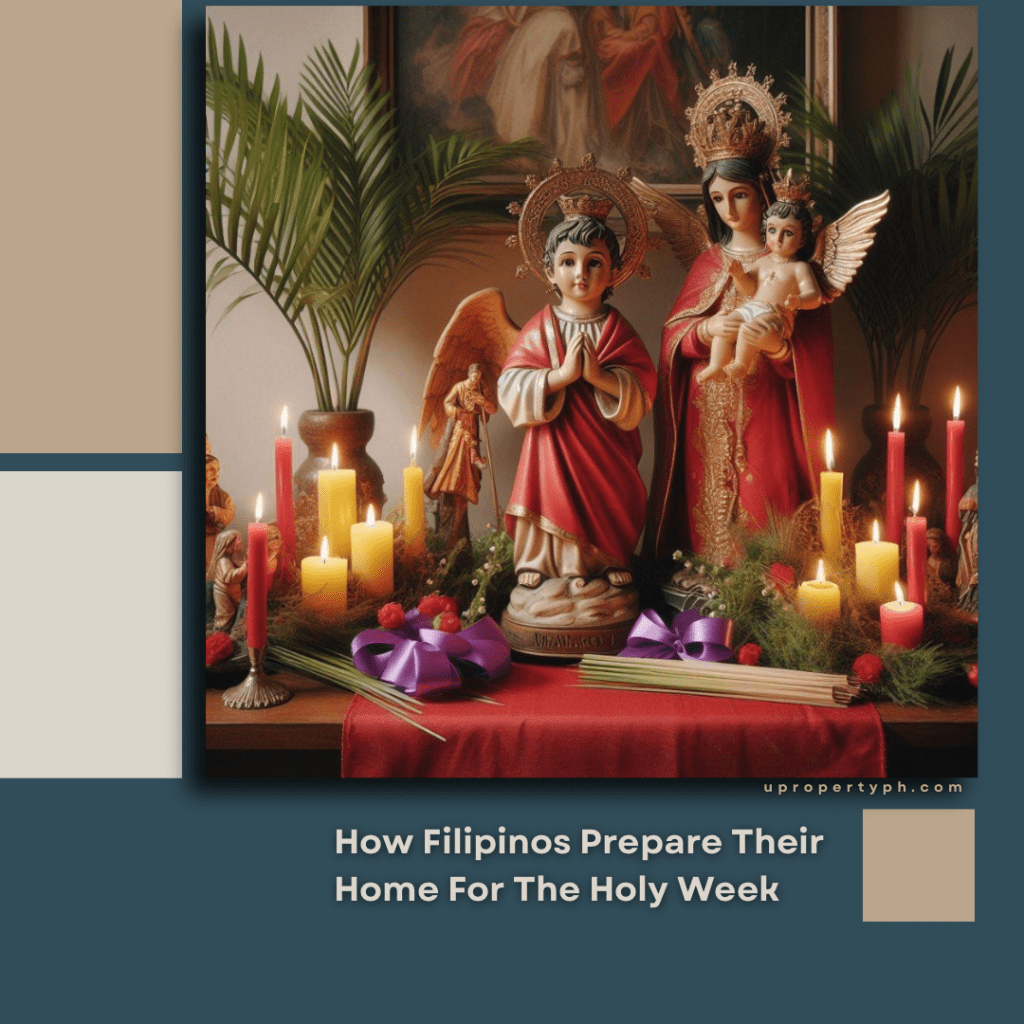
As the solemnity of Holy Week envelops the Philippines, a palpable transformation occurs in homes across the archipelago. This sacred season, deeply rooted in Catholic tradition, prompts Filipino families to prepare their homes in a manner that reflects the profound spirituality and cultural richness of this time.
A Time for Cleansing and Renewal
The preparation begins with a thorough cleaning, a symbolic act mirroring the internal cleansing of one’s soul during Lent. Dust is swept away, clutter is organized, and every corner is scrubbed clean. This physical act of purification sets the stage for a week of reflection and penance.
This preparatory act also serves as a prelude to the solemn observances that follow. In a sense, it creates a blank slate, a serene environment conducive to meditation and prayer. The cleanliness of the home mirrors the sanctity of the season, inviting a more focused and sincere engagement with the sacred traditions of Holy Week.
Palaspas: Weaving Faith into the Home
On Palm Sunday, families bring home intricately woven palm fronds, known as ‘palaspas’, from church. These are often crafted into crosses or other religious symbols and placed on doors and windows as a testament to faith and to invite divine protection into the home.
The ‘palaspas’ also reflect the Filipino’s connection to their agrarian roots, where the coconut palm plays a vital role in daily life. The transformation of these fronds into sacred objects is a reflection of the resourcefulness and ingenuity of the Filipino people. It’s a craft that transcends its religious purpose, becoming a cultural icon during Holy Week.
Altars of Devotion
Many households set up altars adorned with religious icons, candles, and flowers. These sacred spaces become the focal point for family prayers and serve as a reminder of the Passion of Christ. More than a mere physical structure, the home altar is a collective expression of the family’s devotion. It is a testament to their shared beliefs and the strength of their faith. The act of setting up and maintaining the altar is a communal activity that involves all family members, fostering a sense of unity and continuity in religious practice.
Visita Iglesia: A Pilgrimage at Home
During Maundy Thursday, some families practice ‘Visita Iglesia’ by setting up mini altars representing different churches. They move from one to another, praying and reflecting on the Stations of the Cross, thus bringing the tradition of visiting churches into their own homes.
The creation of these altars often involves the entire family and can include religious artifacts, images, and personal mementos that hold spiritual significance. This act of setting up the altars is itself a form of worship, as it requires contemplation and reverence for the sacred objects and the spaces they occupy.
The Pabasa: Chanting the Story of Salvation
The ‘Pabasa ng Pasyon’, a continuous recitation or chanting of the life, passion, death, and resurrection of Jesus Christ, often reverberates through the homes. This oral tradition is a powerful communal experience that binds families and neighbors in a shared narrative of salvation.
Typically, the ‘Pabasa’ is performed over a 24-hour period during the first few days of Holy Week. It is conducted in front of an altar decorated with flowers, candles, lights, and an image of Jesus Christ. Groups of singers take turns chanting the Passion, ensuring that the recitation continues uninterrupted day and night. This round-the-clock devotion reflects the Filipino’s deep commitment to their faith and the importance of the Holy Week observances.
Fasting
Fasting and abstinence are observed with fervor, with meat often forsaken, and simple meals taking precedence. During Holy Week, particularly on Good Friday, many Filipinos will partake in only one full meal for the day, often complemented by two smaller meals to sustain strength. This practice is not just about physical hunger but is also a spiritual discipline that allows individuals to empathize with the suffering of Christ and to reflect on their own spiritual journey.
Embracing Silence and Solitude
In the stillness of Black Saturday, homes become havens of silence and solitude. It is a time for introspection, away from the usual hustle and bustle. This day, known locally as ‘Sabado de Gloria’, marks the period when Jesus is believed to be in the tomb, offering a poignant moment for the faithful to pause and reflect on the themes of life, death, and resurrection.
The Joy of Easter
As dawn breaks on Easter Sunday, the somber mood is lifted. Homes that were once quiet and reflective are now abuzz with activity and filled with the harmonious sounds of joyous music.
‘Salubong’, which means ‘meeting’ in Tagalog, is a dramatic reenactment of the encounter between the Risen Christ and His mother, Mary. This event is a community affair, involving processions that converge at a designated meeting point, typically the local parish or a central location within the community. The statues of the Risen Christ and the mourning Mary are carried in separate processions, symbolizing their individual journeys before their joyful reunion.
The ‘Salubong’ marks the culmination of Holy Week, a time when Filipinos reflect on the Passion and Death of Christ and look forward to His Resurrection. It is a celebration that brings together the themes of life, hope, and renewed faith. Families and friends gather to share in the happiness of the day, reinforcing their bonds and affirming their collective belief in the promise of new life
In every Filipino home, Holy Week is an opportunity to weave faith into the fabric of daily life. It is a time when the sacred and the secular meet, where traditions are honored, and where homes are more than just structures—they are sanctuaries of faith.




 U-Property PH
Leave a comment