
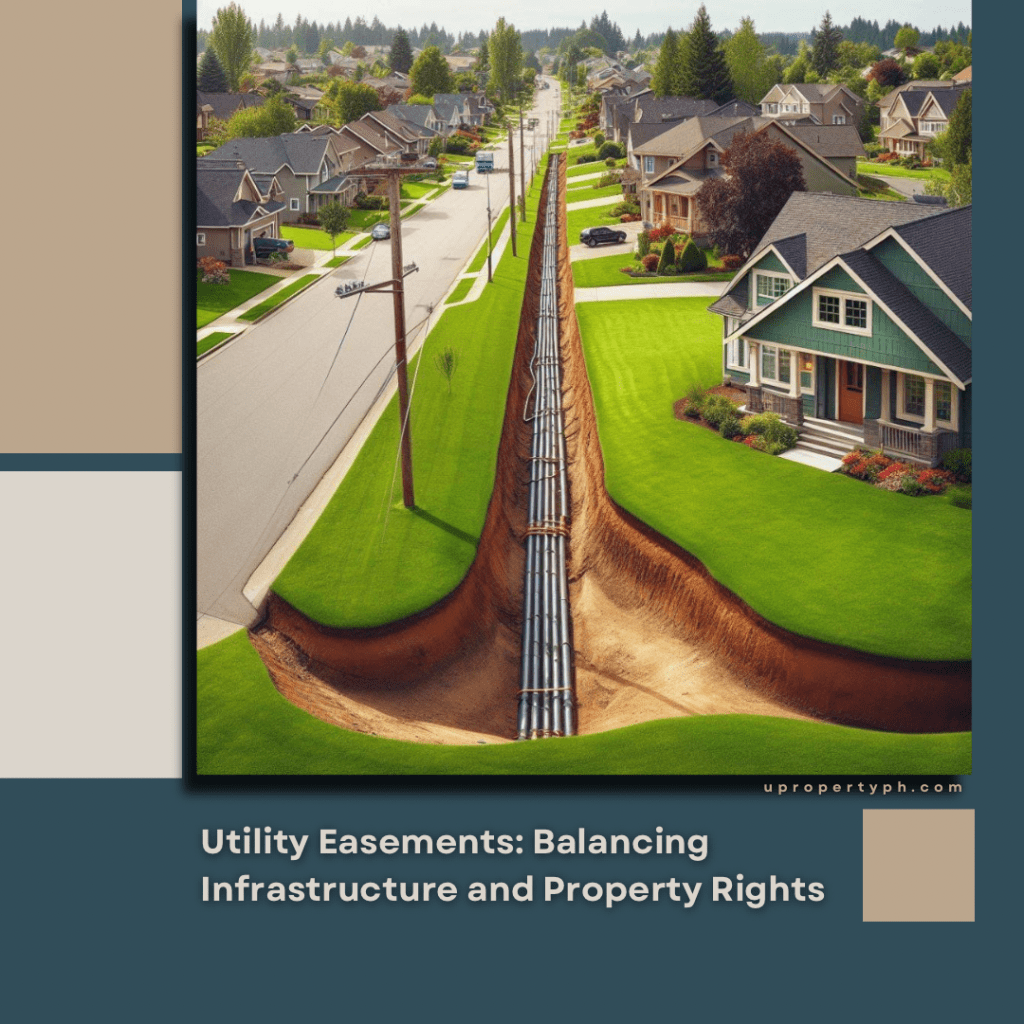
In the intricate landscape of real estate, utility easements emerge as vital threads that weave together property ownership, community needs, and essential infrastructure. These legal provisions ensure that no landowner is left isolated, without access to public roads or necessary utilities. Let’s delve into the world of utility easements, exploring their purpose, rights, and responsibilities.
What Are Utility Easements?
- Utility easements grant specific rights to utility companies or public entities, allowing them access to a portion of private property for specific purposes.
- These purposes typically include the installation, maintenance, and repair of critical utility infrastructure, such as water lines, sewage systems, gas pipelines, and electrical cables.
Balancing Rights and Societal Needs
- Rights of Property Owners:
- Property owners hold certain rights over their land, including the right to exclusive use and enjoyment.
- However, these rights must coexist with the broader societal need for accessible land use and development.
- The Role of Utility Easements:
- Utility easements strike this delicate balance by granting utility companies the necessary access while safeguarding property rights.
- They ensure that essential services—water supply, electricity, telecommunications, and more—can reach every corner of a community.
Rights and Responsibilities
- Rights of Utility Companies:
- Installation: Utility companies can install infrastructure (e.g., water pipes, electrical cables) within the easement area.
- Maintenance: They have the right to maintain and repair existing infrastructure.
- Access: Utility personnel can access the easement area as needed.
- Responsibilities of Property Owners:
- Non-Interference: Property owners must not obstruct or interfere with utility infrastructure within the easement.
- Limited Use: While the easement area remains accessible, property owners cannot build permanent structures or plant trees that hinder utility access.
- Compensation: In some cases, property owners may receive compensation for granting easement rights.
Types of Utility Easements
- Water and Sewage Easements:
- These allow water and sewage companies to lay pipes and maintain sewer lines.
- Ensures clean water supply and efficient waste disposal.
- Electrical Easements:
- Grant access for electrical cables, transformers, and power lines.
- Vital for uninterrupted electricity distribution.
- Telecommunications Easements:
- Enable the installation of telephone lines, fiber optics, and communication infrastructure.
- Connects communities and supports digital connectivity.
- Gas Pipeline Easements:
- Facilitate the distribution of natural gas for heating, cooking, and industrial purposes.
- Balances energy needs with property rights.
Legal Considerations
- Documentation:
- Utility easements are typically documented in property titles or deeds.
- Clear terms—width, location, purpose—prevent future disputes.
- Negotiation and Compensation:
- Property owners negotiate easements with utility companies.
- Compensation may be involved, especially if the easement affects property value or use.
Utility easements are the invisible pathways that keep our communities connected. As property owners, understanding these rights and responsibilities ensures harmonious coexistence with essential services. Next time you see utility workers maintaining infrastructure, remember that they tread upon these legally defined paths, bridging the gap between private property and public welfare
Remember that utility easements play a vital role in ensuring access and preventing isolation. When buying or owning property, knowledge of existing utility easements empowers informed decision-making.


 U-Property PH
Leave a comment