

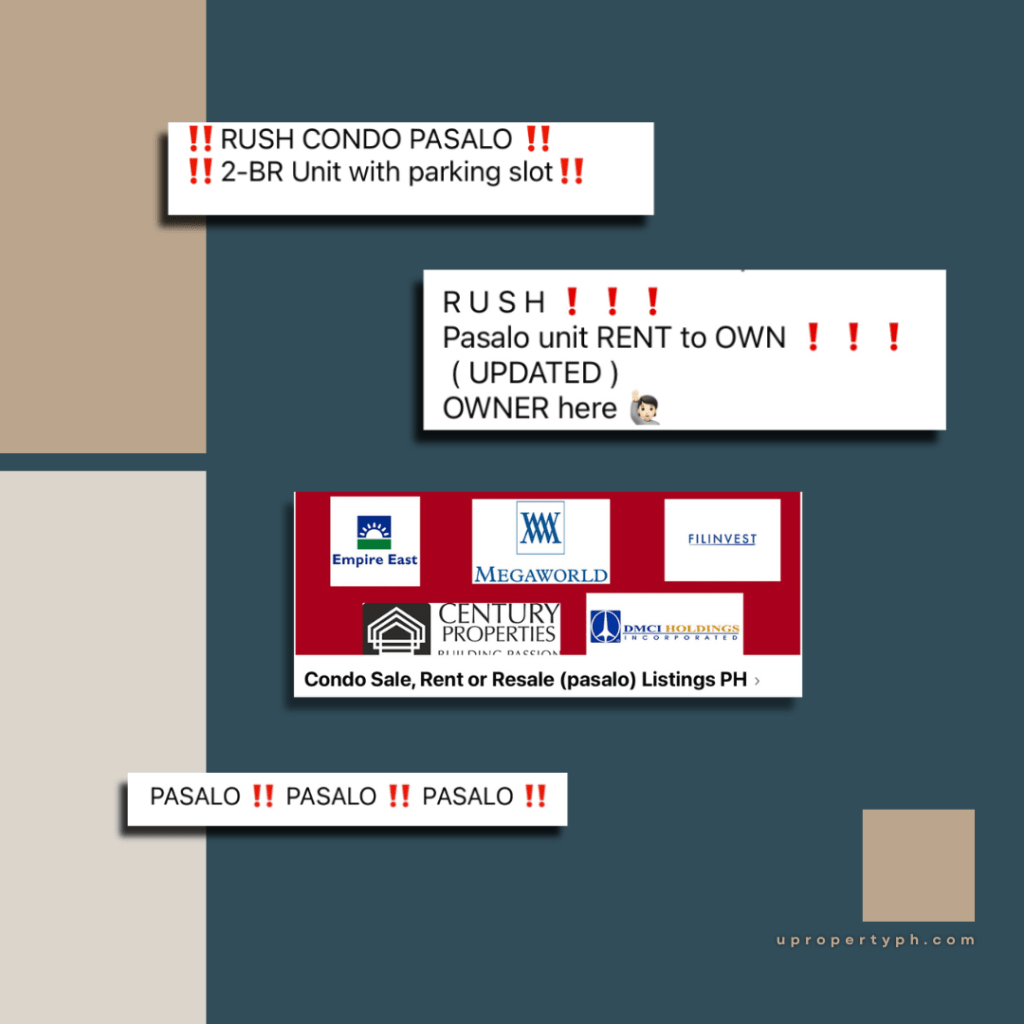
The term “pasalo” has gained popularity in the Philippine real estate market, offering buyers an opportunity to assume an existing loan or mortgage from another seller. While it presents advantages such as lower upfront costs and potential discounts, it also comes with challenges that require careful evaluation.
In this article, we will explore what pasalo properties are, why buyers consider them, the difficulties involved, and whether they are a good investment in the current market.
What is a Pasalo Property?
A “pasalo” property refers to a real estate unit where the original buyer transfers the ownership and financial responsibility of an ongoing mortgage or loan to another party. This is commonly seen in pre-selling condominiums, townhouses, or house-and-lot units where the initial buyer can no longer continue payments and needs to exit the contract.
Instead of canceling the purchase and losing the payments made, the buyer finds someone to take over the remaining balance—often at a negotiated price.
Why Buyers Consider Buying a Pasalo Property?
Many buyers opt for “pasalo” properties due to their financial and strategic benefits. Here are the most common reasons:
1. Lower Upfront Cost
Since the original buyer has already paid a portion of the down payment, the new buyer only needs to reimburse this amount and assume the remaining balance—resulting in a lower initial cash outlay than buying directly from a developer.
2. Discounted Property Prices
Sellers in “pasalo” transactions are often motivated by urgent financial needs, allowing buyers to negotiate a price lower than the current market value.
3. Avoiding Price Increases from the Developer
Developers regularly increase prices on pre-selling properties over time. Buying a “pasalo” unit allows a buyer to take advantage of an older, lower price instead of paying the higher prevailing rate.
4. Shorter Waiting Time for Move-In
Since “pasalo” properties are usually in the latter stages of construction or already ready for occupancy (RFO), buyers experience less waiting time than purchasing a brand-new pre-selling unit.
5. Access to Sold-Out or Prime Units
Popular developments and prime units (e.g., high-floor units with a view or corner lots) sell out fast. “Pasalo” transactions provide a way to acquire these units even after they are no longer available from the developer.
Challenges in Buying a Pasalo Property
While there are benefits, buying a “pasalo” property also comes with risks and challenges. Here are some important factors to consider:
1. Developer or Bank Approval May Be Required
Not all banks or developers allow loan assumptions. Some require the buyer to go through a qualification process to ensure they can continue payments. Others do not allow “pasalo” transactions at all, requiring the buyer to settle the full balance instead.
2. Hidden Fees and Unpaid Balances
Buyers must be cautious about undisclosed fees, penalties, or missed payments by the seller. It’s crucial to check the statement of account from the developer or bank before proceeding.
3. Legal Documentation Can Be Complicated
Proper legal contracts such as a Deed of Assignment or Assumption of Mortgage should be drafted and notarized to ensure a smooth and legal transfer. Informal agreements can lead to disputes later.
4. Risk of Fraud or Scams
Some sellers attempt to offload properties with legal issues or unpaid obligations. Buyers should verify ownership documents and ensure that the transaction is properly processed with the developer or bank.
How to Buy a Pasalo Property: A Step-by-Step Guide
If you’re interested in purchasing a pasalo property, follow these essential steps to minimize risks:
Step 1: Verify the Property’s Loan Status
- Request a statement of account from the seller, developer, or bank.
- Check for missed payments, penalties, or unpaid balances.
Step 2: Get Approval from the Bank or Developer
- Some developers allow loan assumptions, while others require the new buyer to apply for a new loan.
- Check if the developer has specific transfer fees or requirements.
Step 3: Negotiate Payment Terms with the Seller
- Determine how much you will reimburse the seller for their paid equity.
- Clarify additional costs, such as transfer fees or penalties.
Step 4: Secure Proper Legal Documents
- Execute a Deed of Assignment or Assumption of Mortgage.
- If necessary, execute a Contract to Sell with the developer.
Step 5: Pay Required Fees and Taxes
- Settle any necessary fees, including:
- Documentary Stamp Tax
- Capital Gains Tax (if applicable)
- Transfer Tax and Registration Fees
Step 6: Update the Bank or Developer with Your Payment Details
- Ensure that all future payments are under your name.
- Get confirmation from the bank or developer that the transfer is officially recognized.
Is Buying a Pasalo Property a Smart Investment in Today’s Market?
The current real estate market conditions affect whether a “pasalo” property is a smart investment or not. Here are key factors to consider:
✔️ When Buying a “Pasalo” Property is a Good Idea
- If property prices are rising, locking in an older price can be beneficial.
- If current interest rates are high, assuming an older mortgage with a lower rate might be advantageous.
- If the developer’s prices have increased significantly, a pasalo deal may provide savings.
- If the unit is in a prime location or a sold-out project, it may be a rare opportunity.
❌ When Buying a Pasalo Property Might Not Be Ideal
- If the market is declining, buying at an old price might not be a good deal.
- If the seller has hidden fees or legal issues, it can be risky.
- If the developer does not allow loan assumption, securing financing may be difficult.
Final Thoughts: Should You Buy a Pasalo Property?
Buying a pasalo property in the Philippines can be a strategic investment with potential cost savings, but it also carries risks that require careful due diligence. If you’re considering a pasalo property, always verify the loan status, secure proper documentation, and ensure that the transaction is legal and approved by the developer or bank.
For those who want a hassle-free investment, it may be better to buy directly from the developer to avoid complications. However, if you find a good pasalo deal with transparent terms and approvals, it can be a great way to own a property at a lower cost.
Need Help Finding a Good Real Estate Investment?
If you’re looking for a pasalo property or other investment opportunities in the Philippines, feel free to reach out. We provide expert guidance to help you make informed decisions in today’s market.


 U-Property PH
Leave a comment