
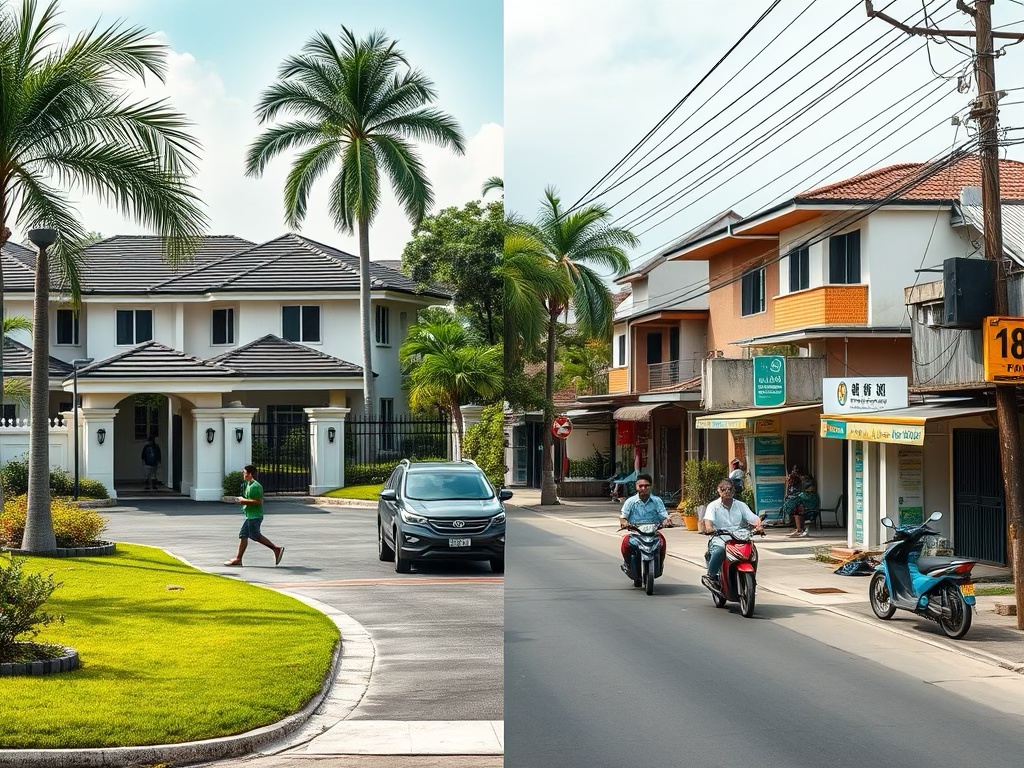
“Where you buy is just as critical as what you buy.”
This simple truth can define your entire homeownership journey—especially in the Philippines, where house and lot properties come in two drastically different setups: gated and non-gatedcommunities.
A gated community is a privately developed and managed residential enclave with controlled access, 24/7 security, and curated amenities. These are often found in subdivisions developed by big names like Ayala Land, Camella, or Filinvest. In contrast, a non-gated community refers to open-access neighborhoods governed by the local barangay, usually found near town centers or inner-city areas, where daily life is more integrated with the local culture and commerce.
Choosing between these two isn’t simply about preference. It’s a decision that directly impacts your lifestyle, monthly costs, personal security, property restrictions, and long-term resale value. Some buyers crave exclusivity and predictability. Others prioritize flexibility and affordability. So, which one truly offers better value?
This article breaks down the real pros and cons of buying a house and lot in a gated community versus a non-gated area—so you can make a smarter, future-proof decision.
What Are Gated and Non-Gated Communities?
When shopping for a house and lot in the Philippines, one of the biggest decisions isn’t about the number of bedrooms or the size of the kitchen—it’s about the kind of community you’ll live in. Understanding the difference between gated and non-gated communities will help you align your home purchase with your lifestyle, safety expectations, and long-term goals.
Gated Communities
Gated communities are exclusive residential enclaves where access is restricted by guardhouses, security personnel, or electronic gates. These developments are usually managed by a homeowners’ association (HOA) that enforces community rules and maintains shared amenities.
Living here means enjoying a curated lifestyle: landscaped streets, clean surroundings, and often amenities like swimming pools, parks, playgrounds, and clubhouses. Privacy, uniformity, and security are at the core of their appeal.
📍 Common Examples in the Philippines:
- Ayala Alabang Village (Muntinlupa)
- Nuvali Residential Communities (Laguna)
- Alviera Estates (Pampanga)
- High-end subdivisions in Quezon City like Capitol Hills, Loyola Grand Villas, and Greenmeadows
Non-Gated Communities
Non-gated communities are open-access neighborhoods typically governed by the local barangay. These areas are integrated with everyday city life, often located along public roads, near markets, schools, transport hubs, and commercial zones. There are no gates, guards, or HOAs—so residents have more freedom, but also more responsibility.
While they may lack master-planned aesthetics or controlled access, non-gated areas offer affordability, accessibility, and flexibility, especially for those who need proximity to work, transit, or business opportunities.
📍 Common Examples in the Philippines:
- Mixed-use barangay zones in Pasig, Caloocan, and Bacoor
- Older city blocks in Project 6, Sampaloc, or downtown Cebu
- Provincial town centers with residential-commercial zoning
Whether you prefer a tight-knit, well-maintained community or a more open and adaptive lifestyle, your choice will shape your day-to-day living and future property value. Let’s dive deeper into what each option brings to the table.
Cost Breakdown: Where Does Your Money Go?
Let’s talk numbers—because when buying a house and lot, the upfront price is just one part of the financial puzzle. Whether you’re eyeing a gated subdivision or a non-gated neighborhood, the true cost of homeownership in the Philippines includes monthly dues, infrastructure expenses, and long-term upkeep. Here’s how each option stacks up.
Property Price per Square Meter
In most cases, gated communities command a significantly higher price per square meter. Why? You’re paying for exclusivity, brand reputation, security, and the overall environment. Developers like Ayala Land, Rockwell, or DMCI price their lots at a premium because of the controlled setting and curated lifestyle they offer.
By contrast, non-gated communities offer lower entry costs. Property prices are more negotiable and vary depending on location, zoning, and demand. It’s possible to score a decent-sized lot at a fraction of the price you’d pay inside a gated subdivision.
📌 Key takeaway:
- Gated: ₱70,000–₱150,000/sqm (prime areas)
- Non-Gated: ₱20,000–₱80,000/sqm (varies by city and province)
Monthly or Annual Costs
Buying in a gated community means committing to regular homeowners’ association (HOA) dues. These fees fund security personnel, garbage collection, street lighting, landscaping, and the maintenance of shared amenities. In upscale villages, these fees can range from ₱1,000 to over ₱5,000 per month, depending on lot size and services.
In non-gated areas, you’ll likely pay little to no community fees—but expect fewer services in return. Maintenance of roads, drainage, and public lighting often depends on the barangay or local city government, which can mean slower responses to infrastructure issues.
📌 Key takeaway:
- Gated: Ongoing fees, but better-managed community services
- Non-Gated: Minimal dues, but less centralized maintenance
Utility and Infrastructure Fees
In gated subdivisions, utilities such as water, electricity, and sometimes internet are bundled and coordinated by the developer or the HOA. Installation is often smooth, and billing is centralized. While costs may be slightly marked up, the convenience and efficiency are big pluses.
Meanwhile, in non-gated areas, homeowners usually handle utility applications independently. While initial hookup costs might be lower, delays or disorganized infrastructure can lead to hidden long-term expenses, especially if drainage, sewage, or road access needs upgrading.
📌 Key takeaway:
- Gated: Streamlined utilities, better infrastructure
- Non-Gated: DIY setup, potential long-term cost surprises
Bottom line? Gated communities cost more upfront and monthly—but they offer predictability and polished infrastructure. Non-gated areas are budget-friendly and flexible, but may require more hands-on effort and surprise expenses later on. Know where your money is going—and what kind of return you’re expecting.
Security and Peace of Mind
How safe is safe enough? Let’s break it down:
Gated Communities
24/7 guards · CCTV · controlled access
Gated developments employ stationed guards, routine roving patrols, and surveillance—making them hard to breach.
Lower petty crime rate
A PSA survey confirms significantly lower crime incidents inside gated communities compared to non-gated ones . One study noted gated neighborhoods had around 33% fewer burglaries than non-gated areas.
Perception equals deterrent
The physical gates, patrols, and cameras send a clear message—“you’re being watched”—which alone dissuades many criminals .
“Gated communities offer zero to low crime rates…perfect for families seeking peace of mind.”
But don’t mistake security theater for invincibility. One gated village in North Forbes saw break-ins across several homes—calculated insider maneuvers despite around-the-clock guards. Guard diligence and HOA oversight matter—a lot.
Non-Gated Communities
Security is inconsistent
Security depends on barangay vigilance. Some neighborhoods have active tanods and watch groups; others rely solely on resident alertness—with no guaranteed patrols or formal access control.
Community-based surveillance
Effective non-gated neighborhoods often foster strong communal ties—neighbors watch out for one another. Still, there’s no formal structure, and it’s variable.
“The priority should always be security… Check if the gate guards are strict. Check if there are roving guards. Check if public spaces are monitored by CCTV.”
✅ Verdict on Security
| Feature | Gated Community | Non-Gated Neighborhood |
|---|---|---|
| Guarded Access | Yes (24/7) | Rare / Ad-hoc |
| Surveillance | CCTVs + Patrols | Rarely systematic |
| Crime Incidents | Lower (–33%) | Varies widely |
| Community Watch | Formal | Informal or self-organized |
If you seek consistent, structured security, gated communities win. They deliver formal presence and systems. But “peace of mind” isn’t guaranteed—HOA effectiveness and guard performance are critical.
Non-gated neighborhoods can offer safety too, especially when community trust runs strong—but it demands proactive vigilance from homeowners.
🗣️ Insight from Buyers & Agents
Gated-glitches alert:
“Guards APPARENTLY DON’T CHECK PEOPLE IN BICYCLES… let them waltz right through.”
Buyer due diligence:
“Check if the gate guards are strict… if public spaces are monitored by CCTV.”
Security isn’t just about the walls—it’s about how well those walls are managed and enforced. Choose based on track record, not just promises.
Lifestyle, Space, and Privacy
The kind of community you live in doesn’t just affect your address—it shapes your everyday experience. From how you commute to how peacefully you sleep, lifestyle and privacy vary greatly between gated and non-gated communities. Here’s what to expect.
Gated Communities
Peaceful, organized, and private
Gated subdivisions offer a lifestyle that’s calm, orderly, and ideal for those who value low noise levels, controlled traffic, and well-maintained streets. The architectural style is often consistent—no jarring color combinations, no random sari-sari stores on every corner, and definitely no tricycles zipping through at full speed.
Designed for modern family life
These neighborhoods are especially popular among families with young kids, retirees looking for peace and quiet, and professionals who want a safe, predictable environment. You’re likely to find wide roads, tree-lined sidewalks, pocket parks, and jogging paths—all maintained by the HOA.
Lifestyle amenities on your doorstep
In premium communities, clubhouses, sports courts, swimming pools, and even cafes are part of the package—encouraging leisure and a sense of exclusivity.
Gated living = lifestyle stability + elevated privacy + curated space
Non-Gated Communities
Vibrant, accessible, and dynamic
If you thrive on daily interaction, spontaneity, and cultural vibrancy, non-gated neighborhoods may feel more “real.” You’re closer to public markets, local eateries, public schools, and transport terminals. That means shorter commutes, quicker errand runs, and constant exposure to the pulse of local life.
A patchwork of character
Non-gated communities are often a mix of old and new homes, street vendors, small businesses, and corner stores. This brings a rich, unfiltered Filipino urban texture—sometimes chaotic, but always alive.
A stronger sense of community
With no walls dividing neighbors, many homeowners here feel more connected. Daily greetings, spontaneous help during emergencies, and neighborhood events create a deep-rooted sense of belonging.
Non-gated living = flexibility + accessibility + cultural immersion
🎯 Lifestyle Match: Who Fits Where?
| Lifestyle Need | Gated Communities | Non-Gated Communities |
|---|---|---|
| Peace and quiet | Controlled noise and traffic | Street noise, mixed traffic flow |
| Proximity to essentials | Often far from urban core | Walkable to markets and transport |
| Privacy and exclusivity | High walls, low density | Open-access, shared spaces |
| Cultural and community vibe | More insular, less daily interaction | Stronger neighbor-to-neighbor ties |
| Amenities and leisure | Clubhouse, pools, playgrounds | Varies per barangay; limited options |
The right choice depends on your priorities. Want peace, order, and a uniform aesthetic? Gated is your lane. Prefer flexibility, immersion, and accessibility? Non-gated might suit you better. Either way, your home should reflect how you want to live—not just where you sleep.
Customization, Rules, and Flexibility
The freedom to make your home truly yours? It depends a lot on where that home is. Gated and non-gated communities have very different rules when it comes to renovations, designs, and even business use. Some homeowners love structure. Others crave creative freedom. Here’s how they compare.
Gated Communities
Strict architectural guidelines,
In most gated subdivisions, especially those developed by top-tier names like Ayala Land or Filinvest, expect a hefty dose of restrictions. You can’t just paint your house neon green or install a rooftop kubo. Architectural committees exist to keep the village aesthetic cohesive—think Mediterranean in Nuvali or Modern Asian in Alviera. This protects property values, but limits personal flair.
Limited renovations and expansions
Want to build a second floor or extend your balcony? You’ll need HOA approval—which can take weeks or even months, especially in high-end villages. Some even have building codes more rigid than local government ordinances.
Home-based businesses? Not always allowed
Don’t expect to launch a sari-sari store, café, or short-term rental from a gated house. Many villages ban commercial activities altogether, including Airbnb. Why? To preserve peace, control foot traffic, and protect the upscale vibe.
Gated = Structure, order, and design uniformity—but with limits.
Non- Gated Communities
Freedom to expand, paint, build, or modify
Want a bright pink gate? A rooftop deck? A sari-sari store on the front porch? In most non-gated communities, you’re free to customize as long as you follow basic local zoning rules. No HOA to stop your vision—whether that’s a minimalist modern cube or a bahay na bato revival.
Ideal for entrepreneurs and DIY homebuilders
If you’re starting a small online shop, a karinderya, or even a local bed-and-breakfast, a non-gated area can offer that flexibility. Just coordinate with your barangay, and you’re good to go.
Looser rules, but more aesthetic chaos
With freedom comes… occasional chaos. One house might look like it belongs in Beverly Hills, the next like a bodega. It’s part of the charm—or clutter—depending on your taste.
Non-Gated = Creative control, home business potential, and flexible use.
🔍 Side-by-Side: Control vs. Freedom
| Feature | Gated Communities | Non-Gated Communities |
|---|---|---|
| House Design Rules | Strict HOA guidelines | Minimal design rules |
| Renovation Approval Needed? | Always, with plans submitted | Not required (barangay permits only) |
| Airbnb or Short-Term Rental | Often prohibited | Usually allowed |
| Home-Based Business Allowed | Rarely allowed | Ideal for small-scale operations |
| Custom Paint or Style | Must conform to village theme | Anything goes |
Bottom line?
If you want peace of mind knowing your neighbor can’t turn their house into a karaoke bar, gated communities offer protective limits. But if you’re dreaming of a side hustle, open layout changes, or a home with a little more character, non-gated living gives you the creative freedom you’re looking for.
Accessibility and Location Advantage
Where your house sits on the map can be the dealbreaker—or the dealmaker. Gated and non-gated communities don’t just differ in style or security—they also offer completely different advantages when it comes to location, convenience, and how easily you can get from point A to point B.
Gated Communities
Usually part of master-planned developments
Think Nuvali in Sta. Rosa, Alviera in Pampanga, or Vermosa in Cavite—these are self-contained residential zones developed by major real estate players. They’re designed for livability, sustainability, and aesthetics. But there’s a catch: they’re usually farther from urban cores.
Excellent internal roads and landscaping
Inside, you’ll enjoy wide streets, traffic-calmed zones, and manicured sidewalks. It’s perfect for joggers, kids on bikes, and Sunday strolls. But outside the gate? You’ll often need a private car to reach malls, business hubs, or transport terminals.
Longer commutes for city workers
Many gated subdivisions are located in suburban or fringe areas, meaning longer drives—especially if you work in central business districts like Makati or Ortigas. Traffic? Unavoidable.
Gated = Peaceful enclave living, but car-dependent and farther from urban action.
Non- Gated Communities
Closer to city centers and essential services
Non-gated areas are often nestled within older barangays—right in the heart of established cities and towns. That means shorter distances to markets, hospitals, schools, churches, and business hubs.
Perfect for public transport users
Living near EDSA, national highways, or city roads means you’re just a tricycle or jeepney ride away from wherever you need to be. MRT stations, bus stops, and UV Express terminals are usually walkable. No car? No problem.
Walkable daily conveniences
Sari-sari stores, panaderia, pharmacies, public schools—daily needs are often just around the corner. This walkability adds tremendous convenience, especially for families, seniors, or anyone avoiding long commutes.
Non-Gated = Central location, better access to transport, and walkable essentials.
🧭 Location Logic: What Works for You?
| Location Factor | Gated Communities | Non-Gated Communities |
|---|---|---|
| Distance from city centers | Farther (suburban or fringe) | Usually central or semi-central |
| Internal roads & open space | Well-planned, wide roads | Narrower barangay streets |
| Public transport access | Limited; car preferred | Tricycles, jeeps, buses nearby |
| Walkability to essentials | Malls or stores are outside gates | Groceries, schools, clinics nearby |
| Convenience for daily errands | Drive out of the village | Walk down the street |
Final takeaway?
If you want a peaceful, traffic-free enclave and you drive daily, gated living is a dream. But if you need fast access to everything—schools, hospitals, groceries, public transport—non-gated communities win with location convenience. It all depends on your priorities: private retreat or connected convenience?
Resale and Investment Potential
Whether you’re buying your forever home or your first step into real estate investing, one thing is non-negotiable: Will this property grow in value? Gated and non-gated communities follow very different investment patterns—and understanding those can help you make a smarter, more strategic move.
Gated Communities
Stronger long-term value
Gated subdivisions—especially those by major developers like Ayala Land, Megaworld, or Vista Land—hold their value better over time. Because of stricter upkeep rules, managed amenities, and tight community control, these areas experience lower depreciation and higher appreciation curves.
Ideal for capital growth
If your goal is to sit on a property and let it grow in value, gated communities are built for that. Appreciation is more stable and predictable, especially in high-demand enclaves near CBDs or in fast-developing townships like Nuvali, Vermosa, or Lipa’s residential districts.
Sought-after by OFWs and high-income renters
These areas attract well-funded buyers—like balikbayans looking for secure homes, expats seeking long-term leases, or retirees who want peace of mind. That creates strong demand in both resale and rental markets.
Gated = Long-term stability, higher market appeal, and solid capital appreciation.
Non-Gated Communities
Faster turnover, lower upfront
These homes are typically more affordable, and because of their lower acquisition cost, they’re easier to resell quickly—especially to first-time homebuyers, renters, or budget-conscious investors. They’re popular for house flipping or buy-renovate-sell strategies.
More volatile value trajectory
The downside? Appreciation can be erratic. Non-gated communities are exposed to uncontrolled development, inconsistent zoning, and potential encroachment from commercial or industrial expansion. Some properties skyrocket in value… while others stagnate.
Stronger ROI in emerging areas
If you pick the right location—like barangays near infrastructure projects (e.g., MRT-7, Bataan-Cavite Interlink Bridge) or upcoming ecozones—you can still enjoy exceptional ROI. The key is timing and location research.
Non-Gated = Lower barrier to entry, faster liquidity, but variable growth.
💸 Investment Cheat Sheet: Which Fits Your Strategy?
| Investment Factor | Gated Communities | Non-Gated Communities |
|---|---|---|
| Resale Value | Higher, more stable | Lower but fast-moving |
| Appreciation Rate | Strong in long term | Varies by location |
| Ideal Buyer Type | OFWs, expats, high-income locals | First-time buyers, flippers |
| Rental Market Appeal | Premium rentals, long-term tenants | Budget rentals, transient renters |
| Risk Level | Low risk, steady returns | Higher risk, potential for high return |
Bottom line?
If you’re looking for security, appreciation, and prestige, gated communities offer a rock-solid investment. But if you’re eyeing a faster ROI, easier resale, or entry into real estate on a budget, non-gated properties in strategic locations could be your golden ticket.
Choose not just where to live—but how to grow your wealth.
Who Should Buy Where?
Choosing between a gated and non-gated community isn’t just about amenities or aesthetics—it’s about lifestyle fit, financial goals, and long-term vision. Each type of location serves a very specific kind of homeowner or investor. Here’s how to decide where you belong.
Gated Community Buyers
Gated communities attract a more security-conscious and stability-seeking crowd. These buyers typically look for peace of mind, long-term appreciation, and a polished neighborhood environment.
Families prioritizing safety and structure
With 24/7 security, traffic control, and clean surroundings, gated subdivisions are ideal for families with young children. Parents value the safety, the parks, and the quiet streets where kids can ride bikes or play without worry.
Retirees seeking peaceful, low-stress living
Retirees—especially those returning from abroad—often prefer low-noise, low-traffic environments with HOA-managed upkeep and reliable infrastructure. The “lock-and-leave” nature of gated homes also appeals to empty nesters who travel frequently.
OFWs and balikbayans investing in home bases
Overseas Filipino Workers often look for properties with secure investment value and ease of maintenance. Gated villages appeal because of their reputation, structure, and potential for leasing to other expats or professionals.
High-net-worth individuals and prestige buyers
For those who want exclusivity and social status, high-end gated communities offer the perfect backdrop. Locations like Ayala Alabang, Corinthian Gardens, or Valle Verde are seen not just as homes—but as lifestyle statements.
📌 Best For: Safety-focused families, retirees, OFWs, high-income investors
Non-Gated Community Buyers
If you’re looking for flexibility, affordability, and location convenience, non-gated communities offer plenty of real-world advantages—especially for those at earlier stages of the real estate journey.
First-time homebuyers with limited budgets
Entry-level properties in open barangays are usually more affordable and don’t come with high HOA dues. They’re perfect for those trying to get a foot in the property market—whether you’re newly married, building equity, or upgrading from renting.
City-based professionals who need fast access
Live near where you work. For employees in urban business districts, cutting down the commute saves hours daily. Being near MRT stations, jeepney routes, or central barangays can make all the difference in quality of life.
Property flippers and short-term investors
Want quick returns? Non-gated homes in up-and-coming zones (think: near bridges, transport projects, or developing townships) offer faster turnover and renovation potential. Great for those flipping or renting out units.
Entrepreneurs and home-based business owners
Whether you’re planning to run a sari-sari store, a tailoring shop, or an online reselling business, non-gated communities give you the freedom to use your property how you want, with fewer rules blocking your plans.
📌 Best For: Budget-conscious buyers, flippers, business-minded owners, city dwellers
🏁 Quick Buyer Match Guide
| Buyer Type | Gated Community | Non-Gated Community |
|---|---|---|
| Safety-conscious families | ✔️ Best fit | ❌ Limited security options |
| OFWs looking for stable investments | ✔️ Strong demand | ⚠️ Case-by-case basis |
| First-time homebuyers | ❌ Higher barrier to entry | ✔️ More affordable choices |
| Real estate investors/flippers | ❌ Slow turnover | ✔️ Quick flip and low entry cost |
| Business-minded homeowners | ❌ Restrictive rules | ✔️ Flexible and home-business ready |
| Professionals working in CBDs | ❌ Often far from urban centers | ✔️ Excellent location access |
| Prestige/luxury lifestyle seekers | ✔️ High-end exclusivity | ❌ Not prestige-oriented |
Final word?
Buy in a gated community if you want structured living, long-term appreciation, and a community with controlled aesthetics and high security.
Buy in a non-gated community if you value flexibility, affordability, accessibility—and want to move fast on opportunities.
Your address should reflect your lifestyle goals, not just your budget.
Expert Tips Before You Buy a House and Lot
Before you sign anything—or even fall in love with a property—take a step back. Buying in a gated vs. non-gated community is more than a financial decision. It’s a lifestyle move, an investment play, and a long-term commitment rolled into one. Here are real-world tips from seasoned brokers, homeowners, and property pros to help you choose wisely.
1. Visit Both Types of Neighborhoods—Day and Night
What looks peaceful in the daytime can turn noisy or unsafe at night. Do a drive-through at different hours. Visit during weekday mornings, afternoon rush hour, and after sunset.
- Gated communities may feel too isolated at night for some.
- Non-gated barangays may show signs of nightlife, traffic, or poor lighting.
👉 Look beyond the brochure. Experience the rhythm of the area.
2. Talk to Current Homeowners
Forget the sales pitch—the best feedback comes from people who actually live there. Ask:
- How responsive is the HOA or barangay?
- Is the community clean and secure?
- What are the hidden costs, if any?
- Would they buy there again?
People love talking about their homes. You’ll get firsthand insights on what life’s really like—warts and all.
👉 Nothing beats real, lived experience.
3. Check Nearby and Future Infrastructure
Always look at what’s coming—not just what’s already there.
- Is there an MRT station being built nearby?
- Will a new expressway cut commute times in half?
- Are commercial centers or schools in the pipeline?
Infrastructure developments can skyrocket land values and transform non-gated barangays into property hotspots.
👉 Proximity to future infrastructure = built-in appreciation potential.
4. Research Developer Track Record or Barangay Governance
A shiny gate means nothing if the developer cuts corners—or the barangay lacks proper oversight.
- For gated communities: Check the developer’s history. Do their other projects age well? Are amenities maintained?
- For non-gated areas: Look into barangay leadership. How are roads maintained? What are the rules for zoning, noise, or small businesses?
Poor management—whether by an HOA or barangay—can drain property value and quality of life.
👉 A property is only as strong as who governs it.
🔎 Pro Buyer Checklist
| ✅ Visit during different times of day |
| ✅ Talk to at least 2–3 current residents |
| ✅ Research any planned public transport or road projects nearby |
| ✅ Check if the developer or barangay has complaints or controversies |
| ✅ Think about how your needs might change in 5 or 10 years |
Bottom line?
Don’t just buy the house—buy into the community. Real estate isn’t just about structure and square footage. It’s about living well and investing smart. Armed with these tips, you’ll walk into your purchase with eyes wide open—and zero regrets.
Final Verdict: Value Depends on Your Priorities
When it comes to choosing between a gated or non-gated community for your house and lot purchase, there’s no one-size-fits-all answer—because value isn’t universal. It’s personal. It’s shaped by your goals, your lifestyle, and how long you plan to stay in the property.
Let’s break it down:
Cost-Efficiency: Non-Gated Wins in the Short Term
If your focus is lower upfront costs, more flexible pricing, and minimal monthly dues, then non-gated communities are the clear winner—especially for first-time buyers or budget-conscious investors. You’ll find more negotiating power and potentially larger lot sizes for the price.
✅ Ideal for: Entry-level homeowners, flippers, and startup families
Security and Exclusivity: Gated Communities Dominate
Looking for peace of mind? Gated subdivisions offer round-the-clock guards, CCTV, and controlled access—an unbeatable package for families and retirees. You’re also paying for a curated neighborhood vibe: clean, quiet, and uniform.
✅ Ideal for: Families with kids, balikbayans, retirees
Long-Term ROI: Gated Has the Edge—If It’s Prime
Gated developments in growth hubs or by reputable developers tend to hold their value better over time. Appreciation is more stable, resale values stay high, and leasing demand is strong, especially from OFWs and high-income renters.
✅ Ideal for: Long-term investors, legacy buyers
Lifestyle Flexibility: Non-Gated Has the Upper Hand
Want to open a sari-sari store? Build a second floor? Rent out rooms on Airbnb? Non-gated areas give you that wiggle room. With fewer restrictions and more mixed-use surroundings, they’re perfect for entrepreneurial or unconventional homeowners.
✅ Ideal for: Entrepreneurs, side hustlers, DIY renovators
🎯 Final Takeaway:
“Value isn’t one-size-fits-all. It’s what fits your lifestyle, budget, and long-term goals.”
✔️ Choose a gated community if you want prestige, security, and long-term stability.
✔️ Choose a non-gated area if you’re after affordability, flexibility, and location convenience.
The smarter move isn’t about what’s trending—it’s about what serves your life best. Prioritize your future, and let that guide where your home (and money) should go.
Ready to Find the Right House and Lot for Your Lifestyle?
Whether you’re drawn to the exclusivity of a gated community or the vibrant charm of a non-gated neighborhood, the perfect property is waiting. Let’s match your goals with the best location, budget, and investment potential.
🔎 Explore listings, schedule a site visit, or get expert advice today.





 U-Property PH
Leave a reply to Developers vs. Residents: The Growing Tension in Philippine Gated Communities – RichestPH Cancel reply