
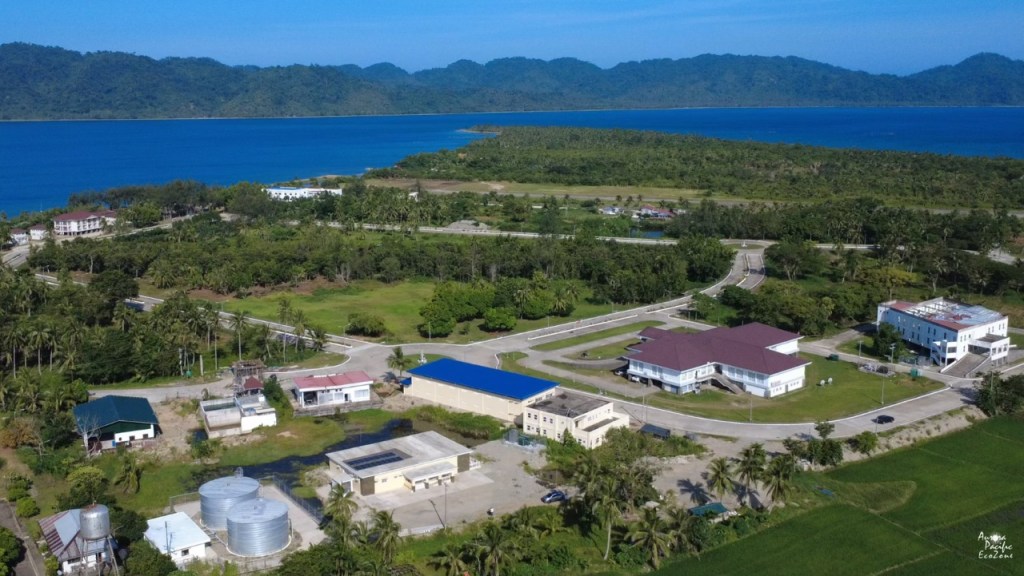
Aurora, Philippines: A Region in Early-Stage Transformation
If you’re tracking the next growth markets in Philippine real estate, Aurora province has entered the conversation.
Two significant developments are underway simultaneously. In March 2026, the Aurora Pacific Economic Zone and Freeport Authority (APECO) and InfiniVAN Inc. signed a memorandum of understanding to strengthen digital infrastructure in Aurora, positioning the ecozone as a viable hub for data centers. Separately, APECO is advancing a commercial airport for Casiguran that would give the province its first direct air access.
These are real, documented developments — but they are also early-stage. Investors who understand both the opportunity and the current limitations are better positioned to act wisely.
Aurora’s potential rests on a broader strategic premise: infrastructure corridors tend to reshape regional property markets over time. Submarine cable connectivity, improved air access, and ecozone investment can combine to create a new economic node. However, the transition from infrastructure announcement to functioning economic hub typically takes years of sustained execution.
The Data Center Story: A Promising Start, Not a Done Deal
Global demand for data centers is growing at a pace the industry hasn’t seen before. The Philippines data center market was valued at USD 735 million in 2025 and is projected to reach USD 2.48 billion by 2031, at a compound annual growth rate of 22.50%. That’s a market nearly tripling in six years — and international players are already taking notice. Global operators like Amazon Web Services and Microsoft Azure have expanded their footprint in the Philippines, while local players are building in anticipation of surging demand.
Aurora is positioning itself to capture a share of this growth. The APECO–InfiniVAN partnership centers on establishing a terrestrial fiber backbone within APECO in Casiguran, linking the ecozone to submarine cable landing points in Baler, Claveria, and other Northern Luzon corridors.
InfiniVAN is no minor partner. The company has emerged as a major connectivity player, boasting the third-largest lit upstream capacity to the global internet backbone from the Philippines, with more than 20 Tbps distributed across ten international submarine cable systems.
The important caveat: what was signed is an MOU to explore infrastructure — not a confirmed data center campus. The agreement is described as a foundational step toward commercial arrangements and MOAs. No anchor data center tenant has been publicly confirmed in Aurora.
That distinction matters. In the global data center industry, operators typically evaluate locations based on three core factors: proximity to submarine cable infrastructure, reliable and scalable electricity supply, and regulatory stability.
Aurora’s emerging advantage lies in connectivity. InfiniVAN’s parent company IPS, Inc. is a designated landing party for the CANDLE submarine cable system — a 24-fiber pair intra-Asia cable connecting Singapore, the Philippines, Malaysia, and Japan — with the Baler cable landing station having broken ground in August 2025. This means Aurora is being wired into a serious international network regardless of whether data centers follow immediately.
What Aurora is competing against, however, are more mature data center locations within the Philippines and across Southeast Asia. Batangas and the greater Metro Manila corridor currently dominate domestic deployments, while regional hubs such as Singapore, Johor in Malaysia, and Jakarta continue attracting hyperscale investment due to established infrastructure ecosystems.
Aurora’s opportunity lies in positioning itself as a secondary or emerging node within that broader network — particularly if connectivity and energy infrastructure mature in parallel.
What This Could Mean for Real Estate — With Context
If Aurora does attract data center investment over the coming years, the downstream effects on real estate are logical, though not automatic.
Industrial land within and surrounding APECO would likely see the earliest impact. Data centers require large tracts of land, stable utilities, and access to fiber networks. Logistics operators and supporting industries tend to cluster around such facilities. Early land acquisitions in strategic locations therefore carry the most upside.
Commercial and office space demand would follow, driven by administrative needs, technology service providers, and suppliers supporting digital infrastructure operations. APECO’s CEO has noted that while data centers themselves operate with lean teams, they create multiplier effects across allied industries — driving jobs, skills development, and broader economic activity.
Residential demand would likely develop more gradually. Housing demand depends on sustained employment creation and population inflows, which typically lag behind infrastructure investment by several years. Developers targeting the affordable to mid-market housing segment would likely see the earliest opportunities if economic activity within the ecozone accelerates.
These projections are based on patterns observed in other data center ecosystems globally. They should be treated as potential outcomes tied to future investment confirmation — not certainties based solely on the MOU.
The APECO Airport: Real Progress, Realistic Timeline
Airports are genuine catalysts for regional economic development. The APECO airport project in Casiguran is real and advancing — but it’s important to understand exactly where it stands.
APECO is advancing plans to develop a domestic airport at its site in Casiguran, with bidding scheduled this year and commercial operations targeted by the second quarter of 2027. APECO is in talks with Cebu Pacific for commercial services, and operations will initially be modest — starting with turboprop aircraft handling 40 to 70 passengers. The airstrip currently accommodates only chartered flights under a one-time permit from the Civil Aviation Authority of the Philippines.
A full international airport is a separate, longer-horizon project. Construction of that facility is not expected to commence until the fourth quarter of 2027 or the first quarter of 2028 at the earliest, with operations projected to begin in 2030.
This is genuine progress for a province that has historically had no commercial air access. Investors should calibrate expectations to the actual development arc: limited domestic turboprop service beginning in Q2 2027, with meaningful international connectivity still several years away.
In the early stages, the airport’s role will be less about generating immediate passenger demand and more about improving accessibility for investors, government agencies, and early ecozone locators. As infrastructure nodes mature, passenger volumes typically scale in parallel with economic activity.
What the Airport Could Mean for Real Estate
The economic literature on airports and property values shows mixed outcomes depending on property type and distance. Commercial and industrial properties along key corridors between airports and economic zones tend to benefit most clearly. Residential properties can appreciate if they are in accessible but not noise-affected zones — though properties directly within flight paths sometimes experience the opposite effect.
For Aurora specifically:
Industrial and commercial properties near the airport and along the APECO corridor stand to benefit as air cargo access gradually improves the region’s logistics proposition.
Tourism-related hospitality is another logical beneficiary. Aurora already has established natural attractions — coastlines, surf breaks, and biodiversity — that have historically been underserved by limited access. Improved air connectivity could expand visitor demand over time, though early passenger volumes will likely remain modest.
Residential demand would grow gradually as economic activity expands and the ecozone begins attracting more workers and service providers.
The Philippines as a Data Center Destination: A Rising Market With Honest Limitations
The Philippines is a growing — though not yet leading — player in Southeast Asian digital infrastructure. While still emerging compared to mature markets like Singapore and rising hubs such as Malaysia and Indonesia, the country offers a compelling set of advantages that foreign investors increasingly recognize.
One real advantage that benefits Aurora specifically: several operators are pre-leasing data hall capacity near submarine cable landing stations in Batangas, Aurora, and Baler in order to capture early traffic from new cable systems entering the region.
However, the country also faces structural challenges that data center investors carefully evaluate.
Electricity pricing is one of them. The average commercial electricity price in the Philippines stands at around USD 0.18 per kWh — the highest in Southeast Asia. For power-intensive data centers, this significantly affects operating margins.
Another critical factor is grid reliability and redundancy. Hyperscale operators typically require highly stable power supply and multiple redundancy layers to ensure uptime. APECO’s long-term development plans include clean energy initiatives intended to address these requirements, but the scale and timing of those energy projects will remain an important variable to monitor.
Government policy support for digital infrastructure is well documented and includes incentives for ecozone locators. The key question for Aurora will be how effectively connectivity, energy capacity, and investor commitments develop together over time.
A Note on APECO’s Development Track Record
Any serious investment analysis should also acknowledge historical context. APECO has faced criticism in previous years for slow development progress and underutilized land allocations. While the ecozone retains strong strategic potential due to its location and scale, large Philippine economic zones often take extended periods to reach maturity.
The current infrastructure push — including submarine cable connectivity and airport development — represents one of the most tangible phases of progress in APECO’s history. Still, investors should approach the opportunity with the understanding that execution timelines may stretch beyond initial projections.
Where Aurora Real Estate Investors Should Focus Right Now
Based on confirmed developments and reasonable projections — not guaranteed outcomes — several investment positions appear most defensible.
Land banking near APECO and the airport corridor represents the clearest long-term strategy. Economic zones often generate value through gradual infrastructure build-out and tenant arrival over multi-year periods. Early entry pricing can compensate for longer timelines.
Industrial and commercial lots within or adjacent to APECO are the most directly tied to the connectivity and logistics thesis. These opportunities are most suitable for investors with patient capital and higher risk tolerance.
Residential development tied to workforce housing becomes viable once ecozone locator activity begins accelerating. Developers targeting the affordable to mid-market segment are typically the first to benefit from early workforce demand.
Tourism hospitality along Aurora’s coastline represents a parallel opportunity driven more by the province’s natural attractions than by the ecozone itself. Air connectivity could gradually expand the visitor base, though investors should size projects conservatively during the early years of airport operations.
What Current Homeowners in Aurora Should Know
If you already own property in Aurora, the long-term direction appears favorable. Infrastructure-led development — submarine cables, airport expansion, and ecozone investment — tends to raise the baseline economic profile of surrounding regions.
The pace and magnitude of property value appreciation will ultimately depend on how effectively APECO converts its pipeline of MOUs and development plans into confirmed locators and operating businesses.
For landowners with developable parcels, this period may also represent an opportunity to engage with developers exploring early projects in the province.
The Bottom Line: A Legitimate Emerging Market With Eyes Open
Aurora’s emerging investment narrative is grounded in tangible infrastructure developments: an international connectivity partnership, a submarine cable landing station under construction in Baler, and a commercial airport project advancing toward operations.
These are meaningful inputs into regional development.
What Aurora is not — yet — is a proven operating economic hub. APECO is still building the foundation. Confirmed data center tenants have not been announced. Commercial flights are roughly a year away and will begin with limited capacity.
The trajectory from early-stage infrastructure investment to a mature regional growth center depends on sustained execution across multiple fronts — connectivity, energy supply, investor commitments, and supporting industries.
For investors with a five- to ten-year horizon and a tolerance for emerging-market risk, Aurora represents a province worth watching closely. The opportunity is credible, but patience and disciplined expectations will remain essential.


 U-Property PH
Leave a comment